desk
desk Share
Share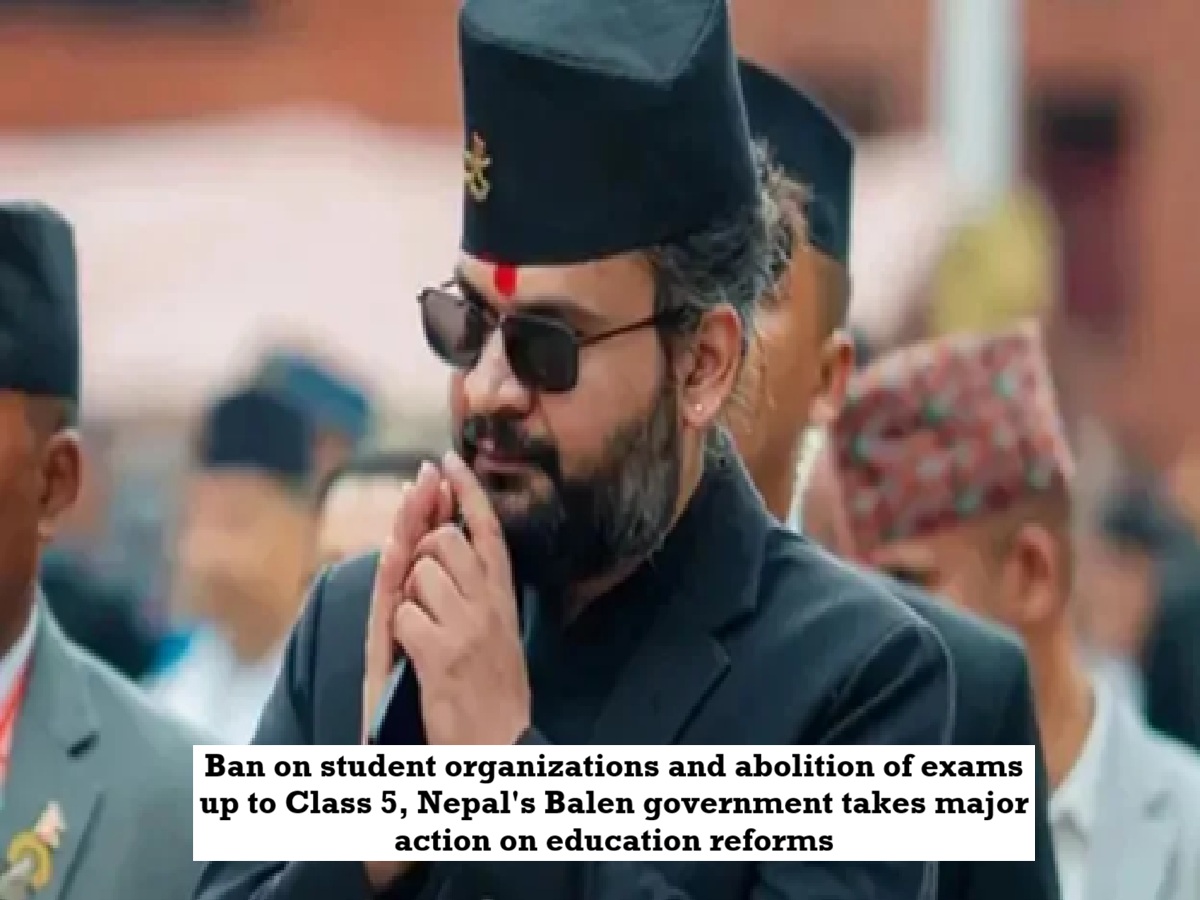
News Topical, Digital Desk : Nepal's Prime Minister Balen Shah's government has taken major steps to depoliticize the education system. Under a 100-day action plan released Saturday night, student politics in schools and colleges has been completely banned. Examinations up to Grade 5 have been abolished, and institutions with foreign names have been ordered to adopt Nepali names.
According to the government's new decision, student organizations affiliated with any political party will now be completely banned from school, college, and university activities. These organizations will be required to remove their offices from campus within 60 days.
Instead, the government will launch non-political platforms like the Student Council or Voice of Students within 90 days. These new platforms will focus solely on student issues, rights, and needs. The government says that educational institutions will no longer be centers of politics, but instead will be centers of learning.
No exams till class 5
A significant change in the education reforms is the elimination of traditional exams for children up to grade 5. This will reduce unnecessary pressure on children and allow them to learn without stress.
The government has also given strict instructions to schools and colleges having foreign names like Oxford, Pentagon or St. Xavier's, that they will have to change their names in Nepali language within this year.
Furthermore, Nepali citizenship will no longer be required for studies up to graduation. No student will be hindered from pursuing their studies due to lack of documents. Universities have been strictly instructed to release exam results on time.
Previously, delays in results forced many students to drop out and go abroad. The government believes that political interference has been the primary cause of delays and disruptions in education.
Property investigation of politicians and officials
The action plan includes administrative reforms in addition to education. A committee will be formed within 15 days to investigate the assets of senior leaders and officials. First, officials who served after 2006 will be investigated, followed by cases from 1991 to 2006.
Each ministry must complete its work within a stipulated timeframe and submit a report to the Prime Minister's Office. The government will also prepare papers for discussion on constitutional amendments within seven days.
Last year, thousands of teachers staged massive demonstrations in Kathmandu. Nearly 29,000 government schools across the country were closed in protest against the education bill, disrupting the education of millions of students. Teachers feared that increased local control of schools would further entrench political influence.
Nepal's education system has long been unstable. Student unions frequently protested, disrupting classes, postponing exams, and delaying results. The Balen Shah government is working to address these problems and make education more efficient and student-centered.
Read More: "Our army is the most dangerous...", hints at ground operation in Iran; statement on regime change.
--Advertisement--