desk
desk Share
Share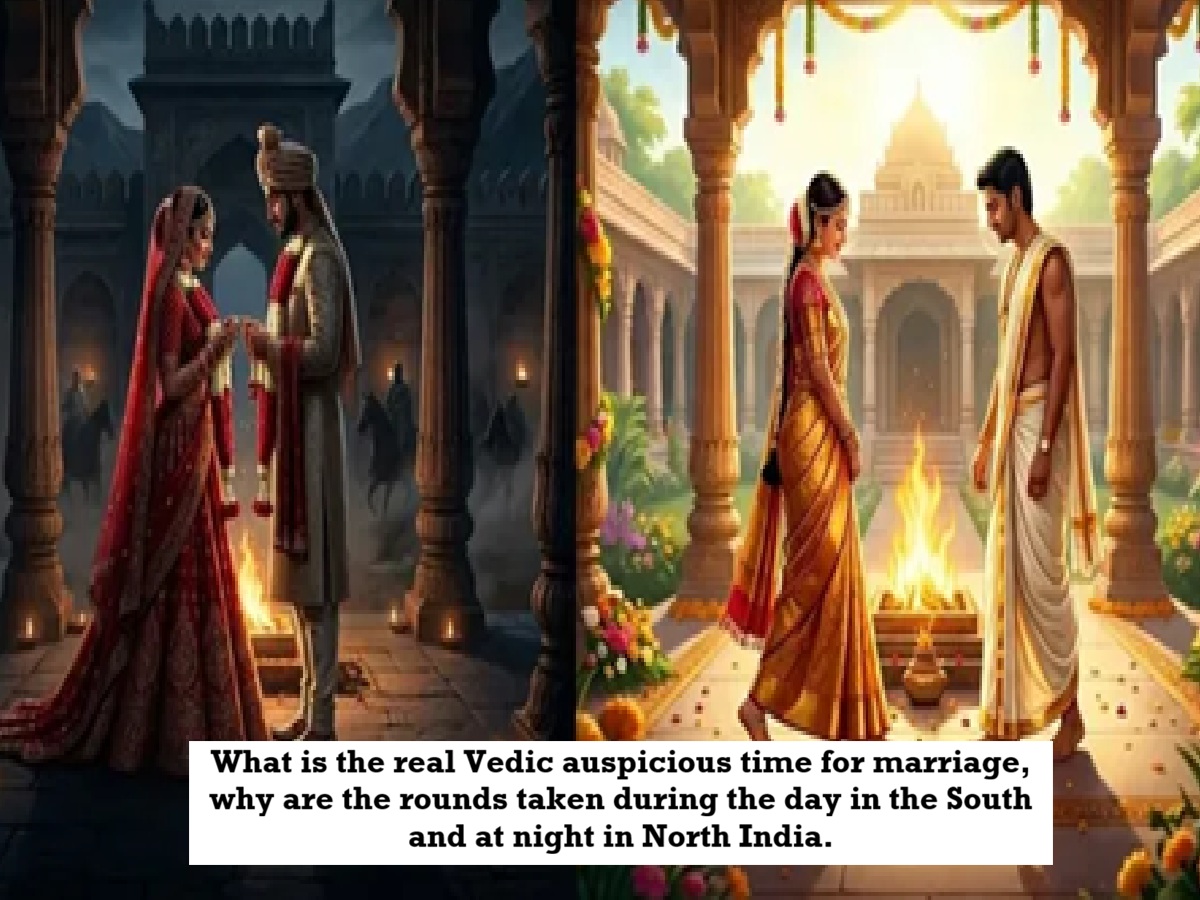
News Topical, Digital Desk : Weddings in India are a sight to behold. Drums, music, dancing, and lots of lights. But have you ever wondered why weddings in North India often take place late at night, while in South India, the wedding rituals are still performed early in the morning?
You might think of it as just a ritual or custom, but you'd be surprised to learn that night weddings in North India aren't a "Vedic ritual." In fact, it was once a survival tactic. According to Vedic tradition, the gods are more active during the day, so the wedding rituals are performed during the day.
What does our Vedic law say?
According to the ancient scriptures and Vedic rules of Hinduism, marriages should always take place during daylight hours. It is believed that the seven rounds should be taken in the presence of the Sun God and the sacred fire god. The people of South India have preserved this Vedic tradition to this day. Even today, weddings there are performed after sunrise and during the auspicious time of the day.
The truth about the auspicious time for marriage
- According to the Vedas and scriptures, the most auspicious time for a wedding is in the presence of the Sun. The Sun is considered the "soul of the universe," so taking the vows under its light is considered most sacred.
- According to Hindu beliefs, daytime belongs to the "gods," when sattvic energy is at its peak. Nighttime is often associated with tamasic energy.
- Actually, there is no clear evidence of this but it is said that in the medieval period, to protect their daughters and wealth from bandits and invaders, North Indians started getting married in the dark of night.
- Having a wedding at night wasn't a religious ritual, but rather a strategic decision, so that enemies wouldn't notice the wedding and the ceremony could be performed without any obstacles.
- The 'baraat' was actually a group of warriors and men accompanying the groom, armed with weapons to counter any attack on the way or at the mandap.
--Advertisement--