desk
desk Share
Share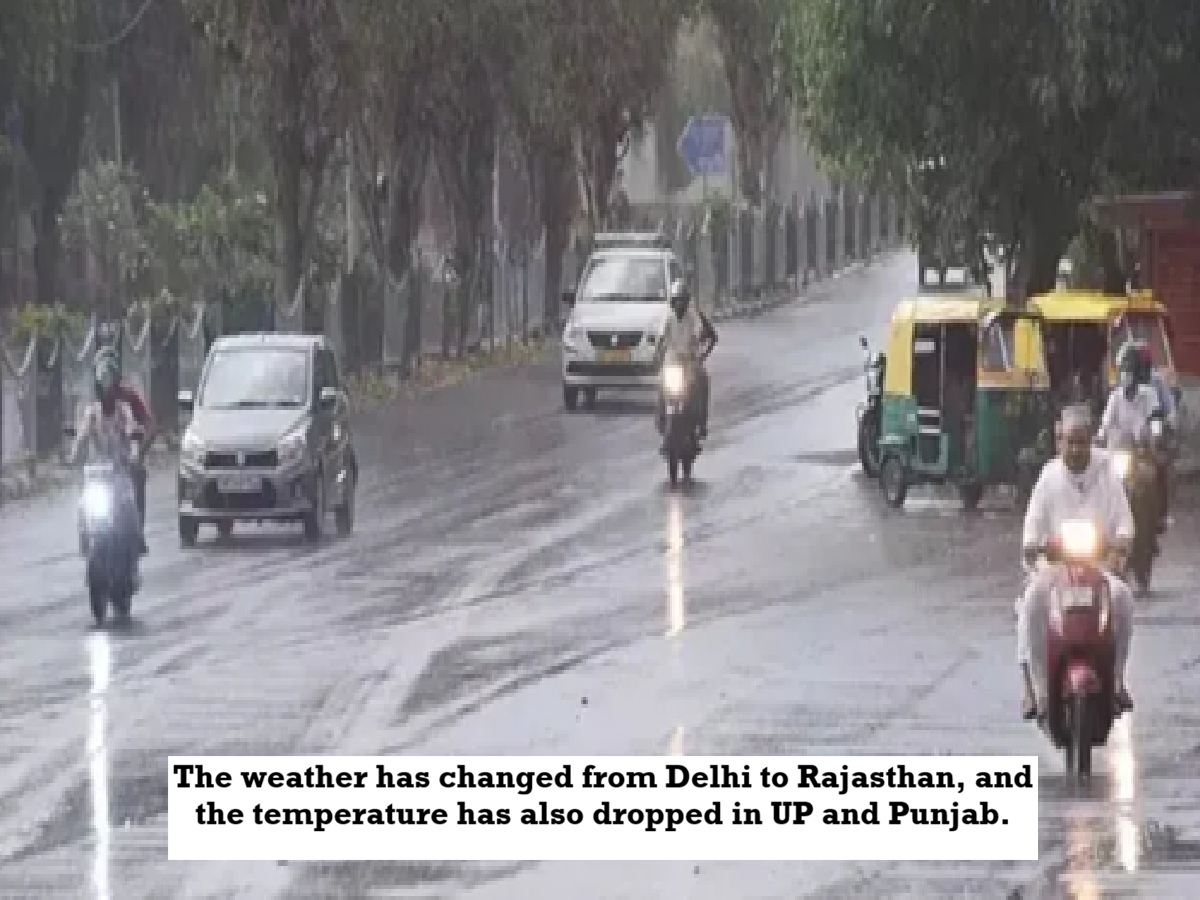
News Topical, Digital Desk : The weather in North India has changed rapidly in the second half of March. Such conditions are likely to continue. Earlier this month, there were signs of a rapid increase in heat, but by mid-March, rain, storms, and rapidly falling temperatures have completely transformed the weather.
Meteorologists are looking at this not as a simple fluctuation, but rather at the combination of several different natural causes (multi-factor climate events). Key factors such as the jet stream, Mediterranean moisture, Arctic warming, and La Niña have all come into play simultaneously. The India Meteorological Department (IMD) believes such weather uncertainty may persist.
Temperatures dropped five degrees below normal
Rapidly rising temperatures in early March gave the impression that we might face a very hot summer this year, but that situation didn't last long. Just two weeks later, clouds, rain, and strong winds completely cooled a large swath of northern India, including Delhi, Punjab, Haryana, Rajasthan, and western Uttar Pradesh.
Temperatures in many areas have dropped by up to five degrees below normal, making it feel cold in March itself. According to meteorologists, the biggest reason behind this change is the increasingly active western disturbances. Several systems are reaching northern India one after another, causing a recurrence of cloud formation and rainfall. This is why the weather remains unstable and is constantly changing.
Western disturbance is not the only reason
However, scientists aren't limiting this to just western disturbances. They also cite global changes as a major reason. Among these is the southward shift of the jet stream. Normally, it flows over the Himalayas, but this time, due to its position below, western disturbances are entering North India directly and having a profound impact on the weather.
Increased humidity in the Mediterranean region is also impacting the weather from Iran to Pakistan and India. Higher-than-normal ocean temperatures there are strengthening the weather systems that form there. These same systems, when reaching India, are intensifying rain and storms. Increasing heat in the Arctic region, known as Arctic amplification, is also considered a major factor.
Increased instability in the global weather system
This is disrupting the balance of cold and warm air masses globally. Waves in the jet stream are increasing, making weather patterns more unstable and unpredictable. The weakening of La Niña is also being linked to climate change. La Niña is now moving toward a neutral state. During this transition, instability in the global weather system increases, and its effects are visible in many regions, including India.
The Meteorological Department believes that western disturbances may remain active in the coming days, leading to light rain and strong winds. There is still more than a week left in March, and two western disturbances are expected during this period. This trend may continue into early April, which could keep the heat wave under control.
--Advertisement--