desk
desk Share
Share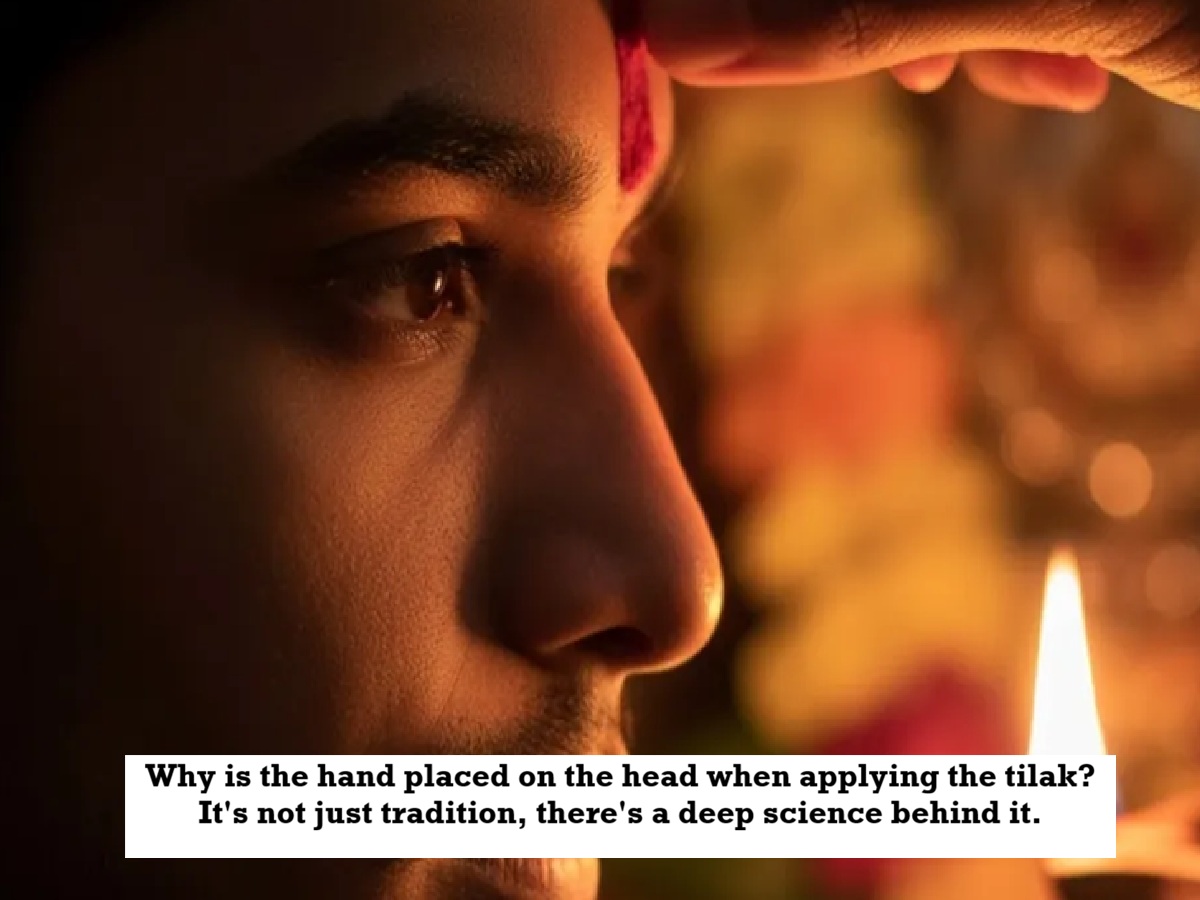
News Topical, Digital Desk : In Indian culture, applying a tilak (a mark of the forehead) during worship or any auspicious event is an essential tradition. You may have often noticed that whenever someone applies a tilak (a mark of the forehead) to us, they place their hand on our head, or we place our own hand on our head. But have you ever wondered why this is done? Probably not. Let's find out if it's just an old ritual? According to Hindu scriptures and ancient science, there are very deep and logical reasons behind this small action.
1. Energy Conservation
At the top of our bodies is the Sahasrara Chakra, considered the primary energy center. Tilak is always applied to the Ajna Chakra, located between the eyebrows. According to ancient beliefs, when the hand is placed on the head while applying the tilak, the body's positive energy flows back into the body instead of being released. This is like completing a circuit.
2. Concentration and mental peace
Scientifically, the Ajna Chakra is located close to our pineal and pituitary glands. When a tilak is applied with the thumb or finger, pressure is applied to that point. Placing the hand on the head stabilizes that pressure, calming the mind and increasing concentration.
3. Feelings of respect and blessings
The tilak symbolizes victory, honor, and purity. Placing a hand on the head is also a form of blessing. It is believed that the positive vibrations emanating from the fingers of the person applying the tilak enter the brain of the recipient, giving them mental strength.
Why is an empty forehead considered inauspicious?
In the scriptures, a bare forehead is considered inauspicious. A tilak (a mark of the forehead) is not merely a decoration, but also a means of instilling self-confidence. Applying a tilak of sandalwood, kumkum, or turmeric provides a calming effect on the mind, which helps reduce stress.
--Advertisement--