desk
desk Share
Share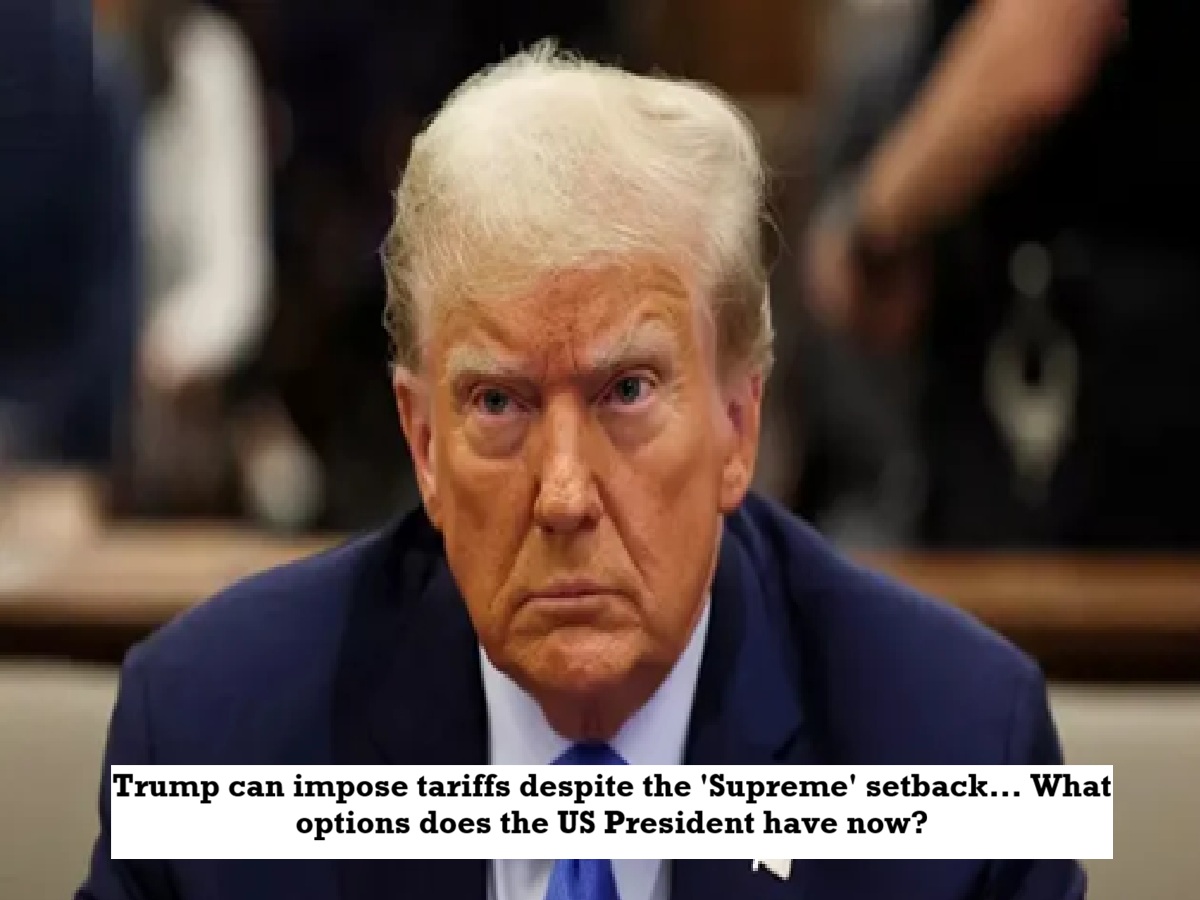
News Topical, Digital Desk : President Donald Trump has several legal options to continue aggressively pursuing global import tariffs despite the US Supreme Court striking down his bid. The court did not accept the president's claim of broad authority under the 1977 International Emergency Economic Powers Act (IEEPA).
Trump, relying on this law, imposed double-digit reciprocal tariffs on nearly all countries last year, calling the long-standing trade deficit a national emergency. Experts believe the court's ruling will not completely end the tariff policy.
Supreme Court rejects Trump's tariff claim
According to Kathleen Klassen, a trade law expert at Georgetown University, other legislative provisions could be used to reinstate the existing tariff structure. Among Trump's options is Section 301 of the 1974 Trade Act, which allows the US to impose tariffs on countries engaging in unfair or discriminatory trade practices.
Trump used this provision extensively against China during his first term. While it requires investigations and usually public hearings before imposing tariffs, there is no clear limit on the rate of the tariffs, and they can be increased after four years.
Trump also has the option of Section 122
Section 122 of the same law allows the president to impose tariffs of up to 15 percent for a maximum of 150 days in response to unbalanced trade. This does not require prior investigation, although this provision has not been used so far. National security grounds also remain a route for the administration.
Section 232 of the Trade Expansion Act of 1962 allows the president to impose tariffs on imports deemed a threat to national security. Trump imposed tariffs on steel and aluminum under this act in 2018 and later expanded them to autos, auto parts, and other products.
This provision does not set a limit on the tariffs, but mandates a Commerce Department inspection. Section 338 of the Tariff Act of 1930 is also being considered as a possible option. Under this law, enacted during the Great Depression, the president can impose tariffs of up to 50 percent on countries that discriminate against American companies.
Read More: Iran attacks Kuwait airbase amid Trump's threat, injuring 15 Americans.
--Advertisement--