desk
desk Share
Share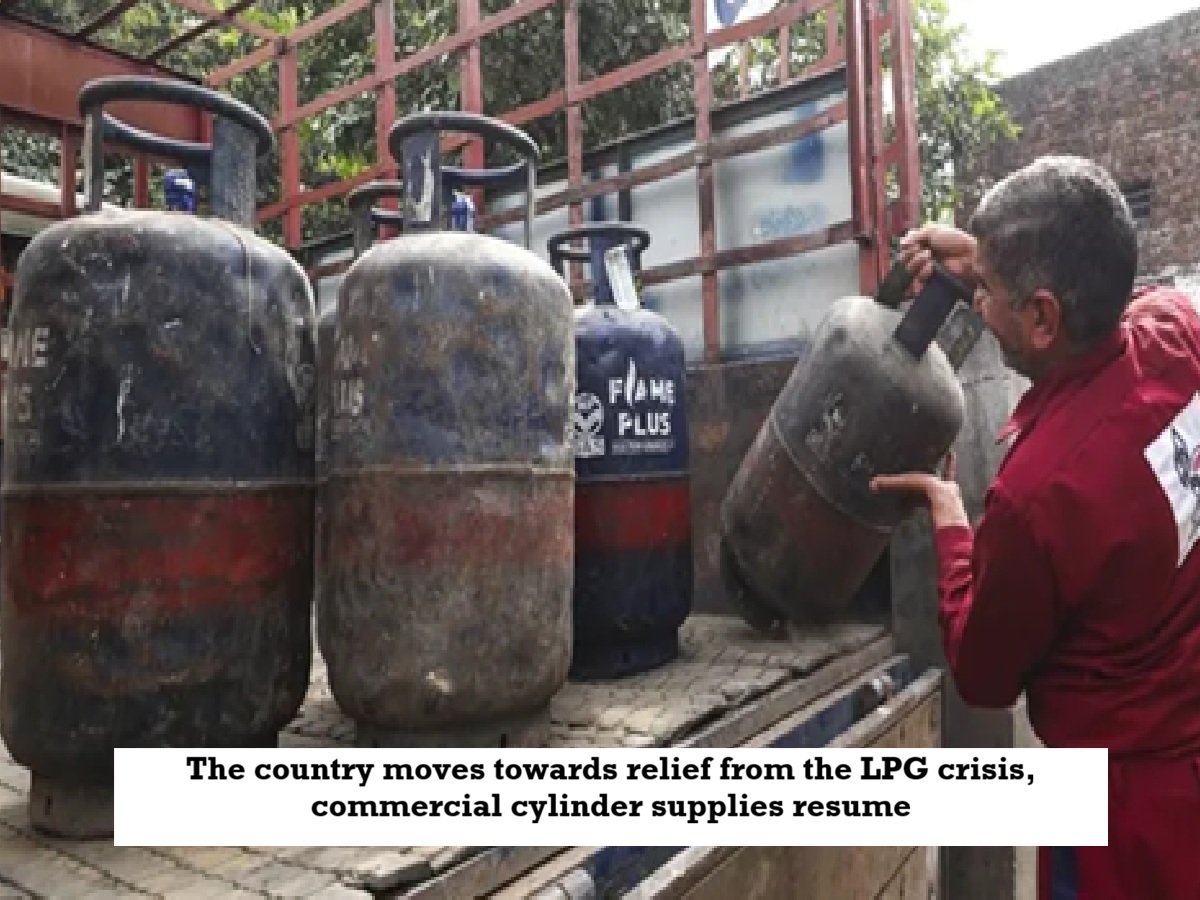
News Topical, Digital Desk : The government has reiterated that even in this war situation, there is no shortage of petrol and diesel domestically. The situation regarding LPG cylinders is certainly dire, but there is no need to panic. The government has urged consumers not to hoard fuel.
Supply of commercial cylinders begins
The Ministry of Petroleum and Natural Gas has stated that commercial cylinder supplies have also resumed in 29 states and union territories. Domestic consumers have been advised to avoid panic booking.
The Indian government has taken swift action to ensure the availability of LPG, according to Reuters. The Ministry of Petroleum and Natural Gas said on Saturday that it has prohibited consumers with piped natural gas connections from storing, receiving, or refilling domestic LPG cylinders under the revised supply order.
State-owned oil companies have also been barred from providing LPG connections or refills to consumers who already have PNG connections.
Appeal to shift from LPG cylinders to PNG
The state government has been entrusted with the distribution of commercial cylinders. Domestic LPG production has been increased by 30 percent. The government has once again appealed to the public to shift from LPG cylinders to PNG.
There are currently 330 million LPG customers, and 6 million of these customers can immediately shift to PNG. GAIL India has been directed to assist consumers in this effort.
All petroleum and gas companies have been asked to spread awareness about LPG and PNG through internet media and other means.
Police alert to stop black marketing of cylinders
To stop cylinder black marketing, raids have been conducted at more than 1,400 locations in dozens of states, including Maharashtra, Goa, Bihar, Odisha, and Uttar Pradesh, and cases are being filed. Surprise inspections were conducted at 1,300 locations. All states have directed the formation of committees at the district level to monitor cylinder supply.
On normal days, 50-55 lakh domestic gas cylinders are booked daily. Bookings on Friday were approximately 7.5 million, and on Saturday, they reached 8.8 million. Previously, 5 million cylinders were supplied daily. The government increased this number, and on Saturday, 6.2 million cylinders were supplied. CNG supplies continue uninterrupted as before.
Appeal to avoid panic booking
Domestic consumers have been advised to avoid panic booking and to book online at all costs. Cylinders can be booked every 25 days in urban areas and every 45 days in rural areas. Domestic consumers have also been advised to avoid visiting their dealers or crowding around for cylinders.
LPG production increased
Commercial use of biomass has been approved in the NCR for the next one month. LPG production has also reached its highest level in the country. It is claimed that the LPG situation will return to normal within the next seven to ten days.
Two Indian ships leave Strait of Hormuz, 22 in line
Two Indian-flagged ships carrying LPG from Gulf countries safely crossed the war-torn Strait of Hormuz on Saturday morning. Rajesh Kumar Sinha, Special Secretary of the Shipping Ministry, said in a press conference that the LPG vessels, Shivalik and Nanda Devi, are now heading for the Mundra and Kandla ports in Gujarat.
According to PTI, these ships are carrying 92,700 tons of LPG and are expected to arrive at Indian ports on March 16-17. These two vessels were among 24 Indian ships stranded on the western bank of the Strait of Hormuz since the war began.
22 Indian-flagged ships are in queue in the Persian Gulf
There are now 22 Indian-flagged ships stranded in the Persian Gulf, carrying a total of 611 sailors. Four other Indian-flagged ships are stranded east of the Strait of Hormuz.
According to Jagran Bureau, six LPG, one LNG and four crude oil ships are currently in the Persian Gulf and it is expected that they will also be allowed to pass through the Strait of Hormuz.
From the Prime Minister to the Foreign Minister, everyone is in constant contact with their counterparts in Iran, Israel, and the United States to ensure the country's energy security. India is in contact with the Gulf countries and many other countries for oil and gas purchases.
--Advertisement--