desk
desk Share
Share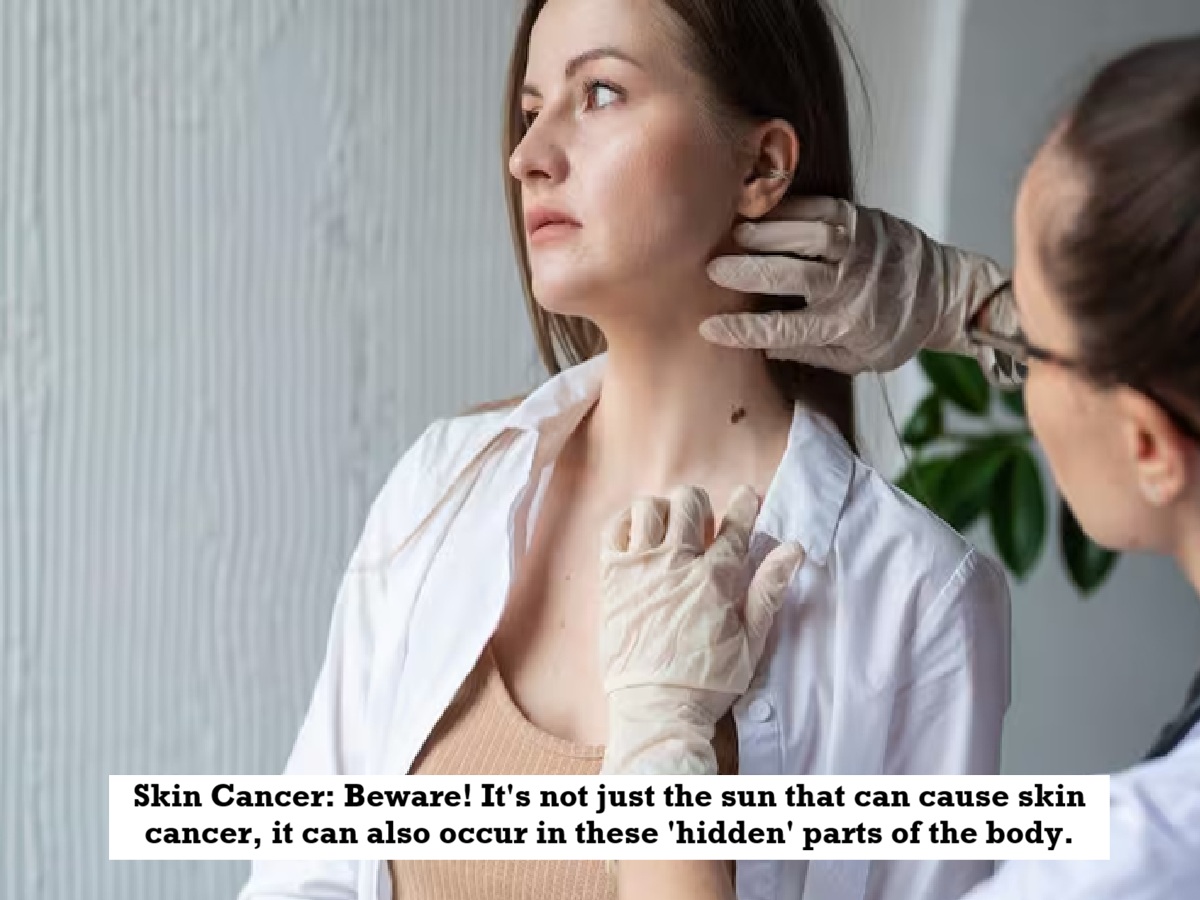
News Topical, Digital Desk : Skin Cancer Symptoms: People often associate skin cancer solely with sunlight and sunburn. We're told to monitor changes in moles and protect ourselves from the sun's harsh rays. But few people know that skin cancer, especially melanoma, can occur in areas of the body that are completely out of reach of the sun. This is why hidden melanomas are considered more dangerous because they can go undetected for a long time, increasing the risk. Let us tell you about them.
What is the way to prevent this?
The first step to preventing skin cancer is regular self-examination. However, the problem is that we often only notice the most exposed areas, while many serious cases occur in areas that often go unnoticed. DNA damage from sunlight, certain genetic factors, and a weakened immune system are believed to increase the risk of skin cancer.
Where do the symptoms of skin cancer occur?
Skin cancer that begins on the outer ear may initially appear as dry, scaly skin or a slowly growing white lump. It's often painless, leading people to ignore it. If left untreated, it can spread to the inner ear and surrounding bones. Cancer that occurs under the nails is called subungual melanoma. It can appear as black or dark marks under fingernails or toenails. Suspicious lesions on the genital skin of men can also be a sign of skin cancer, so it's important to examine these areas as well.
Melanoma in the eye can appear as a dark spot in the white part of the eye or around the pupil. Small, hard lumps on the eyelids can grow rapidly and are considered aggressive forms of skin cancer. Cancer can also develop on the tongue and inside the mouth, especially in people who smoke or drink excessively. Here, lumps, non-healing sores, tingling, numbness, or white, hard spots can be a warning sign.
Cancer can also occur in these parts
Skin cancer can also occur on the soles of the feet and palms of the hands. It's more common in people with darker skin tones and in areas exposed to sunlight. Cancer can also lurk on the scalp, especially in people with thinning hair or baldness. Lip cancer is more common in men and is linked to smoking, alcohol, and HPV infection. Furthermore, tattooed areas can hide moles or blemishes, making changes difficult to detect.
What do experts say?
Experts say that if you have a family history of skin cancer, have very fair skin, have many moles, or spend long periods outdoors, extra vigilance is necessary. Examine yourself every three months, use a mirror, and ask loved ones to keep an eye on you. The earlier skin cancer is detected, the easier and more effective treatment is.
Read More: IBS Problem: Soluble fiber is effective in treating stomach problems like IBS.
--Advertisement--