desk
desk Share
Share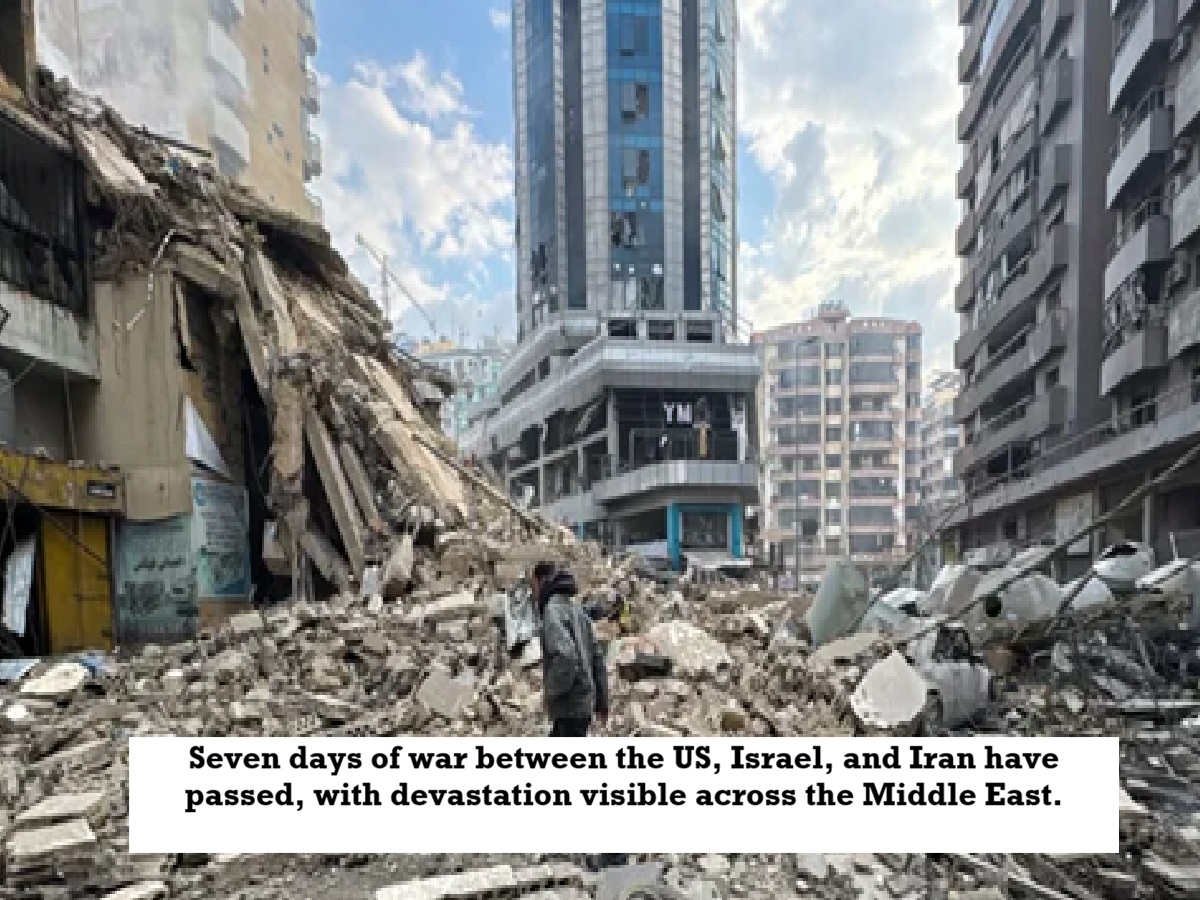
News Topical, Digital Desk : The ongoing war between the United States, Israel, and Iran has become one of the deadliest conflicts in the Middle East in years. It has spread to multiple countries in less than a week. What began as a joint US-Israeli strike inside Iran quickly escalated with retaliatory strikes from Tehran and the involvement of regional powers, turning it into a major regional crisis.
Washington and Tel Aviv say their joint operation, codenamed "Operation Epic Fury," is designed to cripple Iran's military infrastructure, particularly its missile launchers, air defense systems and naval assets. Israeli officials claim their forces now enjoy near-complete air superiority over Iran after thousands of strikes across the country.
Heavy fighting continues in the Middle East
The conflict began with the sudden death of Iran's Supreme Leader Ali Khamenei and several senior officials, triggering retaliatory strikes from the Islamic Revolutionary Guard Corps and allied groups. Within days, missiles and drones were being fired not only at Israel but also at US bases and Gulf countries.
According to estimates by the Center for Strategic and International Studies, the first 100 hours of Operation Epic Fury cost about $891 million per day, most of it outside the current US defense budget. The war has entered its second week, with attacks continuing in Iran, Israel, Lebanon and the Gulf, while global markets and shipping routes are being affected.
Khamenei killed in US-Israeli attacks
The war began with a massive joint US and Israeli air and missile strike on targets across Iran. The attacks targeted military bases, missile launch sites, and strategic facilities in cities such as Tehran, Isfahan, and Kermanshah.
The most shocking incident was the death of Iran's Supreme Leader, Ali Khamenei, in what analysts called a "decapitation strike." Several senior military commanders were also killed in the initial attack.
According to the New York Post, the attack was carried out by a missile fired from a fighter jet that flew to the edge of space and then came down at high speed. The weapon, called the "Blue Sparrow missile," evades conventional air defense systems.
Israeli officials said the attack targeted Khamenei's guarded compound, where a meeting of senior officials was underway. Iranian state media later confirmed the 86-year-old leader's death. The operation was the result of years of intelligence gathering by Israel's Mossad and Unit 8200.
Iran immediately retaliated with missiles and drones targeting Israeli and US military facilities. Air-raid sirens sounded in Israeli cities, and defense systems intercepted incoming missiles.
Day 2: Iran launches major counter-attack
On the second day of the conflict, Iran intensified its response, launching a large number of ballistic missiles and drones at Israeli territory. Many of the missiles damaged infrastructure, although most were intercepted by Israeli air defense systems. Simultaneously, the United States escalated its air campaign against Iranian military targets.
Dozens of additional strikes targeted missile launchers, air defense systems, and facilities linked to the Islamic Revolutionary Guard Corps. Iran also launched attacks on US bases and allies in the Middle East, signaling that the conflict would not be limited to Iran and Israel.
Day 3: Hezbollah opens northern front
The fighting spread beyond Iran and Israel on the third day, with the Lebanese militant group Hezbollah joining the conflict. Rockets were fired from southern Lebanon toward northern Israel, opening a new front.
Israel launched heavy airstrikes on Hezbollah targets in Beirut's southern suburbs and other areas across Lebanon. Israeli officials said the strikes targeted weapons depots, command centers and infrastructure linked to the group.
Israeli strikes have killed more than 200 people in Lebanon since Hezbollah launched rocket and drone attacks on Israel on Monday. One of the deadliest attacks was a nighttime attack on the eastern town of Nabi Chit, where at least 16 people were killed and 35 wounded, according to Lebanon's Public Health Ministry. Officials warned that the death toll could rise as rescue operations continued.
Day 4: Regional tensions escalate in the Gulf
By the fourth day, missile and drone attacks began to affect several Gulf countries where US military bases are located. Iranian projectiles were intercepted over countries such as Kuwait, Bahrain, Qatar, and the United Arab Emirates. Some missile and drone debris caused damage.
Additionally, tensions escalated in the Strait of Hormuz, a vital route for global energy supplies. Attacks on ships and threats to shipping routes disrupted maritime traffic and raised fears of a global energy crisis. Oil markets reacted sharply as traders worried about the potential impact on global supplies.
Day 5: Gulf countries plunge further into conflict
The war spread into a fifth day, with Iranian missiles and drones targeting several Gulf countries. Air defense systems in the United Arab Emirates intercepted dozens of projectiles. Debris from the interception damaged parts of Dubai, including the international airport and coastal areas.
In Bahrain, a missile struck a state-run oil refinery, causing a fire, but officials said it was brought under control. Kuwait temporarily suspended operations after missiles and drones were detected at the US embassy.
Saudi Arabia also intercepted drones and cruise missiles targeting military and energy infrastructure, including areas near the Ras Tanura refinery.
Day 6: The US-Israeli massive offensive intensifies
By the sixth day, the US and Israel had dramatically intensified their military operations inside Iran. According to US military officials, hundreds of targets were struck in 72 hours, including ballistic missile launchers, military compounds, and naval facilities. Israeli officials claimed they had destroyed 80 percent of Iran's air defense systems.
Iranian officials said the nationwide death toll from the attacks exceeded 1,300. Buildings and infrastructure in several cities suffered extensive damage, including government facilities, hospitals and residential areas.
Meanwhile, Iranian forces continued to fire missiles at Israeli territory, although US officials claimed the frequency of attacks had decreased compared to the early days.
Day 7: The war spreads on multiple fronts
By the seventh day, the conflict had spread to much of the Middle East. Israel continued heavy bombing of Hezbollah positions in Lebanon and issued an evacuation warning for Beirut's southern suburbs and parts of the Bekaa Valley. Clashes were also reported along the Lebanon-Syria border. In Iraq, drones and rockets targeted bases housing US forces near Baghdad and in the Kurdish region of Erbil.
At the same time, missile and drone attacks on Gulf countries continued. Explosions were heard in Dubai and Bahrain's capital, Manama, as air defense systems intercepted incoming projectiles. The war has also disrupted global trade routes.
Traffic at the Strait of Hormuz, which carries about a fifth of the world's supplies, has slowed dramatically, with only a few commercial ships passing through.
As the conflict enters its second week, there is no sign of de-escalation. US President Donald Trump has demanded Iran's unconditional surrender and ruled out immediate talks, suggesting the war could spread further into the region.
Read More: Israel issues warning to Lebanon: 'Evacuate these seven towns'
--Advertisement--