desk
desk Share
Share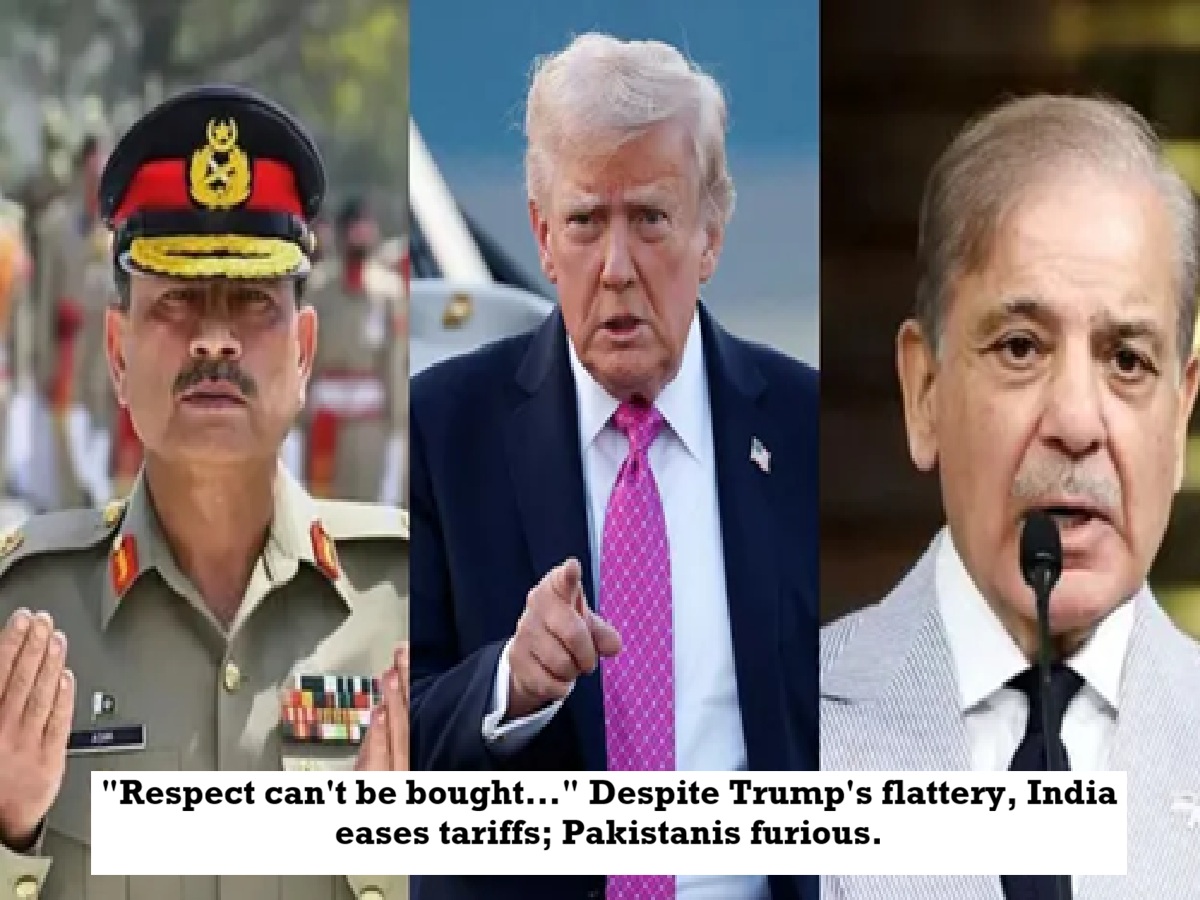
News Topical, Digital Desk : India has signed a trade deal with the United States. Following this agreement, India will now have to pay a reduced tariff on US exports from 50 percent to 18 percent. The agreement was reached on February 2nd. This is being considered a diplomatic victory for India.
Pakistan , on the other hand, is facing a 19 percent tariff , despite Islamabad's continued engagement and lobbying with the Trump administration.
The news has sparked anger and disappointment in Pakistan. People are saying that despite months of flattery, a Nobel Peace Prize nomination, and the development of personal relationships, Pakistan received a higher tariff deal than India. People on social media are writing, "Respect can't be bought."
Criticisms are mounting on social media
Criticism of the agreement has intensified on social media in Pakistan, with people shocked by Trump's posts, where he shared photos of India Gate and the cover of India Today magazine.
Prime Minister Narendra Modi and Trump are seen together in the picture. He then announced an 18 percent tariff on Indian goods, one percent lower than Pakistan's 19 percent.
Former PTI minister Hammad Azhar called it a failure of strategy. He wrote on Instagram, "Foreign policy in the 21st century isn't driven by photo ops or personal relationships. It's based on economic strength, tariffs, and market access. India's recent agreements with the EU and the US prove this. Flattery and photo ops are useless."
Also read: Pakistan's Punjab province to celebrate Spring Festival after two decades, public holidays announced
India's diplomacy vs Pakistan's lobbying
According to the agreement, the US has imposed an 18 percent tariff on Indian exports. Pakistan faces a 19 percent tariff, despite relentless lobbying in Washington by Prime Minister Shahbaz Sharif and Army Chief General Asim Munir. Trump removed penalty tariffs and reduced reciprocal tariffs in the deal with India, conditional on India stopping Russian oil purchases.
The Pakistani opposition has capitalized on this. PTI leaders say India negotiated with "strategic autonomy," while the Pakistani government relied on personal meetings and returned with a weak deal.
Journalist Asad Toor warned that the tariff decision would further worsen Pakistan's economic difficulties , citing falling exports, dwindling foreign investment, and the country's near-absolute loss of bargaining power.
Criticism of Trump's business mind
Digital creator Wajahat Khan wrote, "Trump is a businessman. He saw a manager and a shopkeeper and gave them a shopkeeper's deal. India came as a partner and took home an 18 percent reward. This is the price of a spineless government without a mandate."
Journalist Imran Riaz Khan criticized the lobbying, saying, "The 'salesman-in-chief' strategy has failed. You can give Balochistan's minerals in a wooden box, but you can't buy respect."
People in Pakistan believe that Trump saw India as a partner, while Pakistan was seen as merely a lobbyist. India resisted pressure from Trump and secured a better deal.
Economic benefits for India
India has signed the "mother of all trade deals" with the European Union and now this agreement with the United States. Experts estimate that Indian exports could increase by $150 billion over the next ten years . This will provide a major boost to the textile, pharmaceutical, IT, and manufacturing sectors.
Read More: 'Peace talks with America are just an extension of the war,' says Iranian MP Azizi
--Advertisement--