desk
desk Share
Share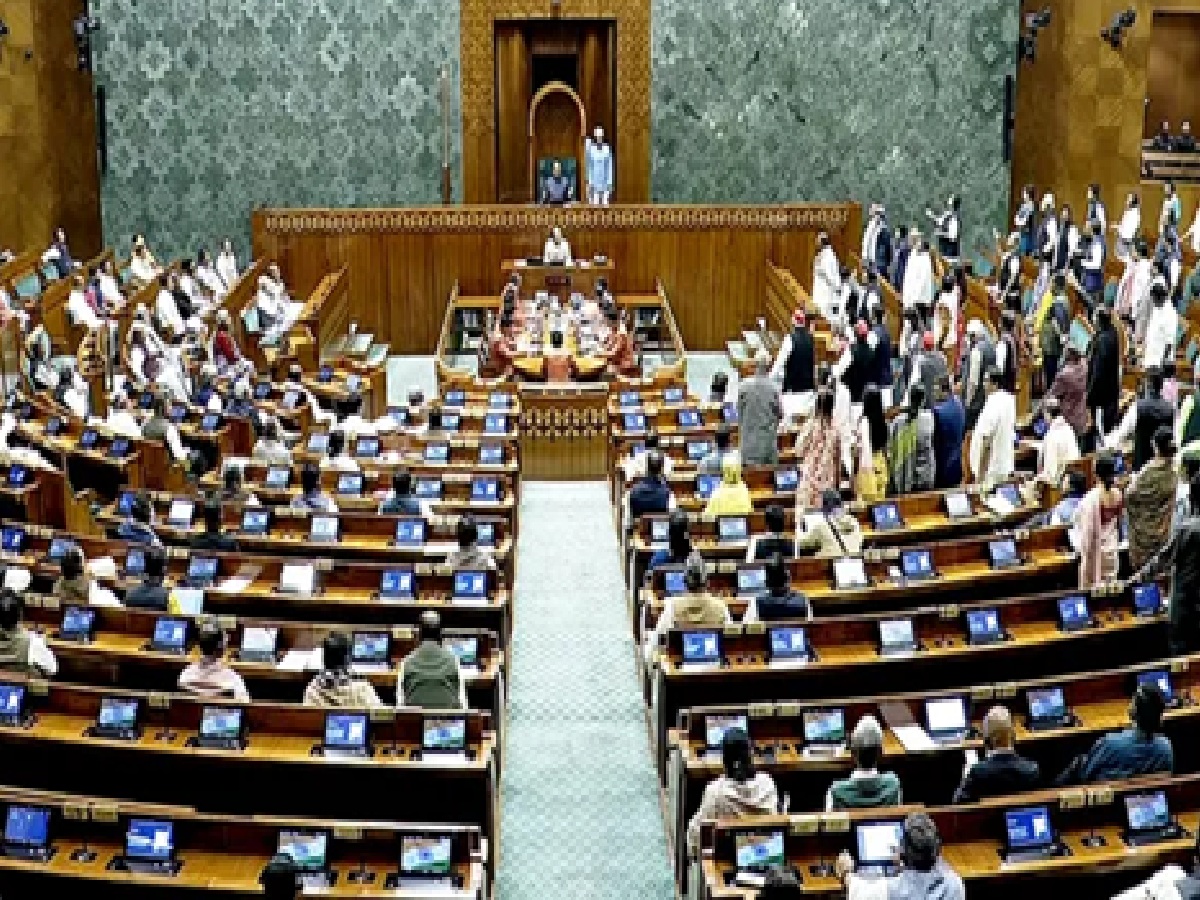
News Topical, Digital Desk : The most fundamental principle of democracy is equal representation. The constitutional concept of "one person, one vote" embodies the idea that every citizen's vote has equal value. However, when disparities in the population of constituencies increase, this principle begins to weaken.
In such a situation, the process of delimitation becomes absolutely necessary. If one area has a large number of voters and another has a very small number, the votes of the less populous area become relatively more influential. This situation is against the principle of democratic equality.
Recently, in the Lok Sabha, Home Minister Amit Shah, while stressing on rationalizing the number of voters in each constituency, had said that MPs from seats with more voters cannot fulfill the aspirations of the voters.
Disparity in the number of voters
Urging the opposition to support the Women's Reservation Bill, he said the delimitation process is necessary to rationalise the number of voters in each constituency as only then will the idea of "one person, one vote" be implemented in the true sense.
Currently, there is a huge disparity in the number of voters in different parliamentary constituencies. On one hand, there is the Malkajgiri constituency in Telangana, which has over 3.78 million voters. Ghaziabad has nearly 3 million voters electing its MP. On the other hand, Lakshadweep has only 58,000 voters. Therefore, delimitation is a practical necessity.
Delimitation means redrawing the boundaries of a Lok Sabha seat. Once a Lok Sabha seat is redrawn, the size and dimensions of assembly seats also change. A single Lok Sabha seat encompasses at least five assembly constituencies.
The government argues that delimitation is also necessary to implement women's reservations. The limit for Lok Sabha seats was set at 550 in 1976. In 1971, India's population was 540 million. Today, it is 1.4 billion. Therefore, increasing the number of Lok Sabha seats to 850 is essential. This will ensure fair representation of the people in Parliament.
Country's largest parliamentary constituencySeat name---------------Voters
Malkajgiri (Telangana) 37.80 lakh
Bengaluru North (Karnataka) 32.15 lakh
Ghaziabad (Uttar Pradesh) 29.48 lakh
Gautam Buddha Nagar (Uttar Pradesh) 26.81 lakh
West Delhi 25.92 lakh
Name of the smallest parliamentary constituency in the country---------------Voters
Lakshadweep 58 thousand
Daman and Diu 1.34 lakh
Ladakh 1.90 lakh
Dadra and Nagar Haveli 2.83 lakh
Andaman and Nicobar 3.15 lakh
This is based on data from the 2024 Lok Sabha elections. These figures are subject to change after the Special Intensive Revision (SIR) of the electoral rolls.
Read More: There is a tussle over delimitation, will population be the only basis or will the rules change.
--Advertisement--