desk
desk Share
Share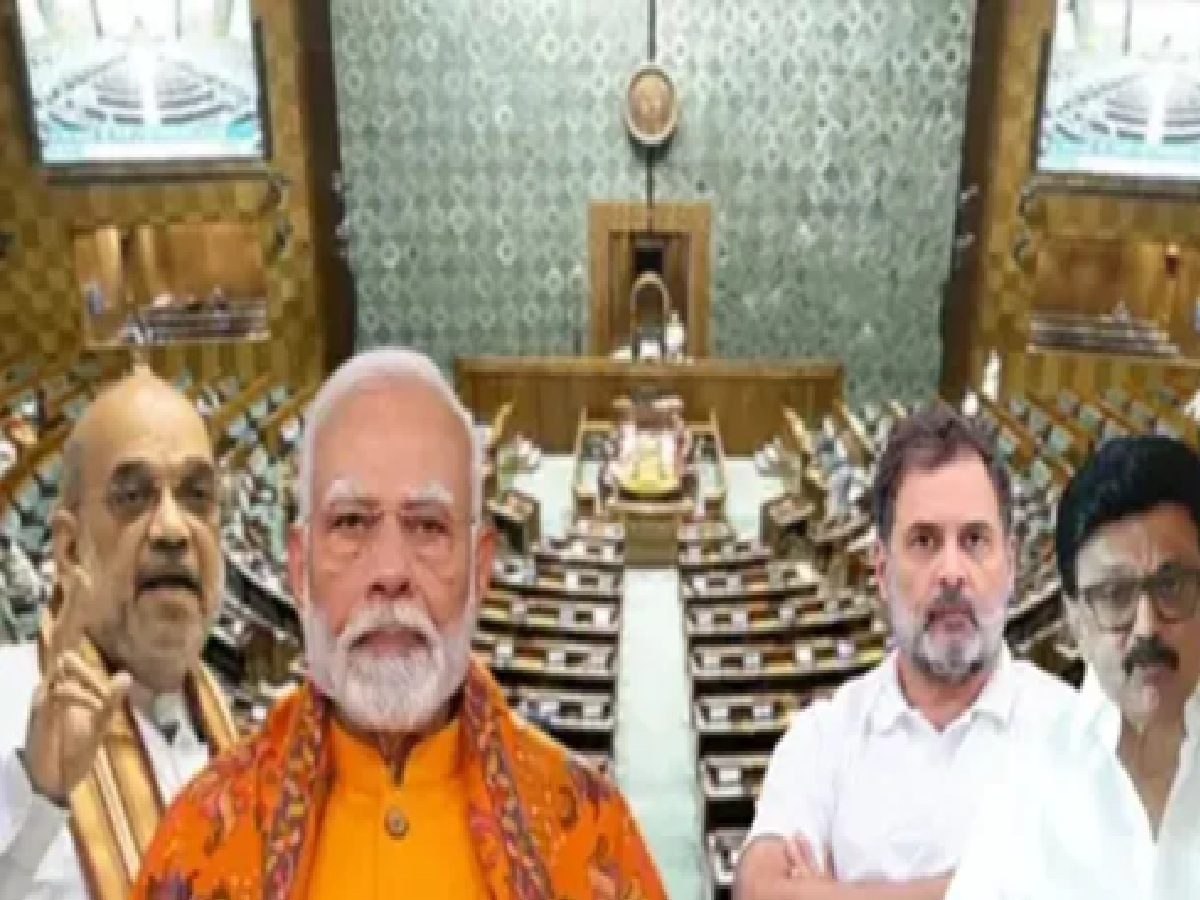
News Topical, Digital Desk : The debate over the delimitation of Lok Sabha seats is heated. The Constitution mandates that Lok Sabha seats be delimited based on population. However, several political parties and some states are opposing delimitation based solely on population, citing differing population growth rates.
Legal experts agree that delimitation of Lok Sabha seats should be based on population, and the Constitution recognizes only population as a factor. However, some have a different opinion, arguing that population can be a factor, but not the only factor.
Other circumstances and aspects must also be considered. The composition of seats in the Lok Sabha, representation, and census are provided for in Articles 81 and 82 of the Constitution. The essence of this is that the distribution of seats will be based on population, and this will happen after every census.
Delimitation on the basis of population
The situation changed after 1976, when seats were frozen. Retired Allahabad High Court judge S.R. Singh says, "What other basis can there be other than population? Delimitation should be based solely on population. And under no circumstances should delimitation be stopped."
Delimitation should be conducted periodically. In fact, the Indian Constitution considers every vote equal. Many believe that something other than population influences the value of a vote. Because every MP elected to the Lok Sabha has the same value, even though the population of their constituency can vary significantly.
This means the population isn't truly represented. Another retired High Court judge also says that delimitation should be done according to the provisions laid down in the Constitution. Any changes will require constitutional amendments, otherwise, there's no going back.
However, retired Chief Justice of the Uttarakhand High Court, R.S. Chauhan, has a different opinion. He says that the situation has changed. Now we need to look at this issue from a new perspective. If population alone is used as the basis, then states that have implemented population control plans and made progress will lose seats and suffer losses.
Senior Supreme Court lawyer CS Vaidyanathan argues that a state's GDP growth and tax contribution, i.e., economic progress, should be the basis for delimitation. However, senior lawyer Vikas Pahwa disagrees with Vaidyanathan. Pahwa argues that economic contribution, i.e., simply earning and paying taxes, cannot be the basis.
What questions are being raised?
Because if that happens, only the earning members will rule the country, and then where is democracy? Many experts agree with Pahwa. They believe that a policy for population control should be formulated and properly implemented. Similarly, economic development leads to prosperity and prosperity of states. However, representation cannot be linked to economic status.
Just as the framers of our Constitution did not make minimum education a criterion for election, the vote of an educated and wealthy voter cannot be more significant than that of a poor voter. If this were to happen, democracy would be in danger. However, the recent proposal to increase the number of seats for all in a federal structure was correct. However, the question of representation still remains.
Read More: Complaint filed against Prakash Raj for hurting religious sentiments of Hindus
--Advertisement--