desk
desk Share
Share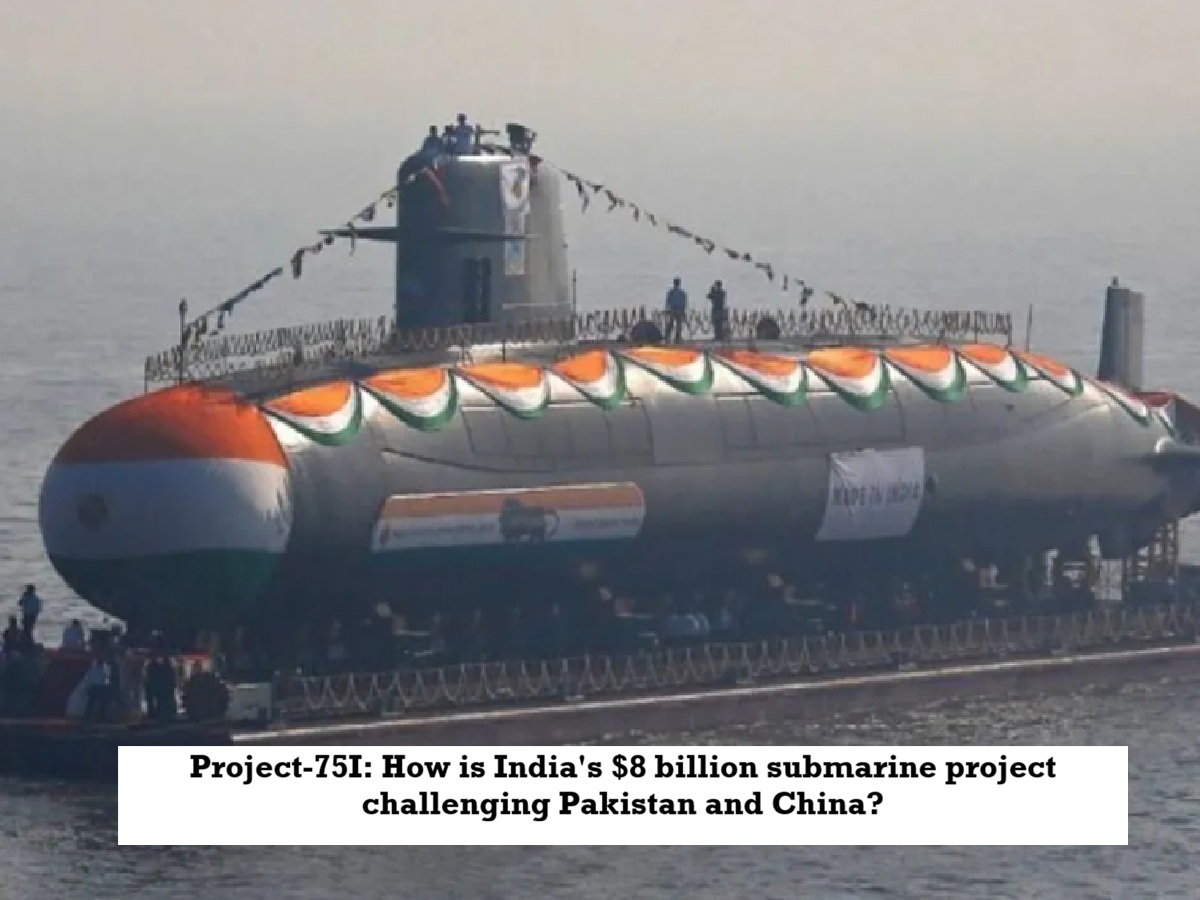
News Topical, Digital Desk : As German Chancellor Friedrich Merz began his visit to India on Monday amid a volatile regional and global security environment, discussions surrounding Project-75I gained new momentum as the Indian Navy plans to induct six next-generation conventional submarines equipped with air-independent propulsion.
More than five decades after Indian naval attacks crippled Karachi during the 1971 war, underwater power is once again at the center of New Delhi's strategic thinking, reflecting lessons from history and renewed tensions with Pakistan following recent crises, as well as China's growing underwater presence in the Indian Ocean.
What is Project-75I and why is it important?
Project-75I is a flagship programme of the Indian Navy to build six modern diesel-electric submarines equipped with fuel-cell-based air-independent propulsion, advanced sensors, torpedoes and missile systems.
According to a PIB statement, the Ministry of Defence had issued a Request for Proposal for the project in July 2021 under the Strategic Partnership Model and described it as a key pillar of the government's Make in India campaign.
The project envisions indigenous construction, long-term technology transfer, and the creation of an ecosystem for domestic submarine development. The estimated cost at the RFP stage was over ₹40,000 crore, while current estimates suggest the final contract value, based on configuration and lifecycle support, will be closer to $8 billion, or approximately ₹72,000 crore.
The project addresses a major gap in the Indian Navy: its conventional submarine fleet is aging, while China and Pakistan are increasingly engaging in underwater activities in the Indian Ocean and along India's sea lanes.
Why was the German Type-214NG chosen?
According to defense sources, the Indian Navy has selected the German Type-214 next-generation submarine, overtaking the S-80 Plus submarine offered by Spain's Navantia. The decision was primarily due to the maturity of the German fuel-cell-based AIP system, its acoustic stealth, and its low lifecycle risk.
AIP allows submarines to remain underwater for weeks without surfacing or snorkeling. This reduces the risk of detection. This capability becomes crucial in enemy territory. The Type-214's AIP technology is considered largely operationally proven, while competing systems are still undergoing validation.
Reliability and survivability often matter more than novelty in underwater warfare, and this is likely why the Navy chose it.
Make in India is the most important
Under the proposed framework, all six submarines will be built in India at MDL, with TKMS providing design authority, engineering expertise, and technical consultancy. Indigenous content is expected to start at approximately 45 percent and increase to approximately 60 percent by the final boat, consistent with the goals of Atmanirbhar Bharat.
TKMS and MDL signed a Memorandum of Understanding (MoU) in June last year to jointly pursue this project. MDL's prior experience building Scorpene-class submarines under Project 75 strengthens its claim as an Indian strategic partner.
The logic of stopping Pakistan
India's emphasis on underwater capabilities is rooted in history. During the 1971 war, the Indian Navy's attacks on Karachi port crippled Pakistan's maritime logistics and fuel supplies. This event demonstrated how control of the sea can influence outcomes on land.
The importance of that lesson was again evident during Operation Sindoor in May 2025, when tensions with Pakistan escalated following a major terrorist attack. Between May 8 and 11, India put its navy on high alert, and Karachi once again emerged as Pakistan's biggest weakness.
Karachi handles most of Pakistan's maritime trade and energy imports. India's ability to threaten without firing a shot highlights the deterrent potential of its naval and underwater forces. New submarines with the ability to stay underwater for extended periods will leave Pakistan unmoved.
China's growing underwater dominance
Besides Pakistan, China poses a significant maritime challenge to India. The People's Liberation Army Navy has a rapidly expanding submarine fleet, including nuclear-powered platforms, which are being deployed in Indian waters.
Chinese submarines have docked at regional ports and patrolled close to the Indian maritime border, while Pakistan is also upgrading its submarine capabilities with Chinese assistance. This dual challenge for India has made restoring conventional submarine power an urgent priority.
Project-75I is designed to address this gap by providing India with a durable and persistent underwater capability suitable for monitoring choke points, tracking enemy submarines and conducting maritime interdiction operations.
Read More: Complaint filed against Prakash Raj for hurting religious sentiments of Hindus
--Advertisement--