desk
desk Share
Share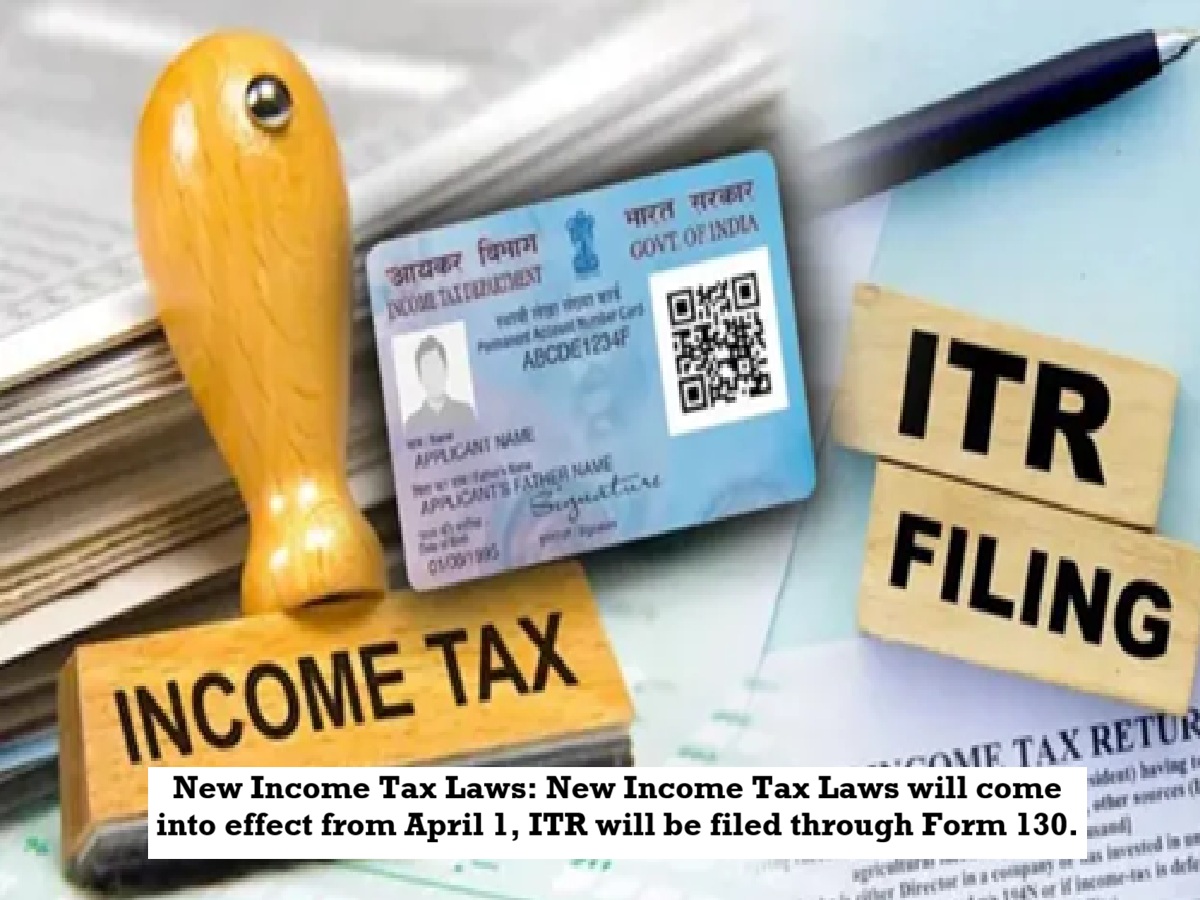
News Topical, Digital Desk : Many income tax rules are set to change from April 1st. Form 16 will no longer be available for filing income taxes for the financial year 2026-27. Employers will issue Form 130 to their employees. Banks will also issue Form 130 to pensioners every year. Form 130 will be similar to Form 16, consisting of three parts: A, B, and C.
Part A will contain detailed employer information, employee bank details, and other relevant information. Part B will contain information about payments credited to the bank and the monthly tax deducted at source (TDS). Part C will be primarily for salaried individuals. This part will contain information such as a complete salary breakdown, taxable income, any exemptions, and total tax paid.
Part C will be added to a pensioner's Form 130 only if their pension is subject to income tax. The bank to which the pensioner's pension is deposited will issue Form 130. Form 130 will be issued by June 15th of each year. If Form 130 contains any incorrect information, the employer will need to file Form 138 to correct it. Form 130 will not be required to be attached when filing income tax returns.
Exchanges selling crypto currency will have to deduct TDS
In the financial year beginning April 1st, exchanges selling cryptocurrencies will be required to deduct TDS on them. This will provide the government with complete information about those purchasing crypto. Complete information about crypto assets will be required when filing income tax returns for the 2026-27 fiscal year. Currently, individuals holding crypto assets or any virtual digital asset do not necessarily provide this information in their returns. A penalty has been imposed on exchanges that fail to deduct TDS.
The rules for taking gold loans are changing.
Gold loan rules are set to change starting April 1st. The RBI issued a directive in this regard last year, which is being implemented in the new financial year. This rule takes into account customer interests. Those taking gold loans up to ₹2.5 lakh will now have to provide gold worth less than before. Currently, the loan-to-value rate for loans up to ₹2.5 lakh is 75 percent, which has now been increased to 85 percent.
This means that the maximum loan amount for gold worth ₹100 is currently ₹75, which will now be reduced to ₹85. If a customer has taken a loan of ₹80 instead of ₹85, they can take an additional ₹5 loan against the same amount of gold if needed. Customers must return their pledged gold within seven days of repaying the full loan amount, otherwise they will be charged a penalty of ₹5,000 per day.
TDS will be deducted on interest exceeding Rs 50,000 in a year.
The Income Tax Department said on Monday that "banking companies" covered under the provisions of the Banking Regulation Act, 1949, will deduct TDS on interest income exceeding a prescribed limit. Under the Income Tax Act, if interest income from bank and post office deposits exceeds ₹50,000 in a financial year, TDS will be deducted. For senior citizens, this limit is more than ₹100,000.
These changes will take place from April 1
- Withdrawals made through UPI from HDFC Bank ATMs will be considered part of the free transaction limits.
- To obtain a new PAN, you only need to provide your Aadhaar. However, for verification of your date of birth, you will also need to provide documents like your Class 10 certificate or passport.
- The annual FASTag of the National Highways Authority of India will now be available for Rs 3,075 instead of Rs 3,000, after becoming costlier by Rs 75.
- HDFC Bank ATM withdrawals are available for free three times in metro cities and five times in non-metro cities. After that, a fixed fee will apply. Certain Punjab National Bank debit cards will only allow daily withdrawals of up to ₹50,000.
- Refunds will be available only if confirmed tickets are cancelled eight hours before the train's departure. No refunds will be available for cancellations after that date.
--Advertisement--