desk
desk Share
Share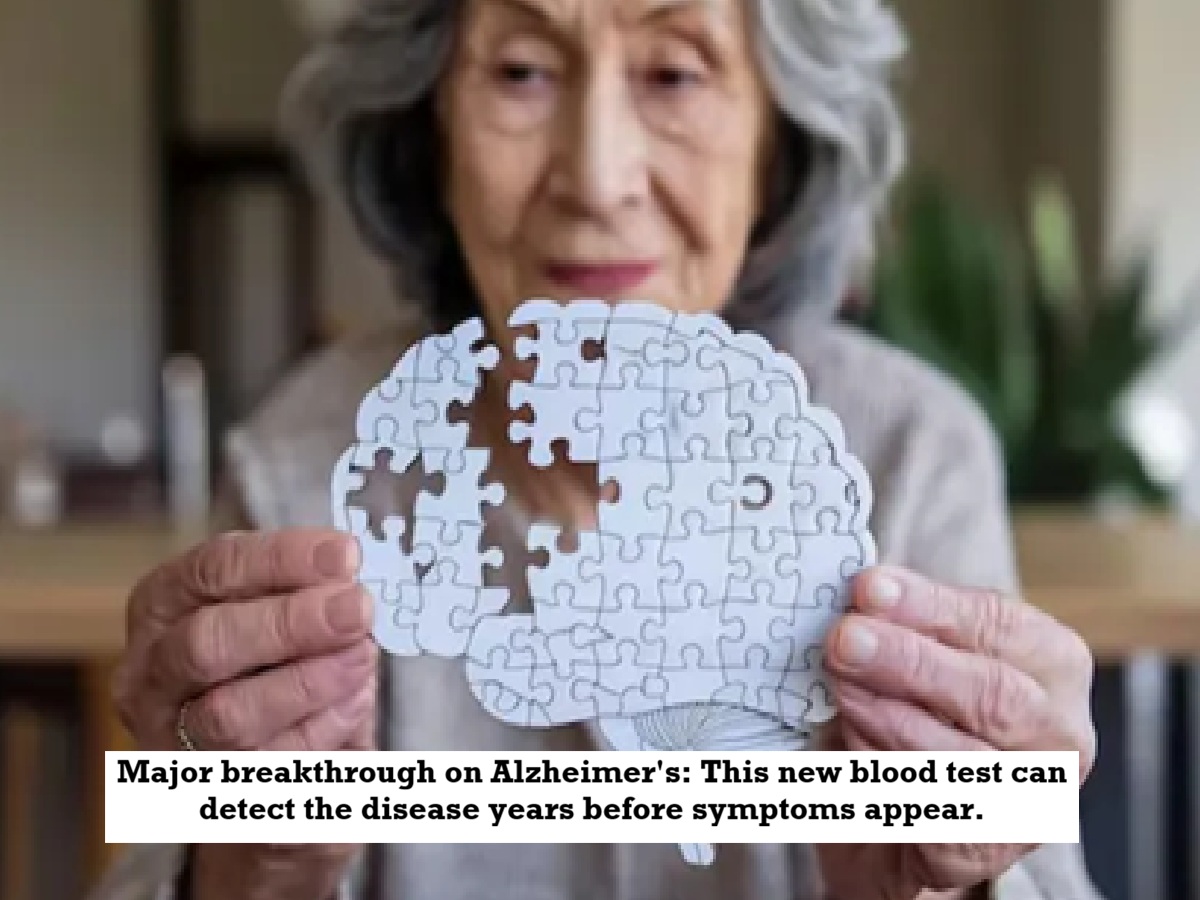
News Topical, Digital Desk : Alzheimer's disease is a mental illness that gradually impairs memory, thinking ability and daily functions. It affects older adults over the age of 65, and is characterized by abnormal protein deposits (plaques and tangles) in the brain that lead to cell death.
The disease can be detected before symptoms appear
Structural and quantitative changes in specific proteins in blood plasma are important indicators for the early diagnosis of Alzheimer's disease. These include increased levels of complement 4A and fibrinogen Y, while decreased levels of apolipoprotein A-1, α-2-HS-glycoprotein, and afamin, which reflect inflammation and neurodegeneration in the brain. These changes may indicate neuronal damage and inflammation years before symptoms appear.
A new type of blood sample that analyzes the folding of amino acids rather than their quantity may be able to detect early signs. Analysis of blood plasma samples from more than 500 individuals revealed that structural variations in three proteins—one involved in immune signaling, another in protein folding, and a third that transports fats in the bloodstream—are strongly linked to Alzheimer's disease, according to findings published in the journal Nature Aging.
Accurate way to detect Alzheimer's
The researchers, including scientists from The Scripps Research Institute in the US, said structural differences in plasma proteins help accurately distinguish between cognitively normal individuals and those with Alzheimer's and mild cognitive impairment. They said this method could eventually lead to earlier diagnosis and treatment.
Alzheimer's disease is currently diagnosed by measuring amyloid plaques and tau tangles, which form due to the accumulation of amyloid and tau proteins in the brain, blood, or spinal fluid. However, researchers said the neurodegenerative condition is increasingly suspected to involve a widespread failure of proteostasis, the system responsible for correctly folding proteins and removing damaged proteins.
Several neurodegenerative diseases are caused by changes in protein structure.
This system becomes less effective with aging, making proteins more likely to misfold during their formation or rearrangement. Senior author Zach Yates, a professor at The Scripps Research Institute, said that many neurodegenerative diseases are driven by changes in protein structure. The question was, are there structural changes in specific proteins that could be useful as prognostic markers?
The researchers proposed that if proteostasis is disrupted in the brain, similar structural changes may appear in proteins circulating in the blood. Plasma samples from participants were divided into three groups: cognitively impaired adults, individuals with mild cognitive impairment, and patients diagnosed with Alzheimer's.
Structural variations of three proteins correlate with disease
The analysis determined the extent to which specific regions in the three-dimensional amino acid chain were exposed or suppressed, reflecting changes in their structure. Machine learning, a form of artificial intelligence, was used to identify patterns associated with the stage of the disease. As Alzheimer's disease progressed, the structure of specific blood proteins became less "open," with structural changes in three proteins showing the strongest association with the disease.
Read More: IBS Problem: Soluble fiber is effective in treating stomach problems like IBS.
--Advertisement--