desk
desk Share
Share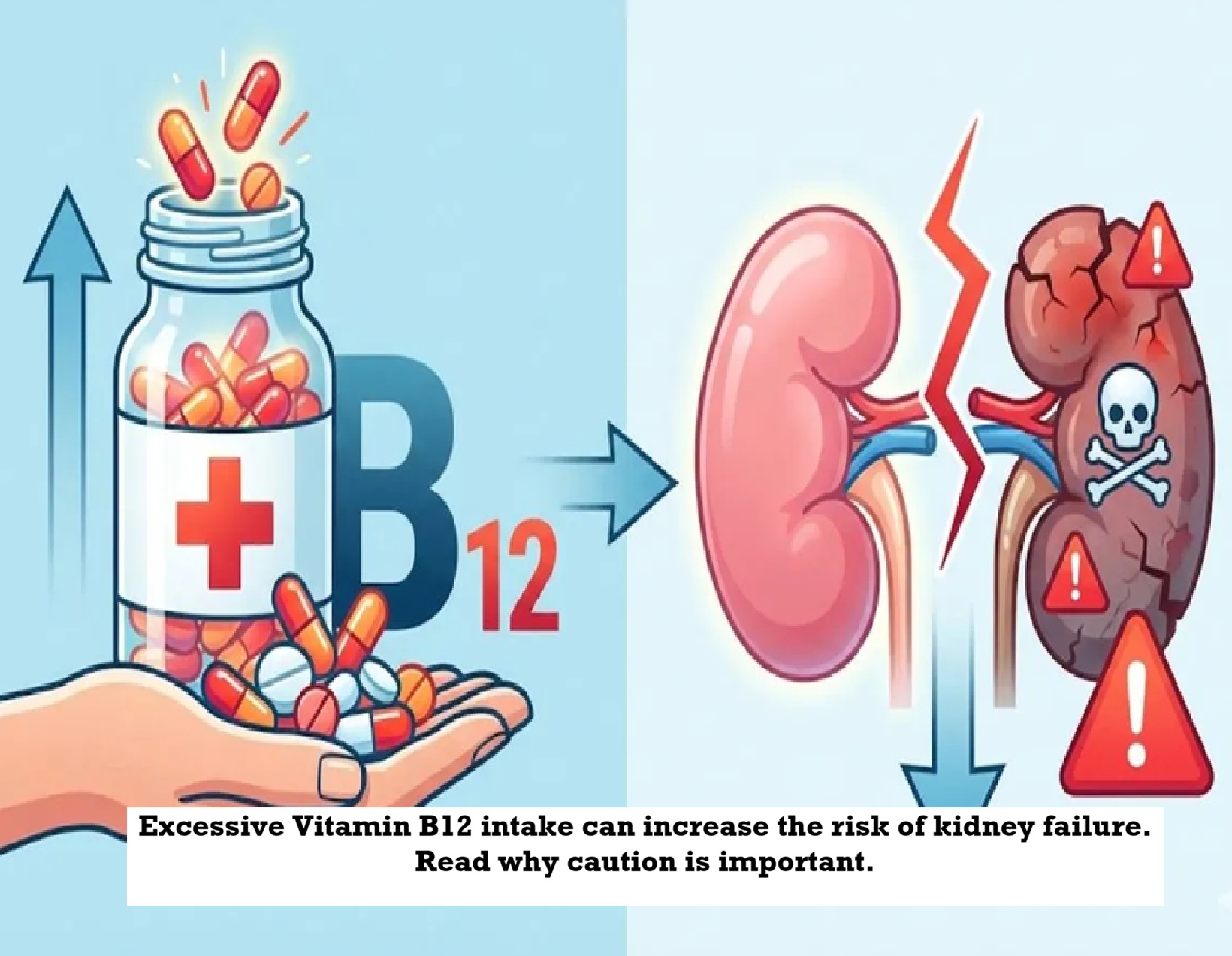
News Topical, Digital Desk : These days, Vitamin B12 is seen as a "magic pill." Whether it's to relieve fatigue, improve memory, or simply maintain a healthy body, people are blindly resorting to supplements and injections. But have you ever considered that the vitamin you consider a boon to health could be an invisible burden on your body's most loyal "cleaner," your kidneys? Before joining this supplement frenzy, be sure to know these five things about protecting your kidneys.
Kidneys and B12 are closely related
A study conducted in Canada has shown surprising results. In this study, diabetic patients suffering from kidney disease were given heavy doses of B12 and B6. The result was that their kidney function declined faster than others. This doesn't mean B12 is bad for everyone, but it should be a warning sign for those with pre-existing kidney problem
Overdose is a matter of concern
Generally, our body needs only 2.4 micrograms (mcg) of Vitamin B12 daily, but its quantity in the supplements available in the market ranges from 500 mcg to 1000 mcg.
A healthy body excretes excess vitamins through urine, but in people with weakened kidneys, this "flush-out" system doesn't work properly. As a result, this nutrient accumulates in the blood, which is detrimental to health. It's always best to get a blood test before taking supplements.
Over-the-counter B12 injections
Getting B12 injections to relieve fatigue or achieve glowing skin has become a trend these days. People are getting them without medical advice. Keep in mind that the injections reach your bloodstream directly and bypass the digestive system. If your kidneys are already stressed due to aging, diabetes, or high blood pressure, this heavy dose of injections can put a significant strain on them.
Know these important things before choosing a supplement
After the age of 50, the body's ability to absorb vitamin B12 from food begins to decline. Kidney function also naturally declines at this age. Therefore, older adults should carefully consider their supplement dosage. It may be safer to choose low-dose tablets or fortified foods, as advised by a doctor, rather than heavy pills.
Is it okay to take Vitamin C and B12 together?
Sometimes we are taking medications for other conditions that interact with B12 and have different effects:
- Diabetes and acidity medications: Medications like metformin and antacids affect B12 levels in the body.
- Vitamin C: Taking large amounts of vitamin C along with vitamin B12 can interfere with B12 absorption. Avoid combining pills without thinking.
Vitamin B12 is essential for health, but the "more is better" formula doesn't work here. Always consider your medications, diet, and kidney health before starting any new supplement.
--Advertisement--