desk
desk Share
Share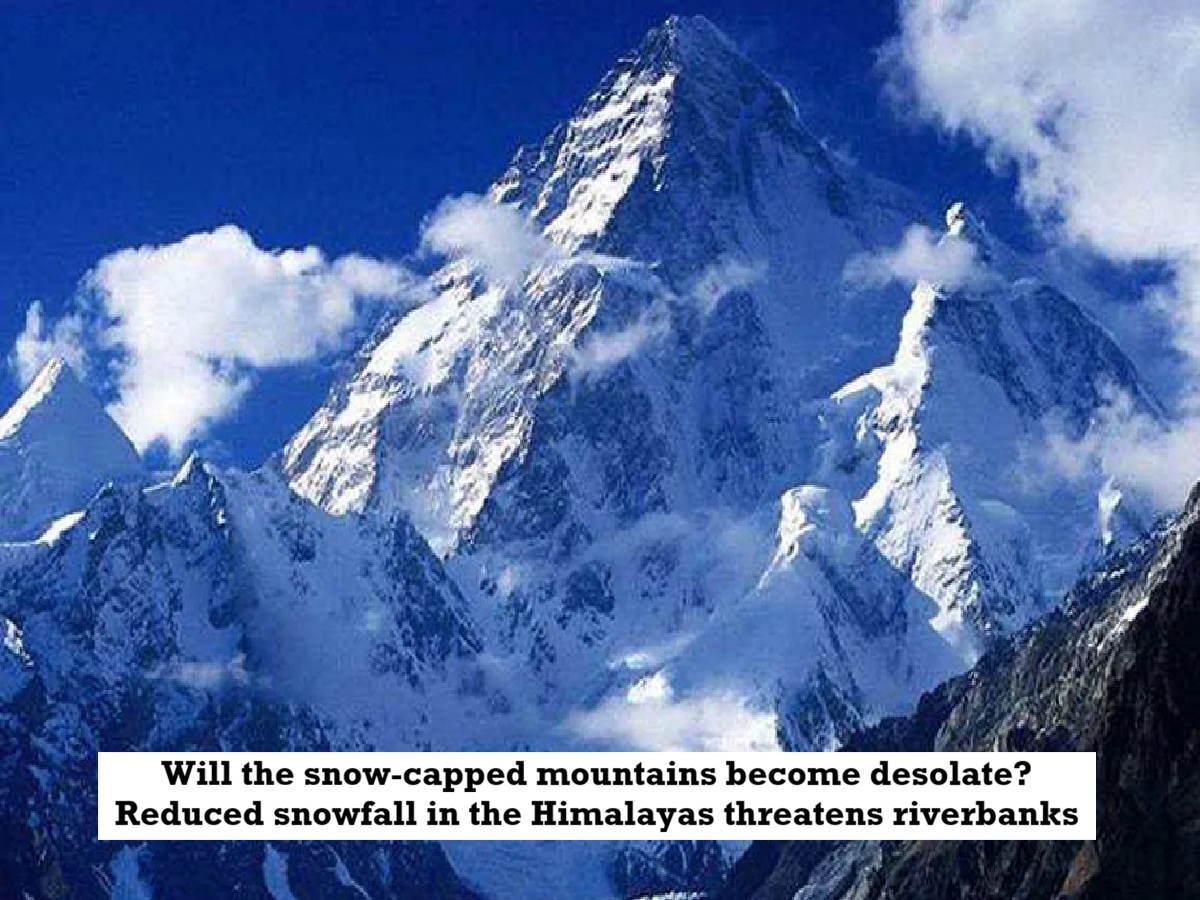
News Topical, Digital Desk : Climate change has become a global reality, one that is impossible to ignore. The effects of rising temperatures are clearly visible on the weather. Late winters, melting mountain snow, and rising sea levels are all screaming signs of impending disaster. Meanwhile, shocking data from the Hindu Kush Himalayas has emerged, once again confirming the existence of climate change.
The International Centre for Integrated Mountain Development (ICIMOD) has released satellite data of the Hindu Kush Mountains. According to this data, this year's snowfall in the Himalayas has been the lowest in the last two decades. According to the report, this year's snow season in the Hindu Kush Himalayas has been the lowest in the last 23 years.
IPCC had warned
Previously, the Intergovernmental Panel on Climate Change (IPCC) also issued a warning about rising temperatures in its report. The IPCC claimed that rising global temperatures could shorten the snowfall season. Snowfall will occur for shorter periods in high altitudes, and the snow-capped Himalayan peaks will gradually appear rocky.
Asia's 'Water Tower'
The Hindu Kush, known as Asia's "water tower," is the source of many major rivers. These rivers contribute to the lush greenery of the plains. Consequently, reduced snowfall and rapidly melting snow could be a warning sign for everyone.
Hindu-Kush Himalaya
The Hindu Kush Himalayas are a mountain range stretching approximately 800 kilometers across Afghanistan, extending into northern Pakistan and Tajikistan. The Himalayas are also considered an extension of the Hindu Kush. These mountains contain thousands of large glaciers, which are the main sources of many major rivers, including the Ganges, Indus, and Brahmaputra.
Read More: Complaint filed against Prakash Raj for hurting religious sentiments of Hindus
--Advertisement--