desk
desk Share
Share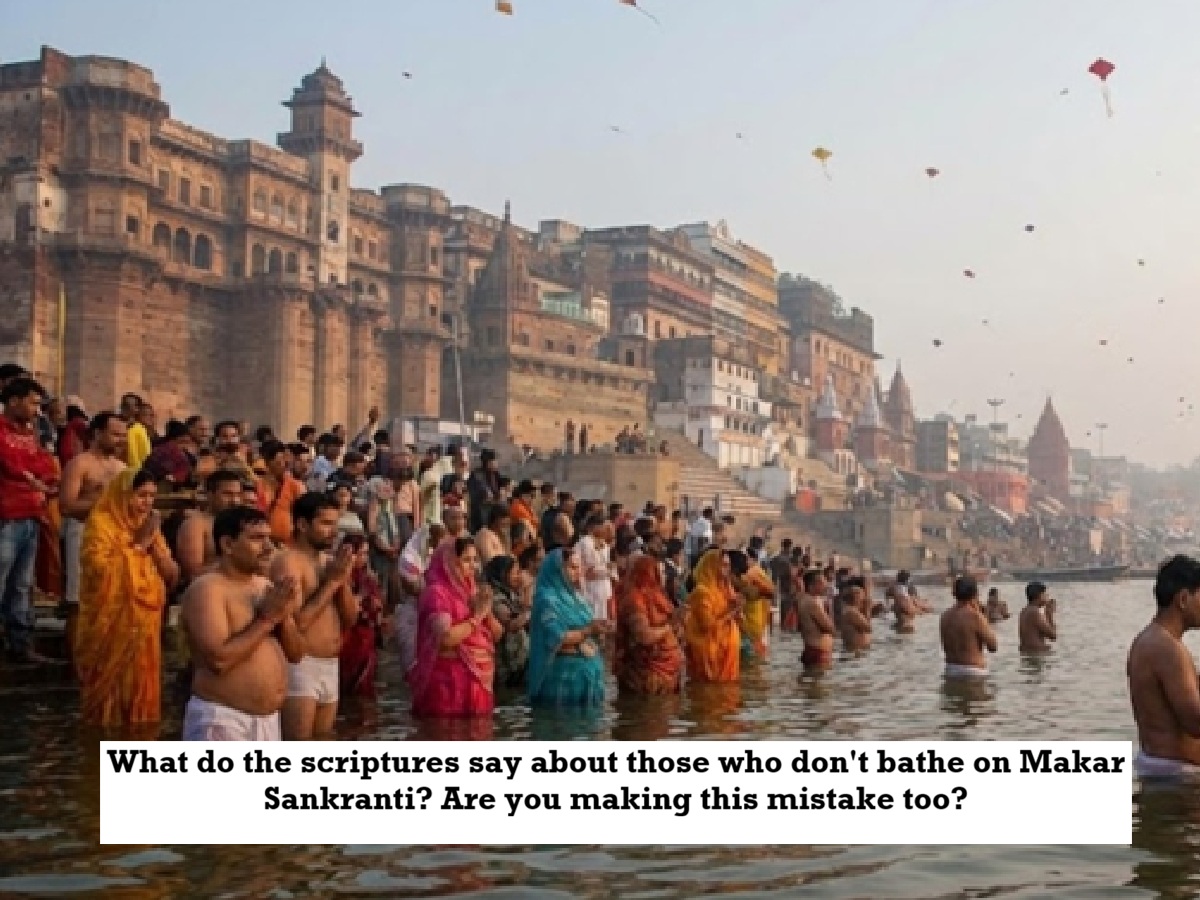
News Topical, Digital Desk : The festival of Makar Sankranti is not just a celebration in Indian culture, but also a symbol of purification and the infusion of new energy. On this day, the Sun God moves from Sagittarius to Capricorn, a period known as Surya Uttarayan. The scriptures emphasize the importance of bathing in a holy river and donating to charity on this special day.
But have you ever wondered why bathing on Makar Sankranti is considered mandatory? Or, what happens if you don't bathe at home and eat without taking a holy bath? Let's find out what the scriptures say about someone who doesn't bathe on this day. We'll also explain the religious and practical aspects behind this tradition.
Importance of bathing on Makar Sankranti
According to Hindu scriptures, bathing on Makar Sankranti is believed to free one from the sins of seven lifetimes. The sun's rays radiate especially positive energy on this day. According to mythological beliefs, on this day, Mother Ganga followed King Bhagiratha through Kapil Muni's ashram and reached the Ganges Sea. Therefore, bathing in the Ganges or any holy body of water on this day bestows eternal virtue.
What do the scriptures say about not taking bath?
Some strict things have also been said in the scriptures regarding bathing on Makar Sankranti :
Laziness and poverty: According to beliefs, a person who does not bathe on this day without a valid reason (such as illness) may feel mentally lethargic and physically impure for the rest of the year. This is considered a symbol of indiscipline.
Religious belief: Some scriptures symbolically state that those who avoid the holy bath on this day may be "sick" or "poor" in their next life. This means that the person loses the opportunity for spiritual advancement.
Negative Energy: Makar Sankranti is a time of transition. Nature changes during this time. Those who do not practice bathing and purification continue to carry old negative energy.
Who is exempt?
The scriptures are also quite lenient. If a person is very ill, elderly, or has a very young child, the rules are flexible. Such individuals can bathe at home by mixing a little Ganga water and sesame seeds in lukewarm water. If bathing with water is not possible, simply chanting mantras and lightly sprinkling water on the body is considered sufficient for purification.
--Advertisement--