desk
desk Share
Share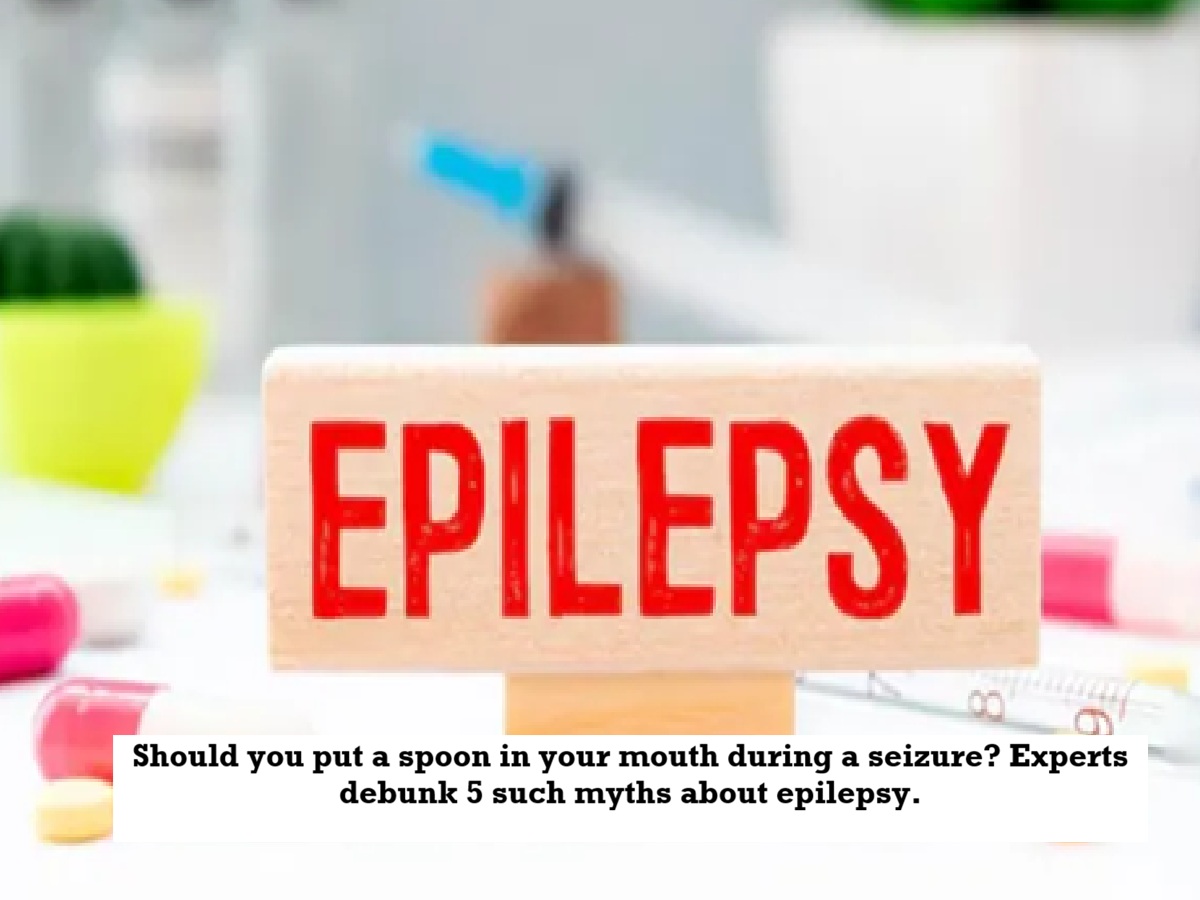
News Topical, Digital Desk : Epilepsy is a condition that still has a lot of misinformation circulating in society. Due to this lack of awareness, people often make mistakes that can be fatal for the patient instead of providing proper assistance during a seizure.
Myth 1- To prevent tongue cuts, a spoon, wallet or piece of wood should be placed in the mouth.
- Truth: This is one of the most dangerous myths. Never put anything in a patient's mouth during a seizure. Doing so could break a patient's teeth, injure their jaw, or block their airway, increasing the risk of suffocation. People often fear that the patient will swallow their tongue, but this is unlikely. Even a minor injury to the tongue is not as dangerous as obstruction of breathing caused by a foreign object.
- What to do: When the convulsions stop, gently turn the person so that the airway remains open.
Myth 2- To stop the shaking, one should hold on tightly.
- Truth: Forcibly grabbing or restraining someone during a seizure is very risky. In fact, restraining does not stop the seizure, but rather increases the risk of muscle strain, fractures, or dislocations.
- What to do: Remove sharp or hard objects from the vicinity, place a soft cloth under the head and let the seizure subside on its own.
Myth 3: All seizures involve the patient falling to the ground and shaking violently.
- The truth: This is often portrayed in movies, but the reality is different. Dr. Agarwal explains that most seizures are quite subtle, such as sudden staring, lip biting, sudden confusion, or strange movements of the arms and legs. People often go unrecognized, leading to delays in treatment. Timely identification and medical advice are crucial.
Myth 4- Flashing lights trigger seizures in every epileptic patient.
- Truth: Photosensitive epilepsy occurs in less than 5% of patients. According to Dr. Agarwal, for most patients, triggers include sleep deprivation, medication withdrawal, stress, infections, or alcohol. Therefore, it's not necessary for every patient to avoid screens or light without consulting a doctor.
Myth 5- Epilepsy is a mental illness or intellectual disability.
- Truth: Epilepsy is a neurological condition, not a psychiatric illness. It has no direct relationship to a person's intelligence or mental capacity. Millions of people with epilepsy around the world live normal and independent lives as successful students, doctors, professionals, and parents.
Read More: Can drinking fruit juice increase blood sugar? Learn the truth.
--Advertisement--