desk
desk Share
Share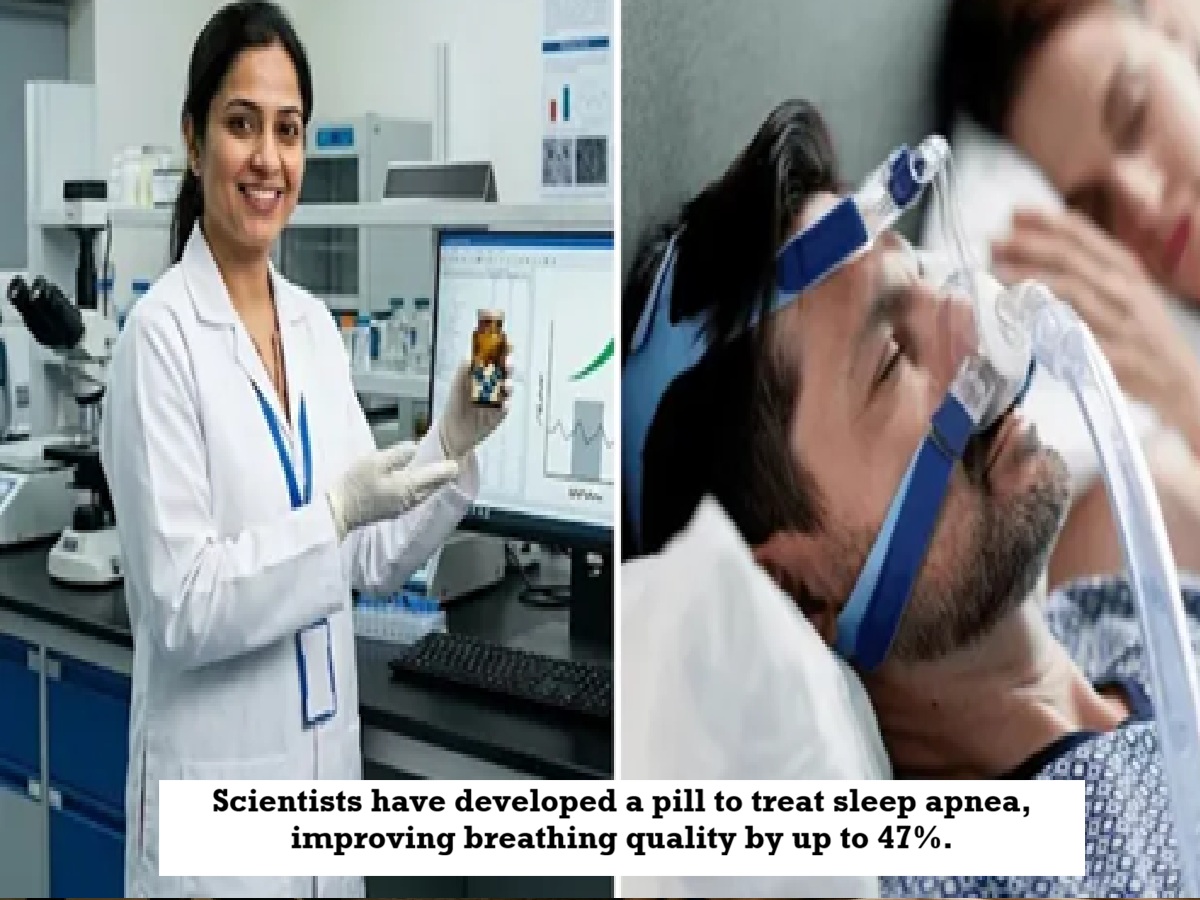
News Topical, Digital Desk : Do you or someone you know suffer from shortness of breath or loud snoring while sleeping? If so, this news may be a great relief for you. Scientists have discovered a new medication for the millions of people suffering from obstructive sleep apnea. This medication could prove to be a boon for those who find it difficult to wear a bulky CPAP machine mask while sleeping.
What is sleep apnea and why is it dangerous?
Obstructive sleep apnea is a condition in which the throat muscles relax completely while a person is sleeping. This causes pressure from surrounding tissues to fall on the windpipe, blocking the airway.
As a result, breathing stops frequently during sleep, depriving the body of oxygen. If left untreated, respiratory arrest can significantly increase the risk of serious illnesses like heart disease , stroke, and diabetes.
What were the problems in treatment so far?
Currently, the best treatment for this condition is a CPAP machine, which maintains constant air pressure in the throat through a mask. However, the problem is that approximately 50% of patients stop using this machine within a year. This is because wearing a mask can cause a feeling of suffocation, dryness of the mouth, and it is very inconvenient to carry the machine with you while traveling.
How does the new drug 'Sulthiam' work?
Scientists have tested a drug called "Sulthiam." While this drug is already used in some countries to treat epilepsy, it has now been found to be highly effective in sleep apnea as well.
This medication works without any mechanical intervention. It directly stabilizes the signals from the brain that control our breathing. It also activates the muscles in the upper part of the throat, preventing the airway from constricting during sleep.
Research raises new hopes
Researchers from the University of Gothenburg in Sweden were also involved in this research, published in the renowned medical journal "The Lancet." The drug was tested on 298 patients in several European countries for 12 weeks. Patients were given doses of 100mg, 200mg, or 300mg one hour before bedtime.
The results were very encouraging:
- Significant reduction in respiratory arrest: Patients taking the 200mg and 300mg doses experienced a 30% to 50% reduction in respiratory arrest. Those taking the highest dose (300mg) saw a 47% reduction in respiratory arrest.
- Better sleep: Oxygen levels improved at night and the problem of unnecessary sleepiness during the day also reduced to a great extent.
- Perfect Balance: The 200mg dose is considered the most balanced in terms of efficacy and side-effects.
- Safe: No serious safety concerns were observed in patients. Side effects were minor (such as mild headache or nausea) and resolved on their own over time.
Senior Professor Jan Hedner of the University of Gothenburg called this a major breakthrough. He said that after a long period of hard work, it has now been proven that sleep apnea can be treated with medication.
Now, preparations are underway for a larger Phase 3 trial. If the upcoming trials are also successful, 'Sulthiam' could become the world's first direct drug for the treatment of sleep apnea. It could transform the lives of millions of people by freeing them from the hassles of machines.
Read More: Do you also consume artificial sweeteners? Study says the future of future generations is at risk.
--Advertisement--