desk
desk Share
Share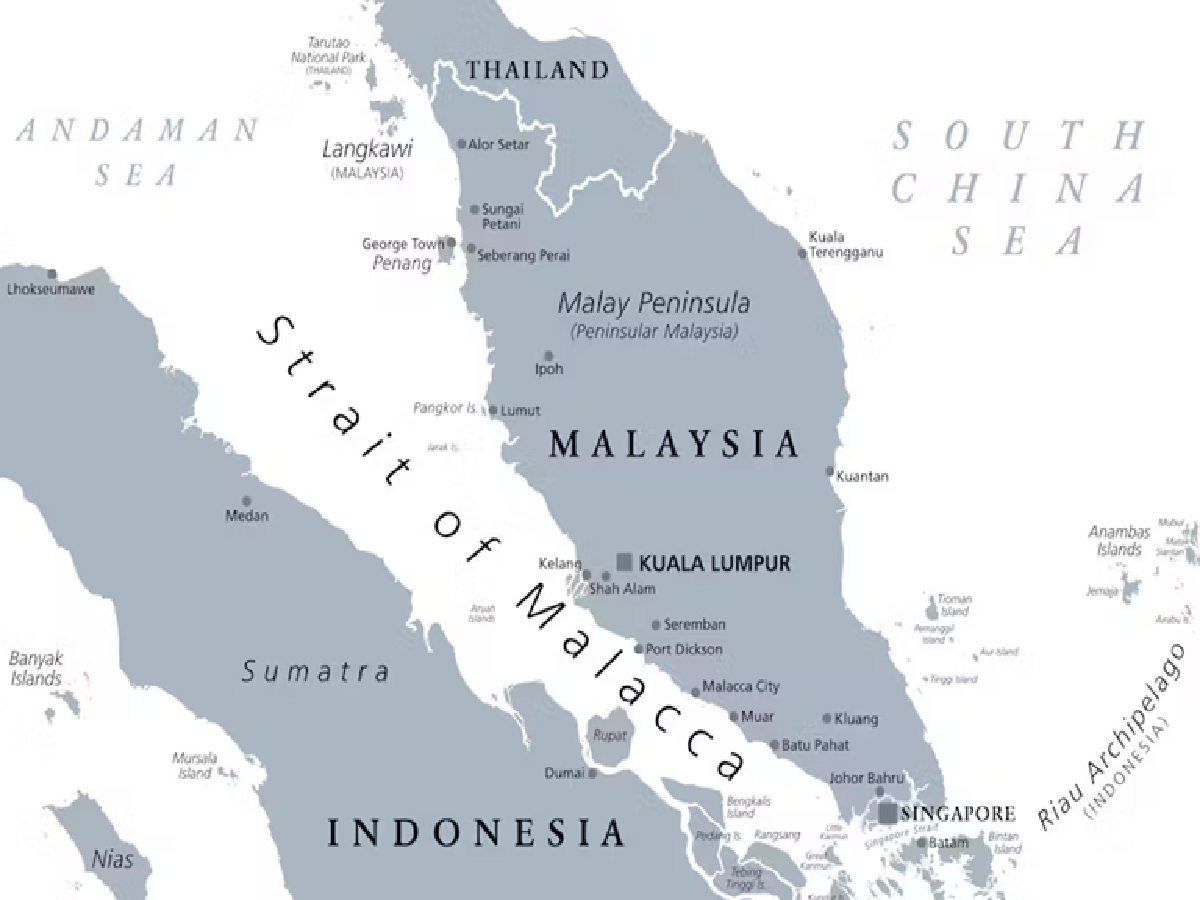
News Topical, Digital Desk : Sea, air and land routes, once considered the lifelines of global trade, are no longer merely geographical routes but are becoming new centres of geopolitical tension, economic control and tariff collection.
Recent discussions by Iran about imposing controls and possible tariffs on ships transiting the Strait of Hormuz and Indonesia's proposal to impose tariffs on ships transiting the Strait of Malacca have intensified the debate on whether global transit routes can be 'monetized'.
Birth of political and economic reaction
Indonesia's proposal, put forward by its finance minister in late April 2026, was withdrawn within hours following intense international pressure. This incident demonstrates that any tariffs or controls on the world's most vital trade routes can trigger immediate global political and economic backlash.
According to experts, the question now is not whether geography determines trade, but to what extent political controls, sanctions and financial pressure will determine who pays, who benefits and who controls global trade flows.
Transit fee regime: no uniform global system
There is no uniform rule for transit charges in global trade. The system operates on different structures for air, sea and land routes.
Air shaft
In aviation, countries have complete authority over their airspace and can levy overflight charges. These charges are usually set by international regulations and are collected through institutional agencies.
However, political tensions and sanctions have disrupted this system in recent years. Following the closure of Pakistani airspace, Indian aircraft were forced to take longer routes, increasing costs. Meanwhile, sanctions in Afghanistan disrupted the payment system, forcing airlines to make payments through intermediaries.
Sea route
Maritime trade is the backbone of the global economy, with approximately 80% of international goods moving by sea. Narrow passages like the Straits are crucial because the traffic passing through them directly impacts global supply chains.
Panama Canal: Connects the east and west coasts of the US and saves thousands of nautical miles.
Suez Canal: Connects Europe and Asia, but jams and blockages affect global trade.
Strait of Malacca: One of the world's busiest shipping routes, also fraught with piracy and security risks.
Bab el-Mandeb Strait: Connects the Red Sea and the Gulf of Aden, an important route for oil and gas transport.
UNCLOS and legal status
The United Nations Convention on the Law of the Sea (UNCLOS) guarantees "free transit" through straits of international navigation. Under this, countries can only charge service fees (such as piloting), and that too without discrimination.
Although some countries, such as Iran and the United States, are not parties to UNCLOS, its rules are still followed in practice. But its true strength lies in cooperation and consensus, not strict enforcement.
Iran's Hormuz Model and the Changing Geopolitical Equations
The Strait of Hormuz is the most sensitive sea route in the Middle East, through which about 20% of the world's oil supply passes.
Iran is now signaling its intention to go beyond traditional controls and regulate and monetize this route. Under the proposed framework, ships could be charged fees based on cargo and conditions, as well as implement a licensing or permit system.
According to experts, this move is an attempt to reduce the impact of Western sanctions and create strategic pressure on global energy supplies.
There is also disparity between ground and air routes.
There is no global standard for land trade routes. Costs and regulations depend entirely on bilateral agreements.
Whereas regions like the European Union have integrated systems where goods move between member countries without customs duties and barriers, reducing both time and costs.
Global trade is no longer a system of uniform rules, but a multi-layered structure where law, geography, and political power combine to determine how and at what cost trade occurs.
Even small disruptions can now have a major impact on global supply chains, making the system as interconnected as it is volatile and vulnerable.
Read More: INS Sunaina strengthens India-Singapore maritime ties, India's influence grows in the Indian Ocean
--Advertisement--