desk
desk Share
Share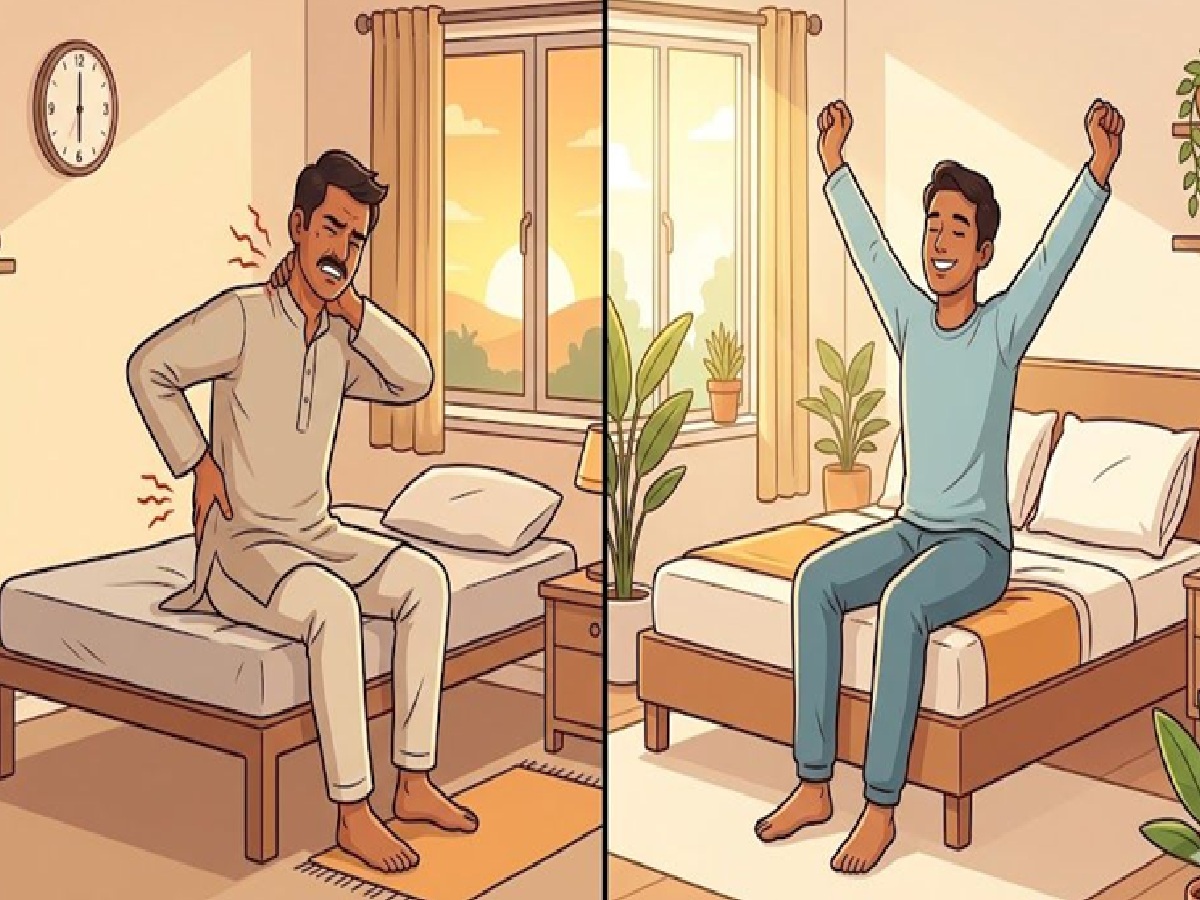
News Topical, Digital Desk : Do you wake up in the morning with aches and pains, and do you feel stiff muscles? It feels as if you haven't had enough sleep? There are many possible reasons for this, but one important one is your sleeping posture. Let's learn from an expert how to improve your sleeping habits...
Nowadays, this problem is becoming increasingly apparent among most young people and those who spend long hours sitting in the office. Upon waking in the morning, their bodies are so stiff, as if blood circulation has stopped. After a long stretch, the body loosens up a bit. Many people think this is due to lack of sleep, but this is not true. Sleeping posture causes pain in body parts.
Which people face more problems?
People with pre-existing bone and muscle problems are more likely to experience stiffness. Those with arthritis, fibromyalgia, or joint problems , or those with vitamin D and iron deficiencies, or those who spend long periods of the day sitting but don't exercise, are more likely to experience stiffness in the morning.
What should be the sleeping posture?
Sleeping posture significantly impacts the quality of our sleep. While everyone sleeps according to their comfort level, some positions can increase body aches and pains. One should spend 50 percent of their sleep time lying on their back, placing a pillow under their knees for comfort if needed. After this, one should spend 25 percent of their sleep time lying on their right side and 25 percent of their sleep time lying on their left side.
Poor alignment due to poor posture
Poor sleeping posture can disrupt the alignment of the entire body. Sleeping on your side in the same position for hours can disrupt blood circulation. Constant pressure on your muscles can cause them to become stiff upon waking. As a result, you may experience headaches, neck pains, shoulders, or back pain as early as morning , and even pain in your legs and arms.
Scientific reasons
Each sleep cycle lasts approximately 90 minutes, and our bodies shift positions several times throughout the night. By paying attention to your sleeping position and using the right pillow, you can train your body to adopt better sleep habits.
Avoid sleeping on your stomach
Sleeping on your stomach provides relief from acidity for some people, but this position is harmful for the spine and back pain. Therefore, try not to sleep on your stomach. Sleeping on your left side is beneficial; it improves digestion and reduces pressure on the heart. Sleeping this way also reduces acidity.
Lie on your back
Sleeping on your back is considered best. This keeps your spine straight and your body aligned. Sleeping on your back reduces pressure on the spine and joints and promotes blood circulation. Along with correct sleeping posture, the correct use of pillows is also important. Placing a pillow under your knees while sleeping helps maintain a natural posture. Sleeping with your hands at your sides or chest can also reduce pain.
What does the doctor say?
According Doctors not sleeping in the right posture does not lead to adequate quality sleep. Sleep is frequently interrupted during the night. This has an impact not only physically but also mentally. Stress increases due to lack of proper sleep. However, it is also true that it is not possible to pay attention to the sleeping posture throughout the night, but whenever you wake up in the middle, you must check once whether your sleeping posture is correct or not. At the same time, people sleeping on the back are advised to use a thin pillow and those sleeping on the side are advised to use a slightly thick pillow, so that the body pain is reduced.
Read More: Is this 'healthy morning drink' damaging your teeth.
--Advertisement--