desk
desk Share
Share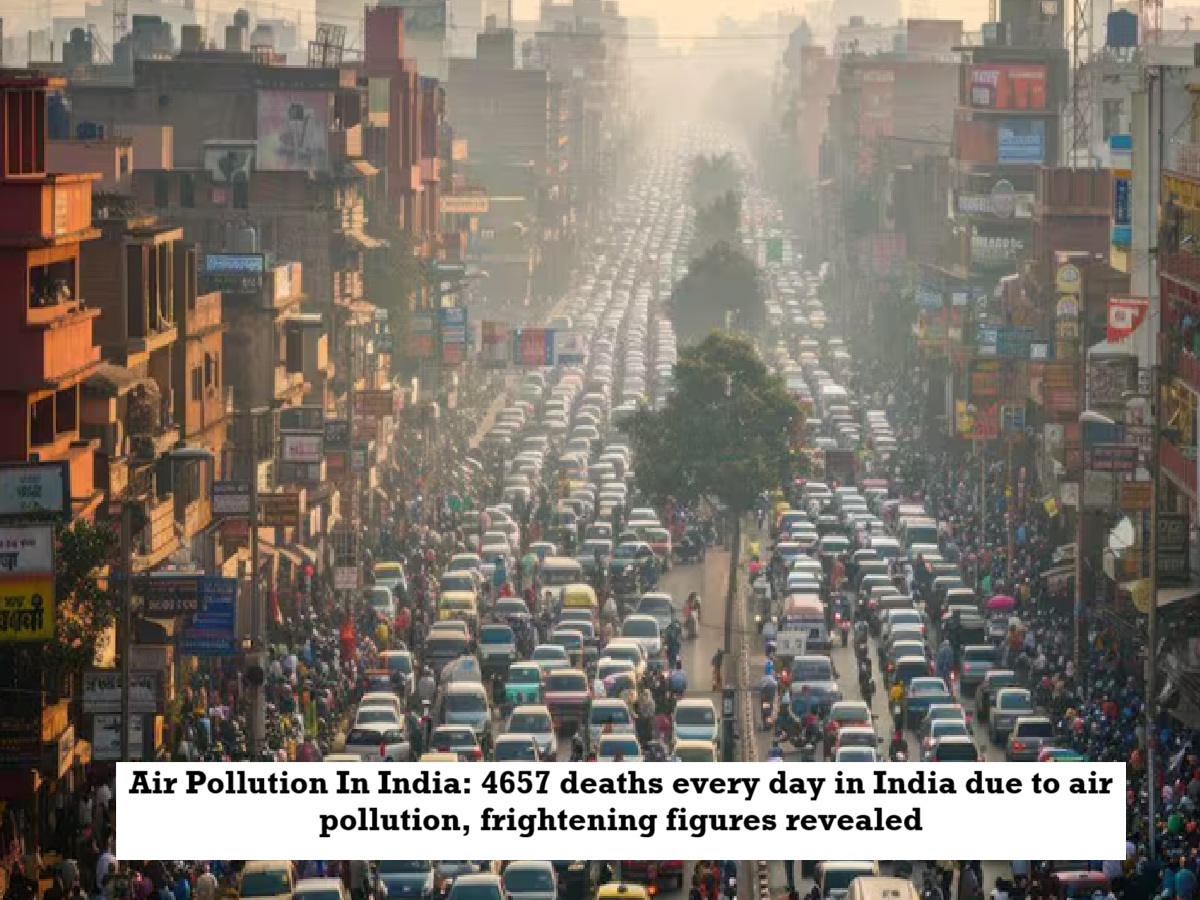
News Topical, Digital Desk : Air pollution in India is no longer just an environmental concern; it has become a serious public health crisis for the country. Experts say that polluted air is claiming millions of lives each year and its impact is also quietly weakening the economy. Economist Gita Gopinath expressed serious concern on this issue during the recent World Economic Forum in Geneva. She stated that air pollution causes approximately 1.7 million deaths in India each year. This means that approximately one in five deaths in the country is linked to polluted air.
If we look at this data on a daily basis, the situation becomes even more frightening, on an average 4,657 people are losing their lives every day in India due to poisonous air.
Along with health, there is also a big impact on the economy.
According to experts, air pollution-related illnesses aren't limited to hospitals; they also directly impact the country's productivity and economy. According to a report, India suffers billions of dollars in economic losses each year due to premature deaths and pollution-related illnesses. In 2019 alone, pollution-related premature deaths cost the country over $28 billion, while economic losses from illnesses were estimated at $8 billion. This combined loss amounted to $36.8 billion, or approximately 1.36 percent of India's GDP.
PM2.5 becomes the biggest threat
A World Bank report released last week stated that 100 percent of India's population is exposed to harmful PM2.5 particles. PM2.5 is considered the most dangerous air pollutant, emitted from multiple sources and directly into the lungs, causing damage.
Direct impact on the heart, lungs and brain
According to the WHO, air pollution multiplies the risk of serious diseases such as stroke, heart disease, chronic lung disease, lung cancer, and pneumonia. Not only long-term, but even short-term exposure to excessive pollution can cause asthma attacks, shortness of breath, and reduced lung capacity. Studies have shown that polluted air can be even more dangerous for pregnant women, leading to low birth weight, premature delivery, and impaired growth.
The crisis is growing every year
According to a study published in The Lancet Planetary Health, if air quality in India met WHO standards, approximately 1.5 million additional deaths could be prevented each year. According to the report, fossil fuel burning alone causes approximately 750,000 deaths annually. This includes approximately 400,000 deaths from coal and approximately 350,000 deaths from biomass burning. Experts say that even short-term exposure to polluted air can cause respiratory problems, asthma, and lung function impairment. While long-term exposure increases the risk of serious heart, brain, and lung diseases manifold.
Read More: IBS Problem: Soluble fiber is effective in treating stomach problems like IBS.
--Advertisement--