desk
desk Share
Share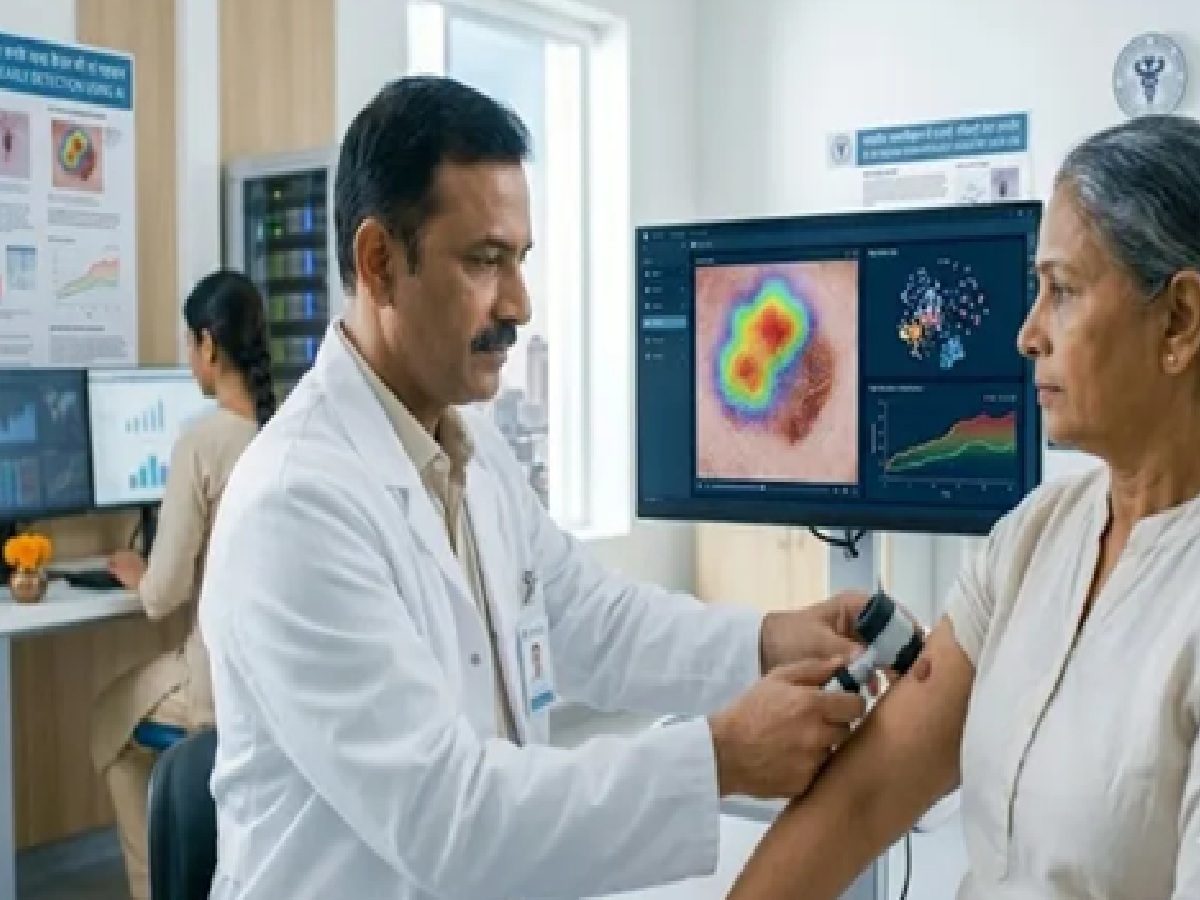
News Topical, Digital Desk : Artificial intelligence (AI) can identify early risk patterns in people at high risk of developing melanoma, a new study revealed on Wednesday. AI models may show greater accuracy in detecting early-stage melanoma and other skin cancers.
The study was based on routinely collected registry data for the Swedish adult population. Data analyzed included age, sex, diagnosis, medication use, and socioeconomic status. Of the 6,036,186 individuals included in the study, 38,582 (0.64 percent) developed melanoma during the five-year period.
The AI not only identifies suspicious lesions, but it can also identify high-risk individuals using a combination of patient metadata (age, gender) and dermoscopic images, giving a prediction of cancer risk in five years.
Registry data may be used more strategically in the future.
"The study shows that data already available in healthcare systems can be used to identify individuals at high risk of melanoma," said Martin Gilstedt, a doctoral student at the Sahlgrenska Academy, University of Gothenburg. "Our results clearly indicate that registry data can be used more strategically in the future." Gilstedt is a statistician at the Department of Dermatology and Venereology, Sahlgrenska University Hospital.
When the researchers compared different AI models, the differences became clear. The most advanced model was able to identify individuals who later developed melanoma in about 73 percent of cases, compared to about 64 percent when only age and gender were used.
The risk of developing melanoma over five years is approximately 33 percent.
A combination of screening, medication, and sociodemographic data allowed the identification of small high-risk groups with a five-year risk of developing melanoma of approximately 33 percent.
"Our analysis suggests that selective screening of small high-risk groups could lead to both more accurate surveillance and more efficient use of health resources. This would involve incorporating population data into precision medicine and improving clinical investigations," said Sam Polesi, Associate Professor of Dermatology and Venereology at the University of Gothenburg.
More research and policy decisions are needed before this approach can be implemented in healthcare. However, the results suggest that AI models trained on large amounts of registry data could be an important source of support for more personalized risk assessment and future screening strategies for melanoma. AI tools should be used as an adjunct to dermatologist diagnosis, not as a substitute.
Read More: Is this 'healthy morning drink' damaging your teeth.
--Advertisement--