desk
desk Share
Share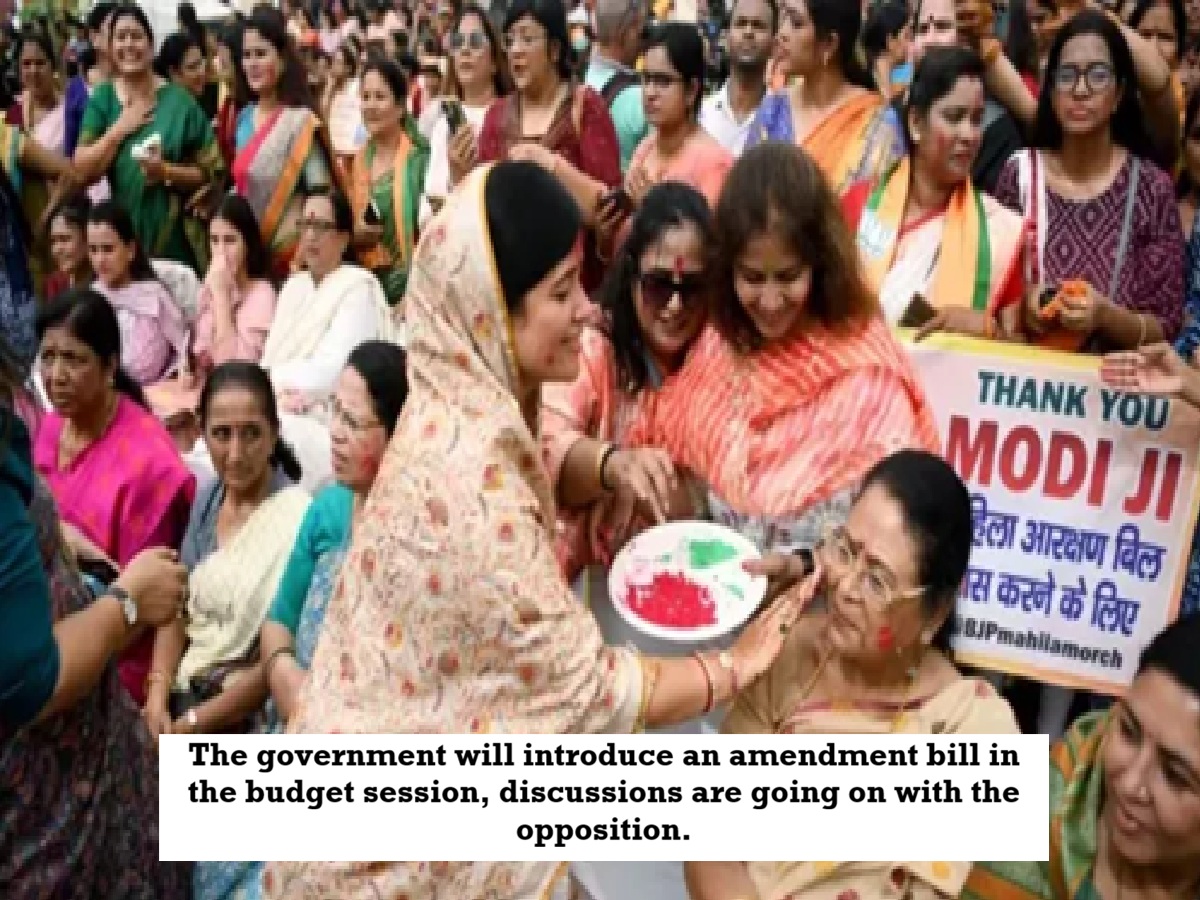
News Topical, Digital Desk : Instead of reserving 33 per cent seats for women in Parliament and state assemblies from 2034, the government has intensified talks with political parties to introduce the Women's Reservation Amendment Bill, implementing it from the 2029 Lok Sabha elections.
It is understood that the government has already begun discussions with opposition parties to introduce an amendment bill in this regard in the current budget session. It is preparing to introduce an amendment bill to amend the Nari Shakti Vandan Act, allowing delimitation of Lok Sabha seats to begin before the 2027 national census, and to pave the way for implementing women's reservations as early as the 2029 general elections.
The government's initiative to introduce a women's reservation amendment bill clearly indicates that the current 543 Lok Sabha seats will be increased by 33 percent, reaching 814. Of these, 272 Lok Sabha seats will be reserved for women. If political consensus is reached on the proposed amendment bill, the number of seats reserved for women will be increased by delimiting Lok Sabha and Assembly seats based on the 2011 population.
Larger states will see an increase in Lok Sabha seats based on the 33 percent reservation. However, smaller states with only one or two seats will see no increase, and seats will be reserved for women on a rotational basis after two or three elections. The government may introduce this proposed bill on women's reservation in the Rajya Sabha.
According to sources, Home Minister Amit Shah and Parliamentary Affairs Minister Kiren Rijiju have initiated discussions with opposition party leaders regarding the government's intention to introduce the Women's Reservation Amendment Bill in the current budget session. Rijiju wrote to Rajya Sabha Leader of the Opposition and Congress President Mallikarjun Kharge last week, asking for a discussion on the issue of women's reservation. Kharge urged the government to call an all-party meeting on this issue.
However, the signals clearly indicate that the main opposition party, the Congress, will have no problem supporting the initiative to implement women's reservations, and the party even advocated for its immediate implementation when the Nari Shakti Vandan Act was passed in 2023. Just a few days ago, Leader of the Opposition in the Lok Sabha, Rahul Gandhi, urged the government to implement women's reservations by the 2029 Lok Sabha elections.
Other major opposition parties, including the Trinamool Congress and the Left, are unlikely to have any problem supporting the Women's Reservation Amendment Bill. However, parties like the Samajwadi Party, the RJD, and the DMK are likely to demand separate quotas for OBC, SC, and ST categories within the women's reservation quota.
--Advertisement--