desk
desk Share
Share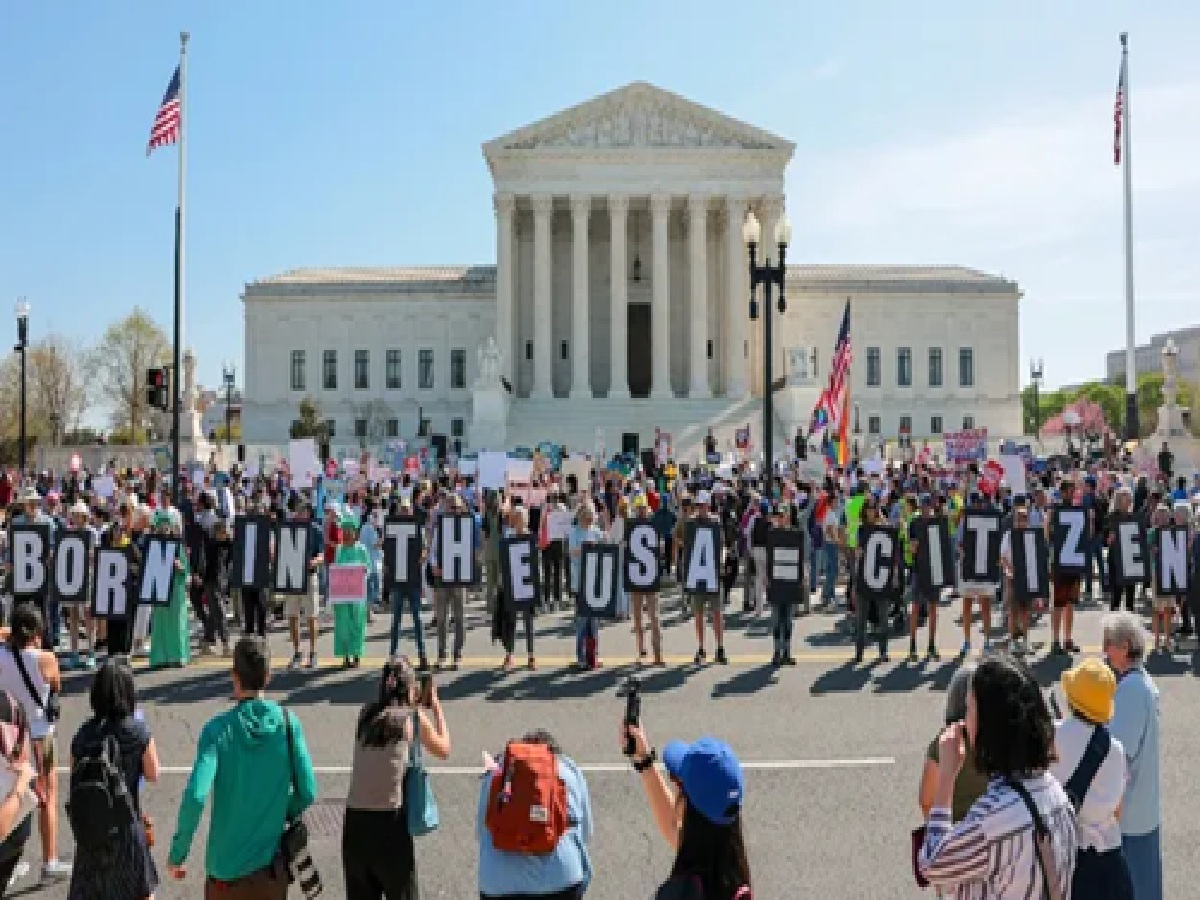
News Topical, Digital Desk : On the very first day of his second term, US President Donald Trump signed an order banning birthright citizenship. However, lower courts had already blocked the order.
Now, during a hearing in the Supreme Court, the justices have raised serious questions about the interpretation of the Constitution. The executive order limiting birthright citizenship in the United States has now been hotly debated in the Supreme Court.
Trump himself arrived at the court for the hearing.
Trump became the first sitting president in US history to appear for nearly an hour at a Supreme Court hearing. In the hearing, scheduled for April 1, 2026, the justices questioned whether the president can single-handedly overturn the 14th Amendment and a 125-year-old law.
Justice Ketanji Brown Jackson questioned whether the government would sit in the delivery room and decide which child would receive citizenship. Other justices also emphasized that citizenship by birth is a fundamental principle of the US Constitution, which the president cannot change without Congress or the courts.
What was in the order?
According to Trump's executive order, children born to parents who came to the US on temporary visas would not automatically receive citizenship by birth. Similarly, the same applies to children born to parents living illegally.
Trump argues that this system is an abuse of America, but the opposition and many legal experts consider it a constitutional violation.
Experts predict that the Supreme Court's stance suggests the order may be overturned. A final decision is expected by June or July 2026.
Court halts White House grand ballroom project
Meanwhile, the Trump administration has suffered another setback: A federal court has blocked the construction of a grand ballroom at the White House, estimated to cost approximately ₹3,740 crore.
Judge Richard Leon said that such a large-scale construction requires congressional approval. The president cannot make this decision alone. The project involved replacing the old East Wing with a new hall, which Trump has touted as an enduring symbol of his presidency.
The National Trust for Historic Preservation filed a lawsuit, alleging that this was damaging the historic structure and violating due process. The court clarified that construction must stop until Congress approves.
Trump called the decision disappointing and said he was trying to improve the White House, but critics are linking it to unnecessary spending and abuse of power.
--Advertisement--