desk
desk Share
Share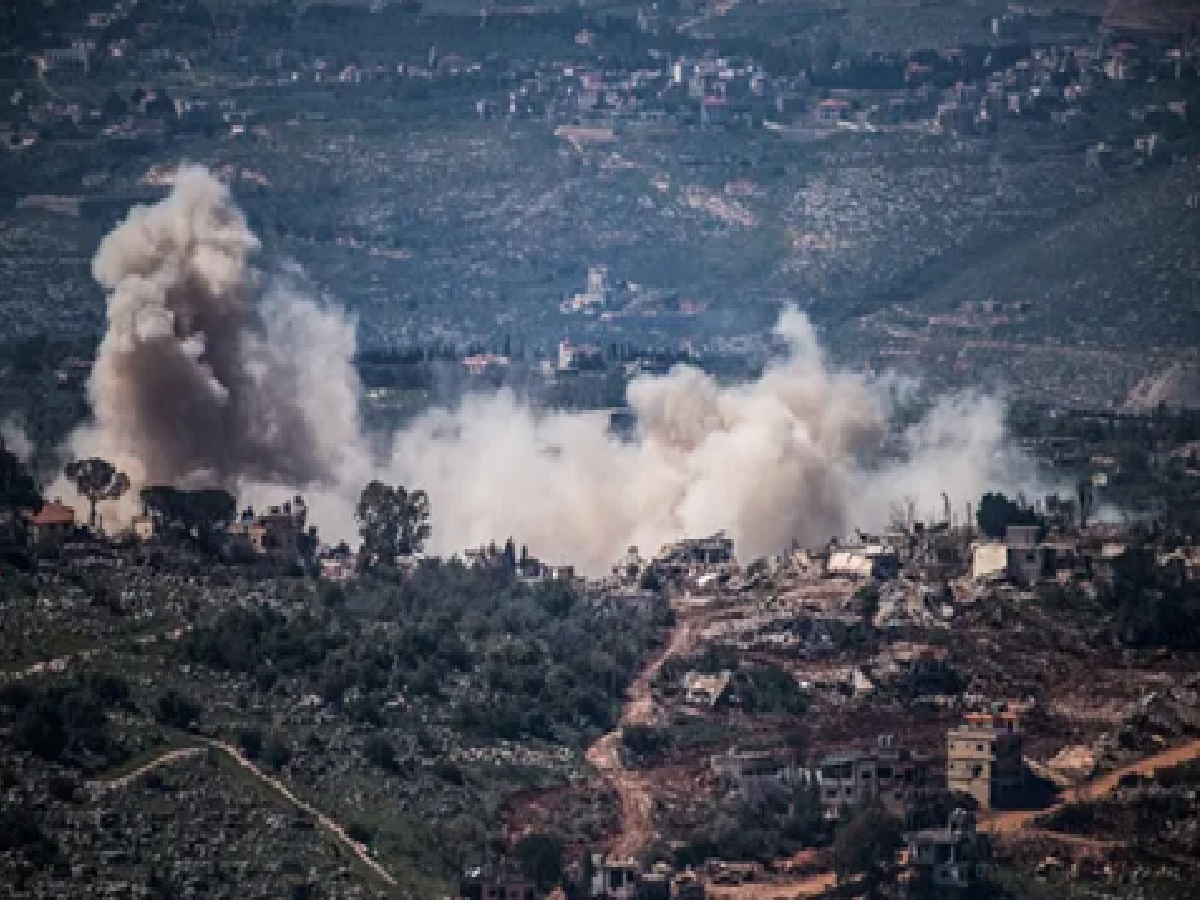
News Topical, Digital Desk : Israel and the Hezbollah group have agreed to extend the ceasefire for three weeks. US President Donald Trump said during a White House briefing on Thursday that the decision was made during a meeting between the Israeli and Lebanese ambassadors.
It's worth noting that this was the second meeting in the past week. Since the initial ceasefire came into effect last Friday, it has been violated several times by both sides. Furthermore, Trump acknowledged during a meeting in the Oval Office that he also needs to think about the Hezbollah group. Therefore, he is expected to meet with Israeli Prime Minister Benjamin Netanyahu and Lebanese President Joseph Aoun in Washington in the next few weeks.
Direct talks between Israel and Lebanon begin after decades
Israel and Lebanon held their first direct diplomatic talks in two decades. The two countries have officially been at war since Israel's creation in 1948. An initial 10-day ceasefire was set to expire on Monday.
Meanwhile, Lebanese Ambassador Nada Hamadeh Moawad thanked Trump. Referring to Trump's slogan "Make America Great Again," she said, “I believe that with your help and your support, we can make Lebanon great again.”
Lebanese President Aoun had said a day earlier that future talks aim to achieve a complete halt to Israeli attacks, the withdrawal of Israeli troops from Lebanon, the release of Lebanese prisoners held in Israel, the deployment of Lebanese troops on the border and the start of the reconstruction process.
Our fight is with Hezbollah: Foreign Minister Gideon Saar
Israeli Foreign Minister Gideon Saar has also urged Lebanon to work with Israel to disarm Hezbollah. Addressing Israeli ambassadors and diplomats on Independence Day, Saar said, "We have no serious differences with Lebanon. There are some minor border disputes that can be resolved."
He added, "There is only one obstacle to peace and normal relations between the two countries: Hezbollah." Israeli forces have occupied a buffer zone stretching 6 miles (10 kilometers) in southern Lebanon. Israel says its aim is to eliminate the threat of short-range rockets and anti-tank missiles fired toward northern Israel.
However, Hezbollah has not been involved in the diplomatic talks. Wafiq Safa, a senior member of the group's political council, told The Associated Press that they would not accept any agreement reached during direct negotiations.
Amidst all this, the Lebanese government hopes that these talks will pave the way for a permanent end to the war. While Iran has set an end to the ongoing war in Lebanon and the region as a condition for talks with the US, Lebanon is adamant that it will represent itself. Last week's talks were the first direct talks between Israel and Lebanon since 1993.
Read More: Trump announces three-week ceasefire extension between Israel and Hezbollah
--Advertisement--