desk
desk Share
Share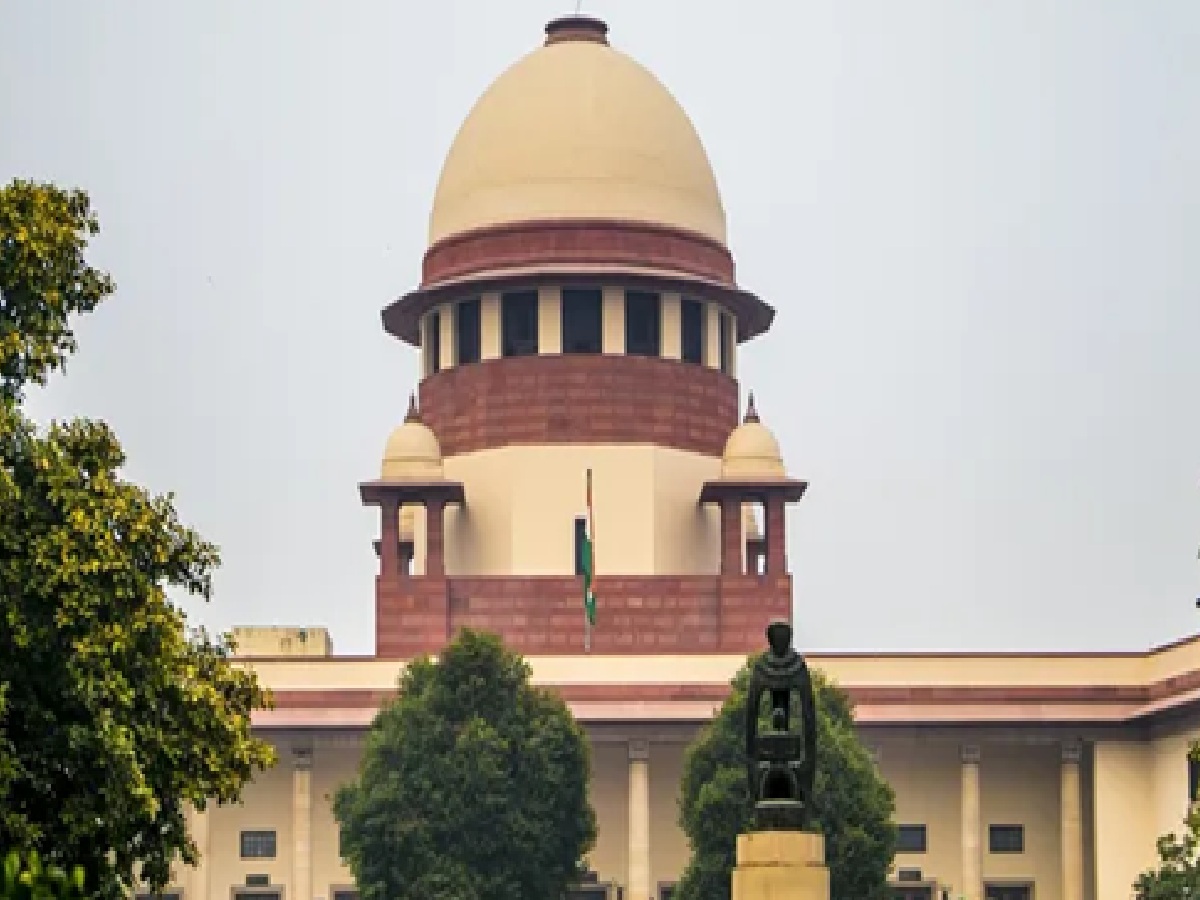
News Topical, Digital Desk : The Supreme Court will deliver its verdict on Wednesday on a number of petitions related to hate speech. According to the Supreme Court's April 29 case list, a bench comprising Justices Vikram Nath and Sandeep Mehta will deliver the verdict.
The Supreme Court had on January 20 said it would dispose of most of the petitions related to hate speeches pending since 2021, in which the court had directed the police to take suo motu cognizance and register FIRs.
The bench had concluded hearing on these petitions filed by various individuals after the Central government, Delhi Police and Uttar Pradesh government said that they had substantially complied with the court's directions.
Every religious institution needs rules, there can be no anarchy: Supreme Court
The Supreme Court on Tuesday said that the right to manage a religious institution does not mean that there should be no structure for its operation. There can be no anarchy regarding management.
There should be a system and regulations governing the functioning of religious institutions. The court also stated that roads cannot be blocked in the name of religious activities. Any religious community has autonomy in its worship practices, and the court cannot adjudicate on its religious matters. However, if any secular activity is being affected, the government can intervene.
The nine-judge Constitution bench made the observation while hearing petitions related to discrimination against women at religious places, including the Sabarimala temple in Kerala, and the scope of religious freedom in different religions.
The bench comprises Chief Justice Surya Kant, Justice BV Nagarathna, Justice MM Sundaresh, Justice Ahsanuddin Amanullah, Justice Aravind Kumar, Justice Augustine George Masih, Justice Prasanna B. Varale, Justice R. Mahadevan and Justice Joymalya Bagchi.
Advocate Nizam Pasha, appearing for Pirzada Syed Altamash Nizami, a descendant of the Chishti Nizami tradition associated with the shrine of Hazrat Khwaja Nizamuddin Auliya, said that a dargah is a place where a saint is buried.
He said, 'In Islam, there are different opinions regarding the status of saints after death, but in the Sufi tradition, there is deep reverence for the place where a saint is buried.'
Pasha argued that the right to regulate admissions to a religious institution is part of management. Justice Amanullah said that the right to manage cannot mean the absence of a structure and that there must be a system for everything.
Read More: Major twist in Dabholkar murder case, Bombay High Court grants bail to convict Sharad Kalaskar
--Advertisement--