desk
desk Share
Share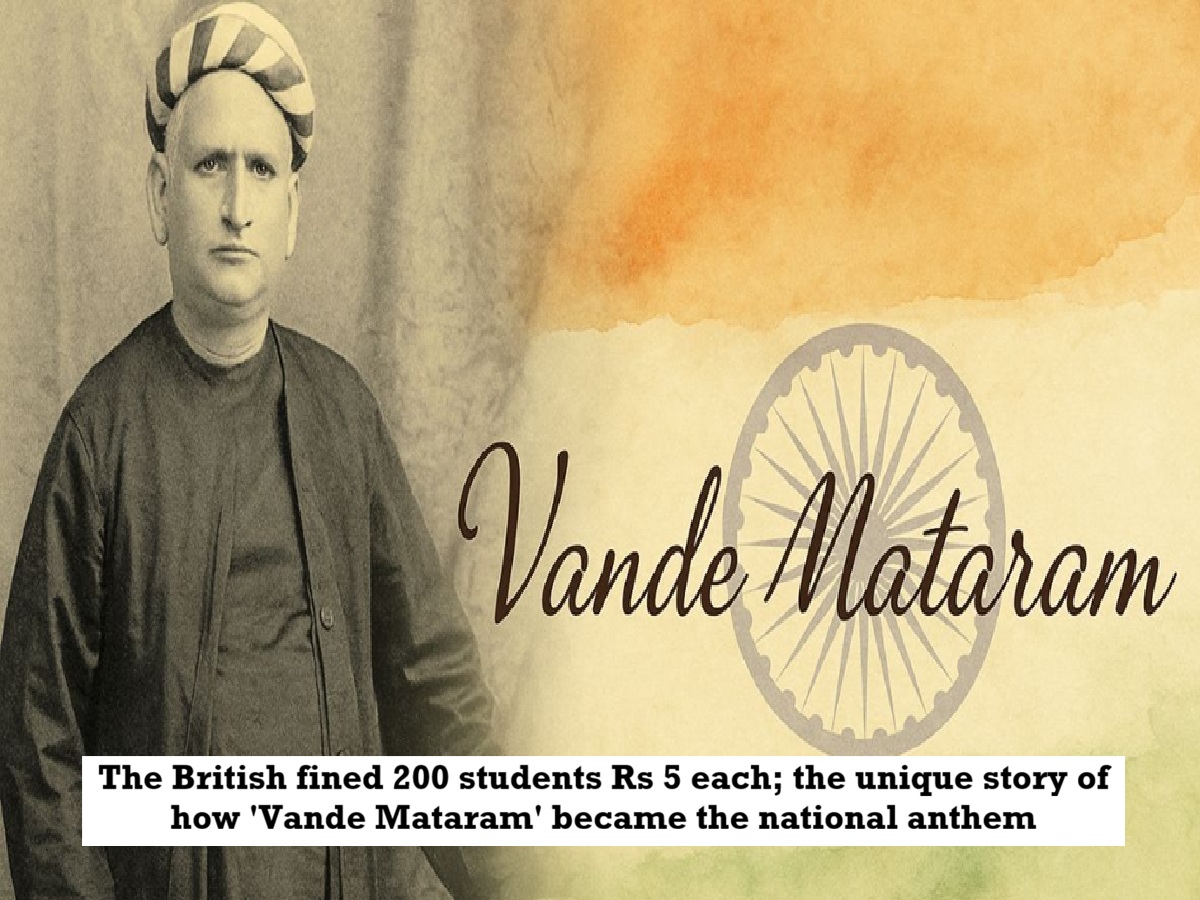
News Topical, Digital Desk : "Vande Mataram..." is the song that became the voice of the freedom movement. It awakened Indians slumbering in the slumber of slavery. When "Vande Mataram," penned by Bankim Chandra Chatterjee, resonated, it ignited a revolutionary spirit in the hearts of listeners, shaking the very foundations of British rule. From farms and barns to the darkest prison cells, this song became a source of inspiration for freedom-seekers.
Every note of it held the fragrance of the motherland, and every line the spirit of freedom. A symbol of devotion, sacrifice, and pride for our motherland, the national anthem "Vande Mataram" wasn't just written or sung, it was lived.
Prime Minister Narendra Modi released a special postage stamp and commemorative coin in November 2025 to commemorate the 150th anniversary of the national anthem "Vande Mataram." Prime Minister Modi said then -
"Vande Mataram" is a mantra, a dream, a resolve, and an energy. This song is a hymn to Mother India. "Vande Mataram" was a declaration of India's independence and remains relevant in every era.
Then, on December 8, 2025, a 10-hour debate took place in the Lok Sabha on the national song, Vande Mataram. In it, the Prime Minister said, "There is neither a pro- nor anti-Semitism in this discussion. It is a great privilege for all of us in this House to remember Vande Mataram, the mantra, the slogan that energized and inspired the country's freedom movement and showed the path of sacrifice and penance."
When was Vande Mataram written, when was it first published, and how did it become the national anthem? Let us tell you the full story of Vande Mataram, from poem to national anthem...
India was under British rule. Bankim Chandra Chattopadhyay was in government service. During those days, the British issued an order mandating that all Indians should henceforth sing the song "God Save the Queen."
This decree to sing songs in praise of a foreign ruler on Indian soil was unacceptable to millions of Indians, including Bankim Chandra Chatterjee. This decree rubbed salt into their wounds. In protest of the British decree and the hurt it forced upon them, Bankim Chandra Chatterjee wrote "Vande Mataram."
Bankim Chandra Chattopadhyay's song Vande Mataram first appeared in the literary magazine Bangadarshan on November 7, 1875. Seven years later, Bankim Chandra Chattopadhyay included it in his novel Anandamath, published in 1882.
In 1896, Rabindranath Tagore sang Vande Mataram from the stage at the Congress session in Calcutta (now Kolkata). This was the first time the song was publicly sung on a national scale. Thousands of people present at the gathering were moved to tears.
Read the full Vande Mataram here...
Vande Mataram!
Sujalan Suphalan Malayajsheetalam,
Shasyashyamalan Mataram.
सुभ्रज्योत्स्नाम पुलकित्यामिनिम्,
फुल्लकुसुमितद्रुमदल्शोभिनिम्,
सुहासिनिं सुमधुर भाषिनिम्,
सुखदां वर्दां मातर्म॥ Vande Mataram!
The one who made millions of throaty roars,
the one with two seven crore arms,
said, Maa! Are you incapable?
Bahubal Dharini, Namami Tarini,
Ripudalvarini Mataram. Vande Mataram!
You are the knowledge, you are the religion,
you are the heart, you are the soul,
you are the soul, you
are the body, you are the power,
the heart is your devotion,
your statue is in
the temple, the temple is yours. Vande Mataram!
Twam hi Durga Dashaprahandharini,
Kamala Kamaldalviharini,
Vani Vidyadayini, Namami Tvam,
Namami Kamalam Amlam Atulam,
Sujalan Suphalam Mataram. Vande Mataram!
Shyamala Sarlaam Susmitam Bhushitam,
Dharani Bharani Mataram. Vande Mataram!
Fine imposed for singing Vande Mataram
By the late 19th and early 20th centuries, "Vande Mataram" had become the slogan of Indian nationalism. In 1905, during the protests against the Partition of Bengal and the launch of the Swadeshi movement, Vande Mataram became the voice of the people. That same year, at its Varanasi session, the Indian National Congress mandated that "Vande Mataram" be sung at all events, meetings, and conferences.
On May 20, 1906, a Vande Mataram procession was held in Barisal (now in Bangladesh), in which over 10,000 people took to the streets. People of all religions and castes, including Hindus and Muslims, marched through the streets holding Vande Mataram flags.
The British government was alarmed by the echo of Vande Mataram and imposed a ban.
When children sang this song in a school in Rangpur, the British government fined 200 students five rupees each for saying Vande Mataram. Subsequently, the British government banned the singing of Vande Mataram in many schools.
Not only this, educational institutions were even threatened with de-recognition. Students then skipped classes, took out processions, and continued singing this song. In many places, the police even beat and jailed students.
- Vande Mataram was first used as a political slogan on 7 August 1905.
- In 1907, when Madame Bhikaji Cama hoisted the tricolor for the first time outside India in Stuttgart, Berlin, Vande Mataram was also written on that flag.
- When Madanlal Dhingra was hanged in England on 17 August 1909, his last words were 'Vande Mataram'.
- When Gopal Krishna Gokhale reached South Africa in October 1912, he was welcomed with the slogan 'Vande Mataram'.
When and where was Vande Mataram declared the national anthem?
After independence, there was complete consensus in the Constituent Assembly on adopting both Jana Gana Mana and Vande Mataram as national symbols, there was no debate on this issue.
On January 24, 1950, Dr. Rajendra Prasad, while addressing the Constituent Assembly, had said that due to its important role in the freedom struggle, 'Vande Mataram' should be given equal status and respect as the national anthem 'Jana Gana Mana'.
Dr. Rajendra Prasad's statement was accepted. From that day on, Rabindranath Tagore's "Jana Gana Mana" was adopted as the country's national anthem, and Bankim Chandra Chatterjee's "Vande Mataram" was adopted as the national song.
--Advertisement--