desk
desk Share
Share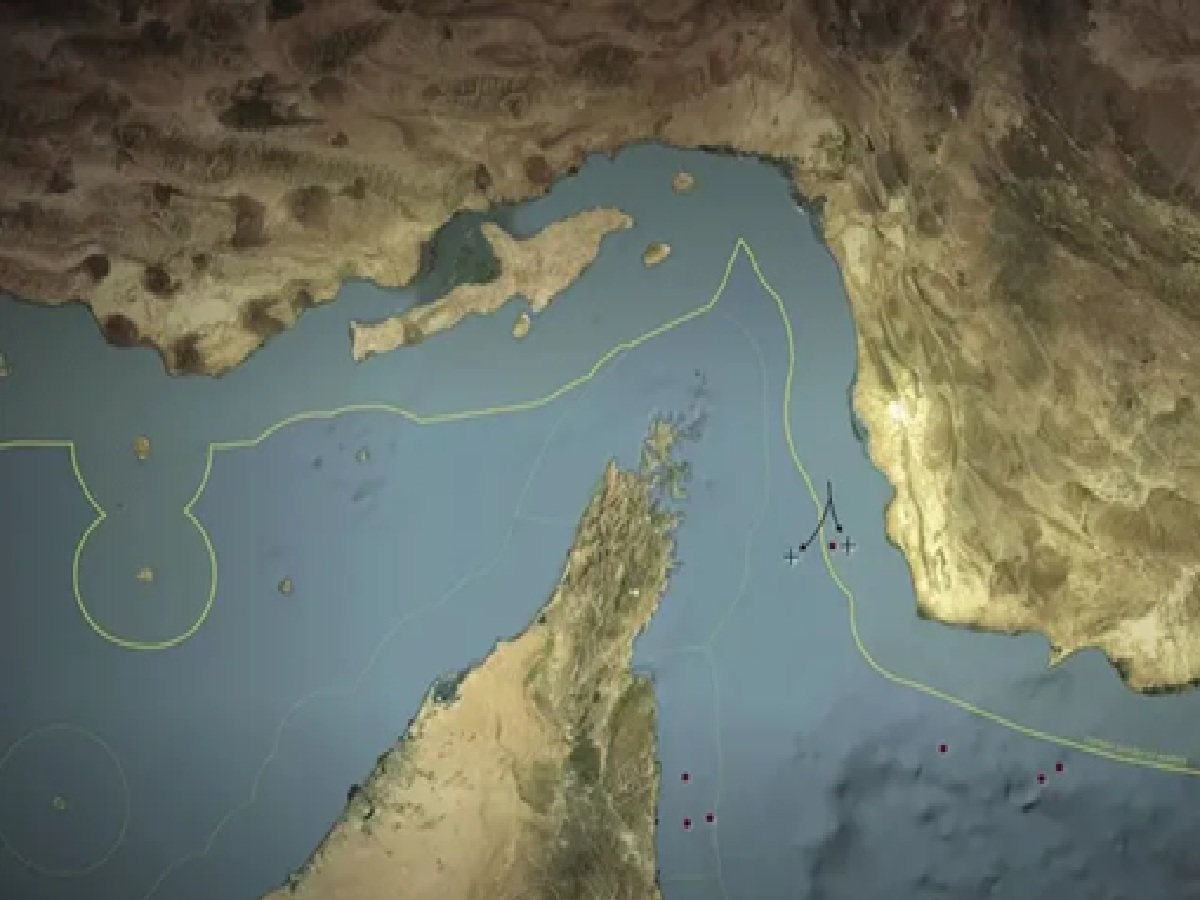
News Topical, Digital Desk : US President Donald Trump's deployment of warships outside the Strait of Hormuz has escalated tensions. This also signals a shift in the Gulf's dynamics. Ships that previously passed through with Iran's permission will now avoid transiting through this area.
The latest example is two Pakistani ships heading to Hormuz, which made a U-turn in response to Trump's order. Experts believe that if the US pursues a blockade, it will not only escalate regional tensions but could also have a profound impact on global oil supplies and the economy.
'US can end Iran's hold on Hormuz'
Trump shared an article on Truth Social, writing that the US could end Iran's hold on the Strait of Hormuz. The US Navy had done the same in Venezuelan waters last year, impacting Venezuela's economy.
US military deployment strengthened in the Persian Gulf
The article also stated that the US Navy has the capability to control movement in this strategic waterway. According to experts, US military deployments in the Persian Gulf have already strengthened. Aircraft carriers such as the USS Gerald Ford and USS Abraham Lincoln are present in the region, further enhancing America's maritime surveillance and control capabilities.
If Iran continues its stubborn attitude then...
Rebecca Grant, a national security expert at the Lexington Institute, was quoted as saying that it would be very easy for the US Navy to decide which ships can and cannot pass through the Strait of Hormuz.
He said that 10 ships had passed through the Strait of Hormuz in 24 hours, including a Russian-flagged oil tanker. Cargo ships also left for India and China. If Iran continues to be recalcitrant, US Navy patrols outside Hormuz could monitor everything that passes through the strait. After that, if you wish to travel beyond the narrow stretch near Kharg Island or Oman, you will need US Navy permission.
Read More: 'No Iranian ship will be able to leave,' JD Vance warns Tehran
--Advertisement--