desk
desk Share
Share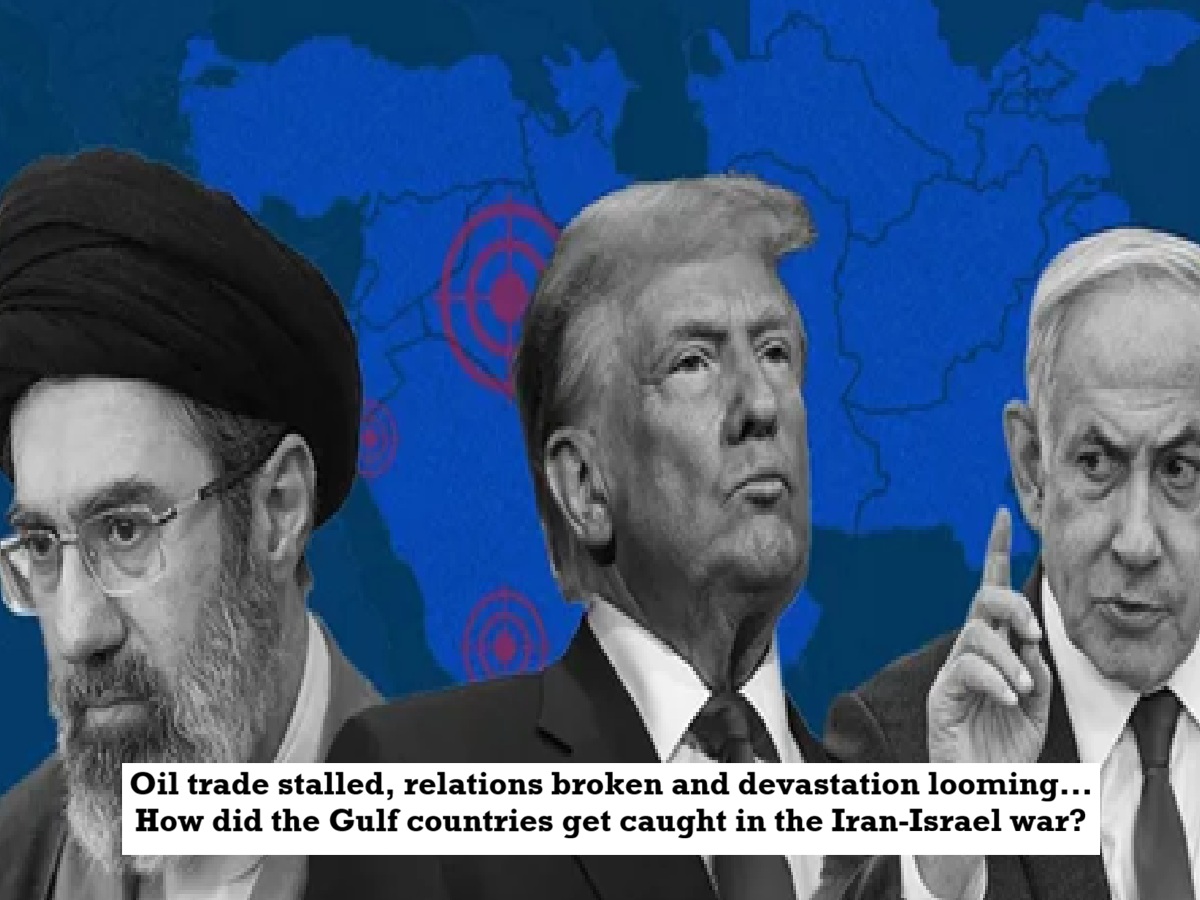
News Topical, Digital Desk : The ongoing war between the United States, Israel, and Iran has now engulfed the entire Middle East. Following the Israeli attack on Iran's South Pars gas field on Wednesday night, Iran has intensified its retaliatory actions.
This attack is believed to be part of a series of Iranian attacks on Gulf countries, which have also targeted energy installations in Saudi Arabia and the United Arab Emirates (UAE). Iran has also launched ballistic missile attacks against the UAE. As this war continues, the situation for the Gulf countries is becoming increasingly complex.
The beginning of the war
On February 28, Iran's Supreme Leader, Ayatollah Ali Khamenei, was killed in a joint US-Israeli attack, sparking a swift retaliatory strike from Iran.
Iran began targeting Israeli and US military bases and the energy and strategic infrastructure of Gulf countries with missile and drone attacks.
These attacks have affected countries such as Bahrain, Kuwait, Qatar, the United Arab Emirates, and Saudi Arabia. Attacks on US bases and regional infrastructure have increased, deepening regional instability.
Challenges for the Gulf countries
Amidst increasing US military activities in the Persian Gulf and the looming threat of war, leaders of Gulf countries were trying to prevent conflict through diplomacy.
But now Saudi Arabia, the UAE, Bahrain, Kuwait, and Qatar have themselves been caught in the crossfire. These countries, all US allies, are being directly affected by Iranian attacks.
Impact on oil prices
The war has caused a sharp rise in crude oil prices. Pre-war prices were around $60 per barrel, but have now reached $90-$100 per barrel. Prices rose by up to 5 percent on Wednesday.
These oil and gas-rich Gulf countries now have few options. They are relying on diplomacy to avoid war, but the situation is rapidly deteriorating. This conflict poses a serious threat to the stability of the Middle East.
The future of the Gulf countries
The biggest question at present is what will the Gulf countries do next?
Qatar and Iran had friendly relations before the Middle East conflict broke out . The two countries jointly operated the South Pars/North Field, the world's largest gas producing region.
This field was the mainstay of Qatar's prosperity. Qatar had made efforts to prevent the war before it began. This war has completely destroyed the trust that existed between the Gulf countries and Iran. The Pars gas field is now engulfed in flames, posing a serious threat to energy security.
The dilemma of the Gulf countries
Despite the heavy attacks, the Gulf countries have not yet formally joined the US-Israeli offensive. They stand at a critical juncture : on the one hand, they want to maintain relations with the US and Israel, while on the other, they want to avoid a direct confrontation with Iran.
Arab countries have neither openly criticized the US and Israel nor supported Iran, but they are now paying a heavy price for this. The situation will only become more complicated for them going forward.
--Advertisement--