desk
desk Share
Share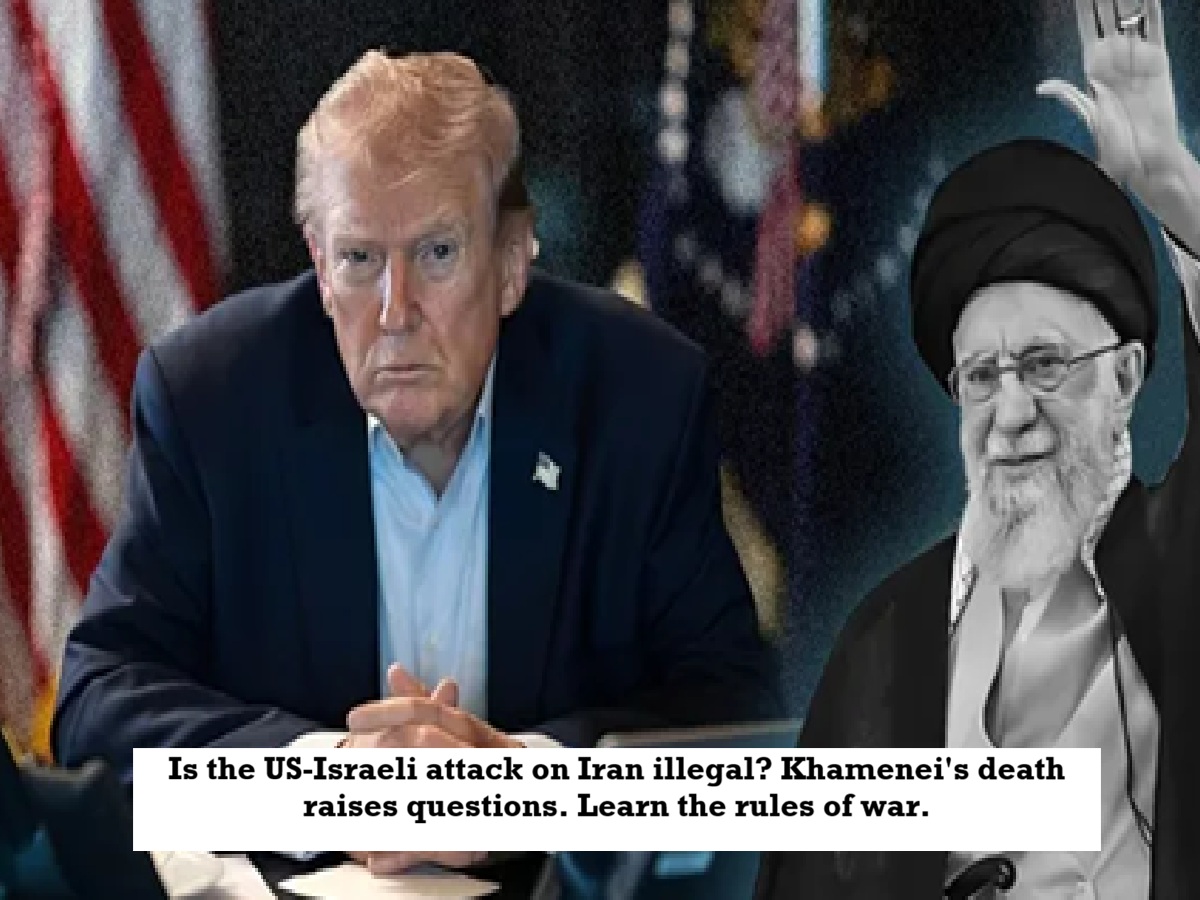
News Topical, Digital Desk : The United States, in collaboration with Israel, has launched a massive attack on Iran. More than 1,000 targets were struck, killing several top officials, including Iran's Supreme Leader, Ayatollah Ali Khamenei.
US President Donald Trump has described it as necessary to eliminate the threat from Iran and stop its nuclear program, but critics are considering it an illegal step and are saying that it is beyond the scope of a president to attack another country.
Trump claimed that Iran was the first to attack, so the action was taken to protect the United States, its overseas bases, and allies. He stated, without evidence, that Iran could acquire a nuclear weapon within a month, while just months earlier he had claimed that the United States had completely destroyed Iran's nuclear program.
Trump has varied his objectives for the attack, sometimes describing it as a counter-attack against an imminent threat, sometimes as a means of overthrowing Iran's regime or liberating its people. Many of these claims conflict with US intelligence reports.
What does the War Powers Resolution say?
The War Powers Resolution (WPR) of 1973 limits the president's ability to use military force only upon a declaration of war by Congress, special authorization, or in response to an attack on U.S. soil and military forces.
The president is required to report to Congress, which the Trump administration has begun. If action is taken without authorization, troops must be withdrawn within 60 days, unless Congress extends the deadline. Members of Congress are planning to introduce legislation this week to block such action.
Who has the right to declare war?
The US Constitution empowers Congress to declare war, while the president is commander-in-chief of the military and oversees foreign policy. Several presidents have launched smaller attacks without congressional approval when they serve the national interest. However, experts say this large-scale attack on Iran exceeds the constitutional limits because it amounts to war. It tests the limits of Trump's military power.
What does international law say?
According to the UN Charter, countries must refrain from the threat or use of force against another country. The use of force is permitted only with the approval of the UN Security Council or in self-defense in response to an armed attack. There is no UNSC approval, nor did Iran launch a first-time attack.
There is a concept of pre-emptive self-defense, which allows action to be taken if an imminent and massive attack is imminent. However, the US has not provided concrete evidence for this. The US has veto power in the UNSC, which allows it to protect itself. Many countries consider this to be illegal.
Was Khamenei's assassination legal or not?
There is a legal debate over Khamenei's death. Reports suggest that Israel carried out the actual attack, while the United States provided intelligence and support. In 1981, Ronald Reagan issued Executive Order 12333, which prohibits assassination by the US government or its agents. Typically, killing a leader during peacetime is considered assassination. However, if an armed conflict is ongoing, killing a leader could be a legitimate act of war. Experts say the matter is unclear because the attack began without a declaration of war.
--Advertisement--