desk
desk Share
Share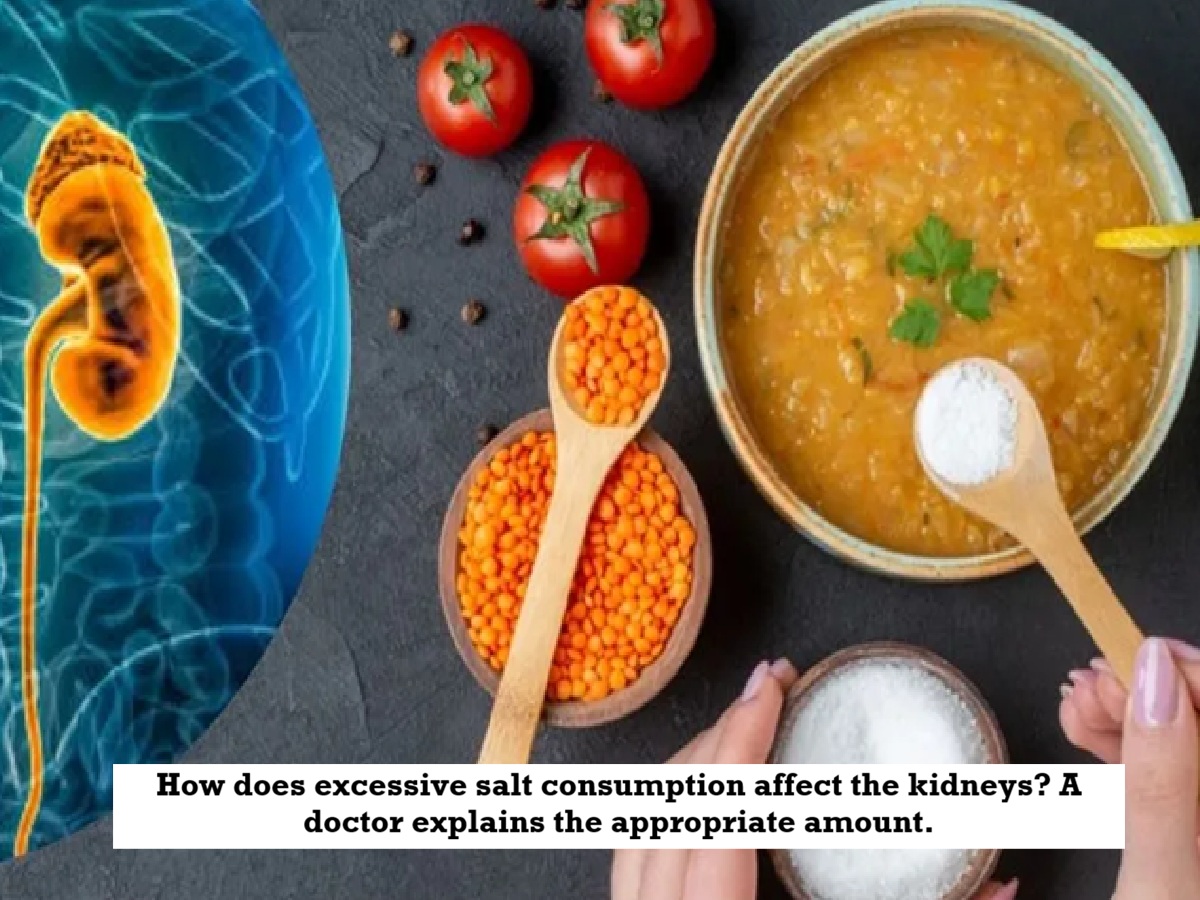
News Topical, Digital Desk : Did you know that the white salt in your kitchen, which enhances the taste of your food, can actually be a silent killer? A pinch of salt is as essential to our body as breathing—it helps our brain and heart function properly. But when this pinch of salt exceeds the recommended amount, your kidneys are the first to be at risk.
The statistics are shocking—while the World Health Organization (WHO) recommends just one teaspoon of salt a day, we Indians, driven by taste, are consuming twice that amount. Is this habit slowly pushing your kidneys toward failure (Effects of High Sodium on Kidneys)?
Why is salt necessary?
It is essential to maintain a certain level of sodium (135-145 mEq/L) in our bodies (How Much Salt Should We Eat). If sodium is deficient in the body, the consequences can be fatal, such as:
- seizures
- brain damage
- Cardiac arrest (heart failure)
Indians are consuming twice the amount of salt they need.
According to the World Health Organization (WHO), a healthy person should consume only 5 grams (about a teaspoon) of salt per day (How Much Salt Per Day) . Salt intake is low in Western countries, but the Indian diet is very high. The average Indian consumes 10 to 12 grams of salt per day, which is twice the recommended daily intake.
Harmful effects of excess salt
The kidneys maintain the balance of salt and water in our bodies. Excessive salt intake can lead to several health problems:
- High blood pressure: Excess salt increases the amount of water in the body, which increases blood pressure. This hardens and narrows the blood vessels in the kidneys.
- Kidney stones: Increased sodium in the urine also increases the amount of calcium, which increases the risk of painful kidney stones.
- Proteinuria: Excess salt intake can cause protein to be excreted in the urine, which is a major sign of kidney damage.
- Heart diseases: Excess salt increases the risk of coronary artery disease , which is directly linked to kidney failure.
A 'low salt' diet is a lifesaver for kidney patients.
For people with kidney failure, reducing salt can be like a cure. It has many benefits, including:
- Blood pressure is better controlled
- Reduces body inflammation
- Shortness of breath improves
Caution: Kidney patients should not use potassium-containing 'salt substitutes' without consulting a doctor, because excess potassium can also be harmful.
How to reduce salt intake
- Read the label: When buying packaged food, look for one that contains less than 140mg of sodium.
- Avoid: Processed meats, fast food, canned food, frozen dinners, and processed cheeses.
- Fresh food: Eat only fresh fruits, vegetables and home-cooked food.
- Amount considerations: Kidney patients should aim for less than 2,300 mg (half a teaspoon) of salt per day.
Remember, the habit of eating less salt doesn't develop overnight. We need to start improving our habits today and those of our future generations to protect our kidneys.
--Advertisement--