desk
desk Share
Share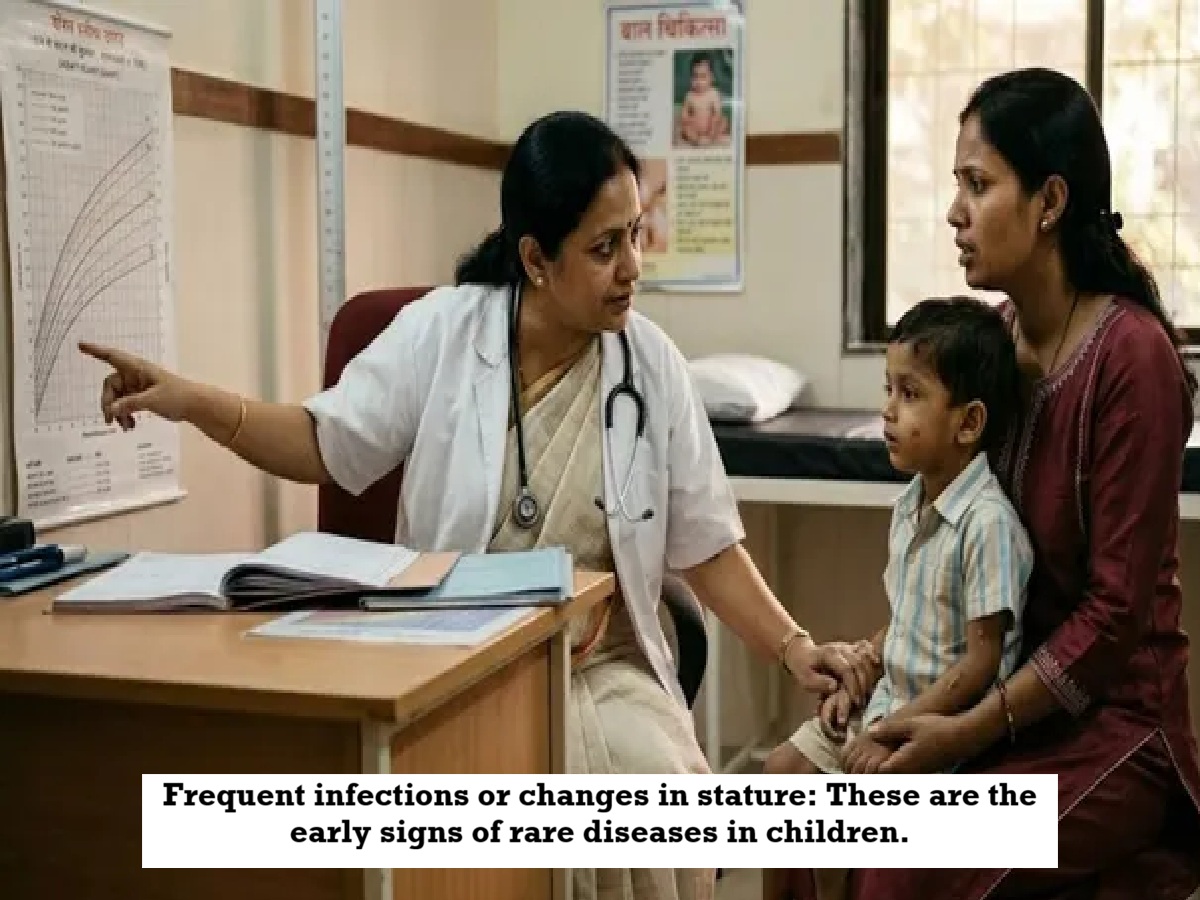
News Topical, Digital Desk : Parents are always vigilant about their children's health and development. However, Senior Consultant (Pediatrics and Intensive Care) at Max Smart Super Speciality Hospital, Saket , explains that the initial symptoms of some rare or genetic diseases in children can appear quite normal.
These rare diseases often present as a cluster of worrying symptoms, rather than a single clear sign. This article outlines eight red flags that should alert parents and prompt them to seek medical attention.
Delayed development or forgetting things learned
- Developmental delay: If your child is not able to sit, smile, make sounds or walk at the same time as other children of their age.
- Forgetting things learned: If the child stops doing things they've already learned (such as talking or losing the ability to walk), this could be a very serious sign of a nervous system or metabolic disease.
Seizures or abnormal body movements
If the child is having frequent seizures, the body has become very loose, there is a sudden change in the way he walks, or abnormal movements are seen in the body parts, then do not ignore it.
Abnormal pattern of physical development
The size of the child's head may be too small or too large, or the height may be short.
- Failure to thrive: The child's failure to increase in weight and height despite adequate and good nutrition.
- Excessive weight gain, which may be a sign of metabolic syndrome.
Abnormalities in facial or body structure
- Specific facial features (such as wide distance between the eyes, small mouth, large tongue, or delay in blinking).
- Excessive fingers and toes or abnormal length of the limbs.
- CHARGE syndrome: Some syndromes present as multiple diseases; such as the simultaneous occurrence of eye defects, heart disease, and ear abnormalities. This is a clear indication that a rare syndrome should be investigated.
Frequent and severe infections
If your child has frequent serious infections (such as frequent ear infections, pneumonia, sepsis, or deep fungal infections), it may be a sign that your child's primary immune system is weakened.
Having problems in multiple parts of the body simultaneously
- Parents feeling a lump in the child's stomach, yellowing of the skin or eyes.
- A child having difficulty running or climbing stairs, or a young infant sweating while nursing, may require investigation of liver or heart disease.
- Continuously increasing swelling of the legs, face, stomach or eyes.
Consistently abnormal medical tests and lab reports
If your child's lab results are repeatedly abnormal, it's cause for concern. For example, an enlargement of the child's heart muscle or a persistent decrease in blood cells without an obvious cause could indicate a metabolic or storage disorder.
Family history
- If siblings or close relatives already have the same symptoms, there have been unexplained deaths in childhood, repeated miscarriages, or there is a known genetic disorder in the family.
- If the parents are close relatives and the child shows any of the above symptoms, the chances of having a rare genetic disease increase significantly.
What should parents do?
According to Dr. the greatest danger and concern is when several of these symptoms appear simultaneously in the same child (for example: developmental delay, seizures, abnormal facial features and lack of physical development).
In such a situation, don't delay. Get your child examined by your pediatrician immediately. They will evaluate the condition and refer you to a pediatric neurologist or genetic specialist for further treatment.
--Advertisement--