desk
desk Share
Share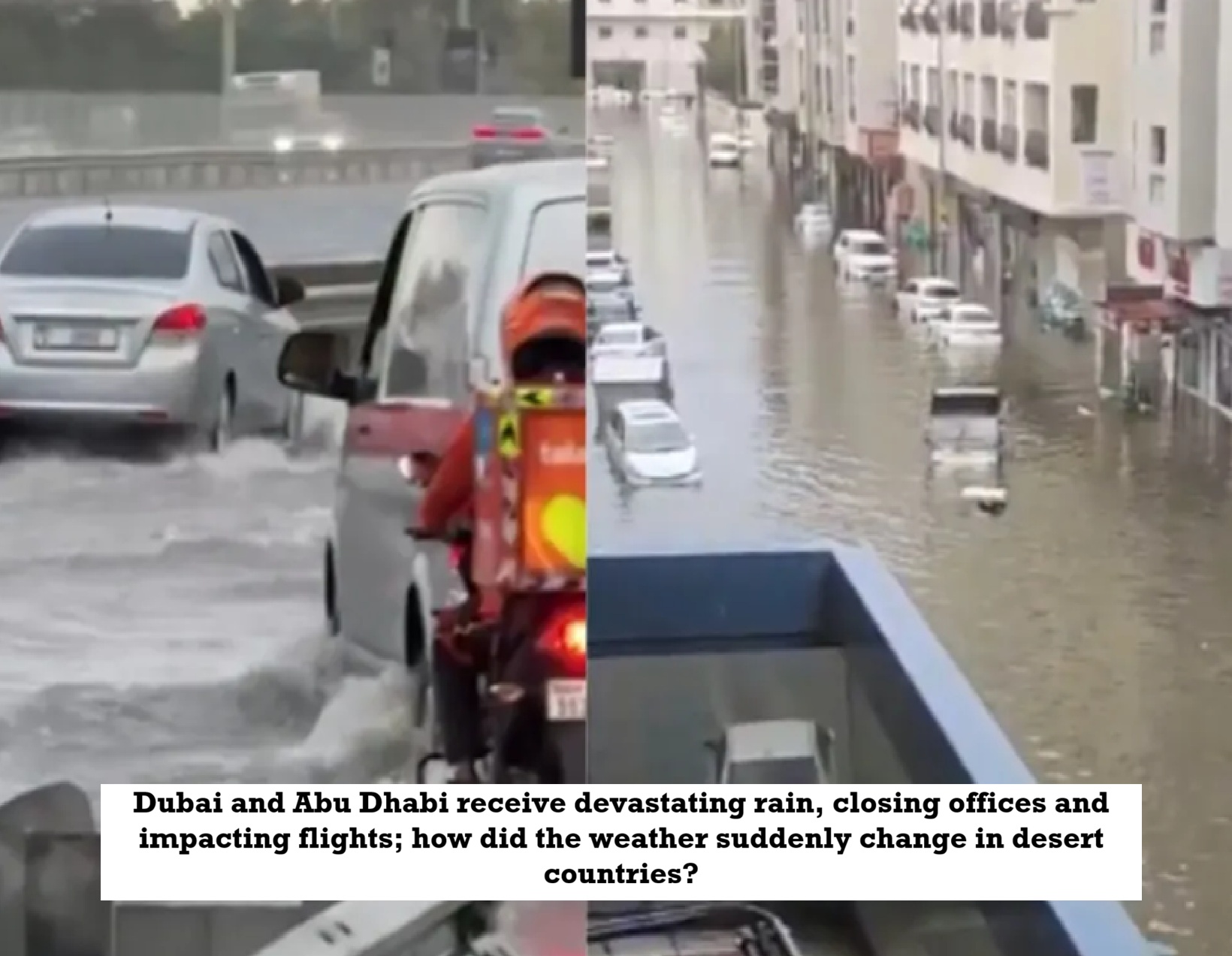
News Topical, Digital Desk : Heavy rains on the night of December 18th and 19th disrupted normal life in the desert nation of the United Arab Emirates ( UAE) . Roads in many areas, including Dubai and Abu Dhabi, were flooded, travel was disrupted, and authorities were forced to take precautionary measures. This incident has renewed attention to the growing climate risks in the Gulf region.
Heavy rain lashed Dubai late last night, spreading to Abu Dhabi overnight. By morning, many roads were submerged. According to officials, the situation was worse in low-lying areas, with strong currents in the northern valleys posing a danger to drivers.
24-hour emergency protocol implemented
To address the situation, Dubai Municipality implemented a 24-hour emergency protocol. Special teams and equipment were deployed to address waterlogging and other problems. The Dubai government also instructed all government employees to work from home and urged private companies to do the same. Meanwhile, the Abu Dhabi administration advised people to stay indoors until noon, and beaches, parks, and tourist attractions were closed as a precaution. Heavy rain also affected transportation services, disrupting flights at Dubai International Airport. IndiGo Airlines also warned that flights across the UAE could be delayed due to thunderstorms.
People traveling by taxi and ride-hail in cities also faced delays. Insurance companies advised vehicle owners to be cautious about flood damage. The incident is reminiscent of the record-breaking rainfall of April 2024, when Al Ain received 254 mm of rain. At that time, airport, highway and metro services had to be closed.
Experts say these unusual rainfall events are linked to climate change. Warming oceans, shifts in the jet stream, and sudden, intense downpours are all taking a toll on desert-friendly infrastructure.
Why is the weather changing?
The impact wasn't limited to the UAE . Heavy rain and lightning in Qatar's capital, Doha, also forced the suspension of a FIFA Arab Cup qualifier. In light of these circumstances, UAE governments are accelerating investment in climate-resilient infrastructure. Work is underway to develop improved drainage systems, water conservation basins, and improve urban design. Abu Dhabi this year launched its first climate adaptation plan for 2025–2050 , which emphasizes water security, soil conservation, and biodiversity. Authorities have urged residents to monitor weather alerts and avoid non-essential travel.
Read More: Pentagon to deploy another aircraft carrier near Iran, awaiting Trump's order.
--Advertisement--