desk
desk Share
Share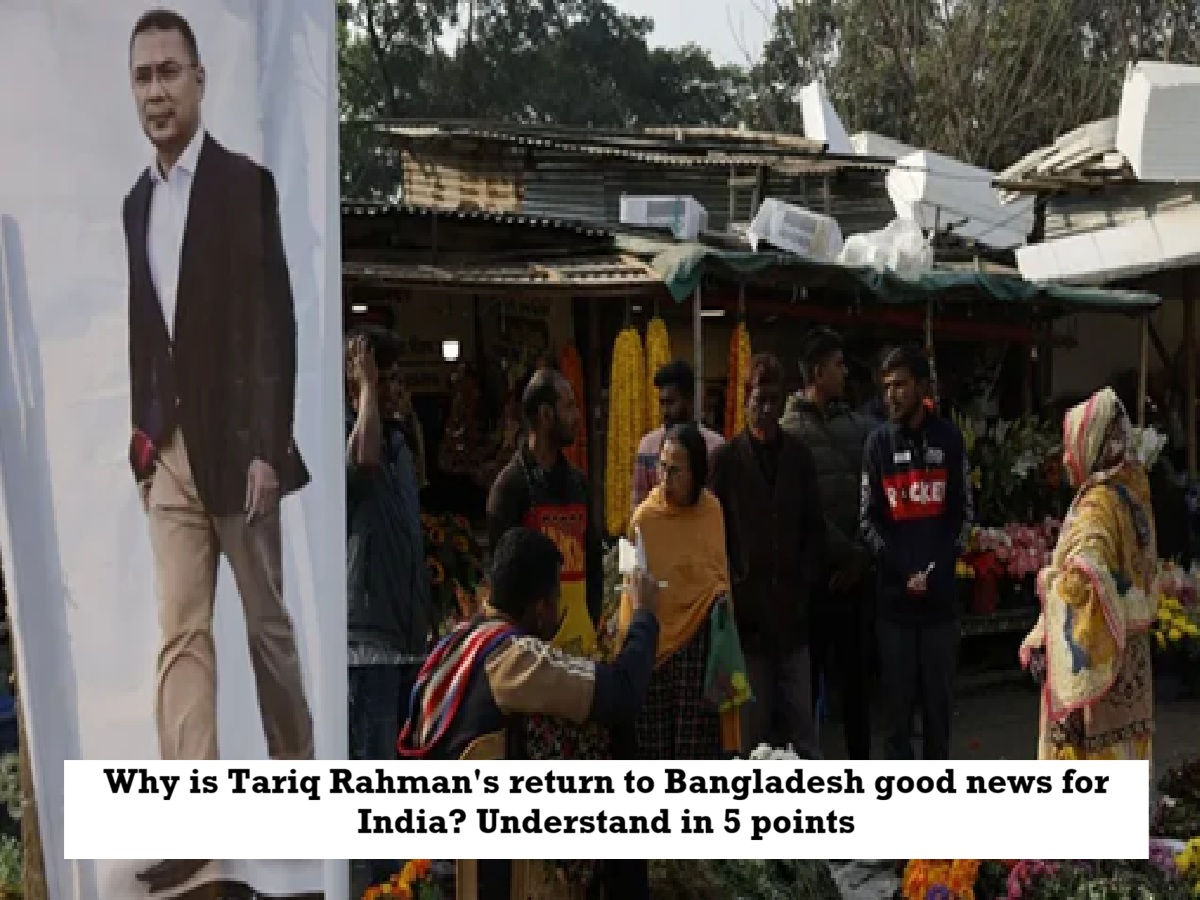
News Topical, Digital Desk : The Bangladesh Nationalist Party (BNP) emerging as the largest party in Bangladesh's general election and Jamaat-e-Islami falling short of a majority mark a significant development in South Asian politics. In the absence of the Awami League, this election has ushered in a completely new political system. Tarique Rahman, son of former Prime Minister Khaleda Zia, will be the new Prime Minister.
Given the current geopolitical and economic situation, this outcome can be seen as more of an opportunity than a disadvantage for India. India also looks forward to working with the new government headed by Tariq Rahman.
PM Narendra Modi sent a congratulatory message as soon as the election results became clear, congratulating Tarique Rahman and saying, "The people of Bangladesh have reposed their trust in Tarique Rahman's leadership. India will always stand with a democratic, progressive, and inclusive Bangladesh. I look forward to working with you to strengthen our multifaceted relationship and advance our shared development goals."
Understand in detail in the five points below why these results cannot be called very bad for India:
1. Jamaat not getting majority – relief from security and strategic point of view –
India's experience with previous BNP governments hasn't been particularly pleasant, yet Tariq Rahman's party would likely be a better fit than Jamaat-e-Islami. Jamaat-e-Islami has long been considered to have a pro-Pakistan political bent and Islamic fundamentalist leanings . A clear majority could have increased concerns about instability on India's northeastern borders, the activation of radical networks, and cross-border infiltration.
While Jamaat has adopted a softer stance toward India in this election, it has consistently incited anti-India sentiment in the past. Holding rallies in Bangladesh against events in India has been its primary political weapon. Its abstention from a majority indicates that Bangladesh's power has not completely shifted toward ideological polarization. This will prevent India from facing immediate security pressures.
2. Economic crisis is the primary challenge: India's role is crucial
Bangladesh's current economic situation is under pressure, facing challenges such as declining foreign exchange reserves, pressure on the export sector, and inflation. In such circumstances, the BNP government's primary priority will be to stabilize the economy and return it to growth. Bilateral trade between India and Bangladesh has grown rapidly in recent years (during Sheikh Hasina's tenure). Numerous projects, including energy cooperation, power exports, petroleum pipelines, rail and road connectivity, and port utilization, connect the two countries. Total investment by Indian companies there is close to $5 billion.
Continuing these projects and maintaining normal trade flows will be a practical necessity for the new government. The BNP manifesto did not adopt a negative or confrontational stance towards India. This indicates that the party, understanding the economic realities, would like to advance relations with India on the basis of cooperation rather than confrontation. India's investment, market, and energy assistance could prove crucial in economic reconstruction.
3. India's initiative to improve connectivity
New Delhi has signaled clearly over the past few months that it is ready to move on from Sheikh Hasina's Awami League. Channels of communication with the BNP leadership have been kept open at the diplomatic level. Backchannel talks, diplomatic contacts, and balanced political messaging have ensured that relations do not suddenly become strained even in the event of a regime change.
Foreign Minister S. Jaishankar visited Dhaka after Khaleda Zia's death, and the Indian Parliament mourned her death. This strategic preparation may now pay dividends. It will not be easy for the new government to adopt an anti-India stance, as the foundation for dialogue is already in place.
4. Interdependence and regional connectivity projects
Relations between India and Bangladesh are not just political, but also structurally linked. Bangladesh plays a vital role in the connectivity of Northeast India. Arrangements such as railways, inland waterways, road corridors, and border haats directly impact the local economies of both countries.
Stopping or slowing down these projects would be economically detrimental for the BNP. Conversely, advancing them would give it a development-oriented image domestically. Therefore, pragmatic politics may work to stabilize relations. Sheikh Hasina has initiated the integration of Northeast India's economy with Bangladesh. This is likely to bring numerous economic benefits to Bangladesh.
5. Changing global order: the need for strategic balance
The world is currently undergoing a geopolitical rebalancing. Competition in the Indo-Pacific region is intensifying, China's economic activity and its alignment with Pakistan are evident. In such a scenario, it would be risky for Bangladesh to lean entirely on any one axis. The changing global environment increases the need for stable and reliable partners.
India, which plays a key role in regional stability and supply chain security, will remain a natural strategic partner for Bangladesh. Dhaka will also need to strengthen bilateral strategic ties in areas such as energy security, maritime cooperation, and disaster management.
The election results are not a cause for complete satisfaction for India, but they are also not a cause for serious concern. Jamaat is far from a majority, the BNP appears pragmatic, and economic constraints may drive cooperation. However, in the absence of the Awami League, Jamaat has emerged as a strong opposition force that could try to fuel anti-India sentiment in the future.
Therefore, New Delhi must adopt a multi-layered diplomacy, keeping in mind both the opportunities and challenges. A new era is also about to begin in India-Bangladesh relations. India must exercise political patience, vigilance, and advance its "Neighborhood First" policy. India has already done so in Afghanistan, the Maldives, and Sri Lanka.
Read More: 'Indian Army is preparing to fight and win the next war', says former Army Chief JJ Singh
--Advertisement--