desk
desk Share
Share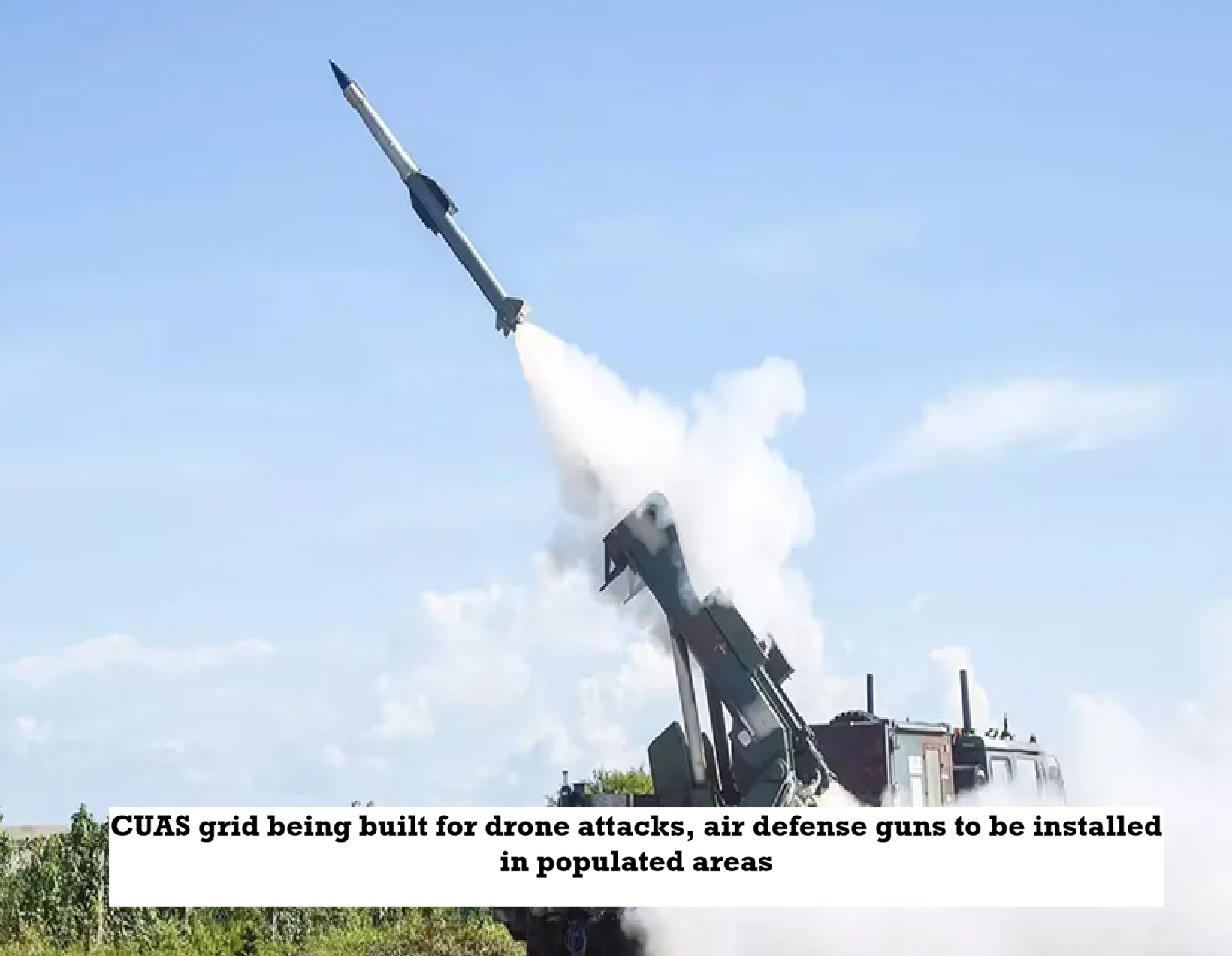
News Topical, Digital Desk : Drawing lessons from the experiences gained during Operation Sindoor, the Indian defence forces are reinventing their security mechanisms to counter aerial threats, especially enemy drone attacks.
While the Army is working on deploying air defence guns in populated areas, the Central Government is moving ahead towards developing a comprehensive air defence shield across the country under 'Mission Sudarshan Chakra'.
In this sequence, the three armies are jointly preparing a joint Counter Unmanned Aerial System (CUAS) grid, which will enable effective surveillance and prompt action on enemy or suspicious drone activities.
According to sources, this joint CUAS grid will network various counter-drone systems acquired by the three services—the Army, Navy, and Air Force—over the past five to 10 years. This grid will be separate and independent from existing air defense systems, such as the Indian Air Force's Integrated Air Command and Control System (IACCS).
This grid will be operated through Joint Air Defence Centres (JADCs), with participation from all three services. Its purpose is to monitor small drones and unmanned aerial systems and to provide timely neutralisation of drone attacks by enemy or terrorist organisations.
Defense sources say that if the existing air defense network were tasked with monitoring small drones, it would be overburdened. This is why a separate dedicated grid is being developed for CUAS.
During Operation Sindoor, the Pakistan Army attempted to target Indian civilian and military installations using Turkish and Chinese-made drones. However, these attempts were thwarted by the three armed forces, particularly the Army's air defense units. The Indian Army's L-70 and ZU-23 air defense guns inflicted heavy damage on the small drones.
At the highest level, a national security framework for air defense is being developed under "Mission Sudarshan Chakra," for which a committee has already been formed. The Chief of Defense Staff (CDS) is responsible for better coordination and integration between the three services.
Highlights of the CUAS Grid
- A separate joint CUAS grid will be created for the three services.
- CUAS will effectively monitor and respond promptly to enemy drone movements
- CUAS Grid to network counter-drone systems of all three services
Emphasis on technology and defence cooperation in modern warfare: Army Chief General Dwivedi
Army Chief General Upendra Dwivedi, highlighting the changing global security landscape and the nature of modern warfare, said that rapid technological advances have completely transformed the nature of today's conflicts. He said that military leadership must constantly evolve and adapt to meet current and future challenges.
Addressing the officers of the National Defence College (NDC) of UAE, General Dwivedi described the role of senior military leadership as extremely important and said that in the era of increasingly complex security challenges, foresight, strategic thinking and timely decision-making prove to be decisive.
The Army Chief also stressed the need for strong bilateral and multilateral defence cooperation between India, the UAE and other regional partners. He said that deepening cooperation in the interest of shared security is essential not only for regional but also for global peace and stability.
--Advertisement--