desk
desk Share
Share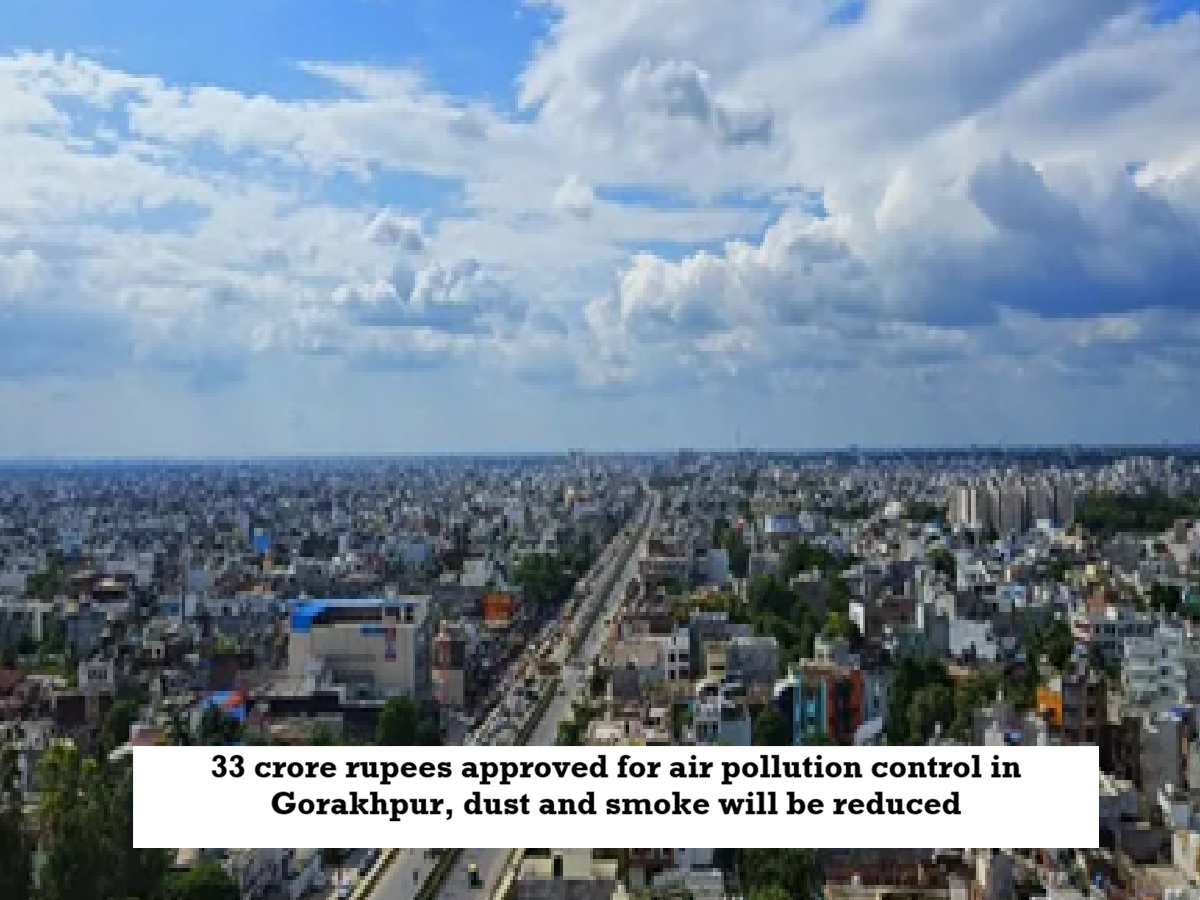
News Topical, Digital Desk : The Municipal Corporation has prepared a comprehensive action plan to improve the city's deteriorating air quality. Under the National Clean Air Program (NCAP), a plan worth approximately ₹32.90 crore has been approved by the government. Under this plan, several concrete steps will be taken to reduce pollution in the city. Under the plan, the Municipal Corporation will also teach people about reducing pollution through various measures, including increasing green areas and installing pollution control equipment.
This action plan was finalized at a meeting of the City Level Implementation Committee, chaired by Municipal Commissioner Gaurav Singh Sogarwal. The plan aims to ensure a clean environment by reducing dust and air pollution in the city. All work will be carried out in accordance with the guidelines of the Central Pollution Control Board.
According to a plan prepared by the Municipal Corporation, special attention has been paid to controlling dust from roads. To this end, the goal is to construct interlocking, blacktopping, and pothole-free roads along approximately 30 kilometers of roads at a cost of approximately ₹7.50 crore. Interlocking between roads and drains will prevent dust from accumulating, thereby improving air quality.
A massive tree planting campaign will also be launched to increase the green cover. Major routes such as the Domingarh to Mahesara Overbridge, the Transport Nagar to Bypass, and the Nausad to Bagha Gada Road will be heavily tree-planted. These will include large trees like Neem, Peepal, Banyan, Jamun, and Arjun, along with medium-sized trees like Kadamba, Amaltas, and Kachnar. Grass species like Khas and Lemongrass will also be planted, which will help trap dust on the ground.
To improve traffic management, four major intersections in the city will be made smart at a cost of approximately five crore rupees. This will ease traffic congestion and reduce vehicle emissions. Additionally, dense forests will be developed using the Miyawaki method at a cost of approximately 18 crore rupees, which will increase greenery in the city and help control pollution.
Special equipment will also be installed for pollution control. Air pollution control devices will be installed at Rajghat cremation ground, Kanha Upvan crematorium and Golghar area at a cost of about Rs 1.5 crore. These will be able to control smoke and harmful gases.
The device separates harmful particles and gases present in the air
Scientific Assistant Environment Satyendra Nath Yadav said that air pollution control devices mainly work to separate harmful particles and gases present in the air. After this, these collected harmful elements are destroyed safely. Fine mesh filters are used in this device which absorb small particles like dust and smoke.
Particulate matter (such as carbon powder) collected from vehicles or chimneys is used to make paints, inks, or roads. Some devices use chemical processes to convert toxic gases into less harmful ones so they can be safely released into the atmosphere.
--Advertisement--