desk
desk Share
Share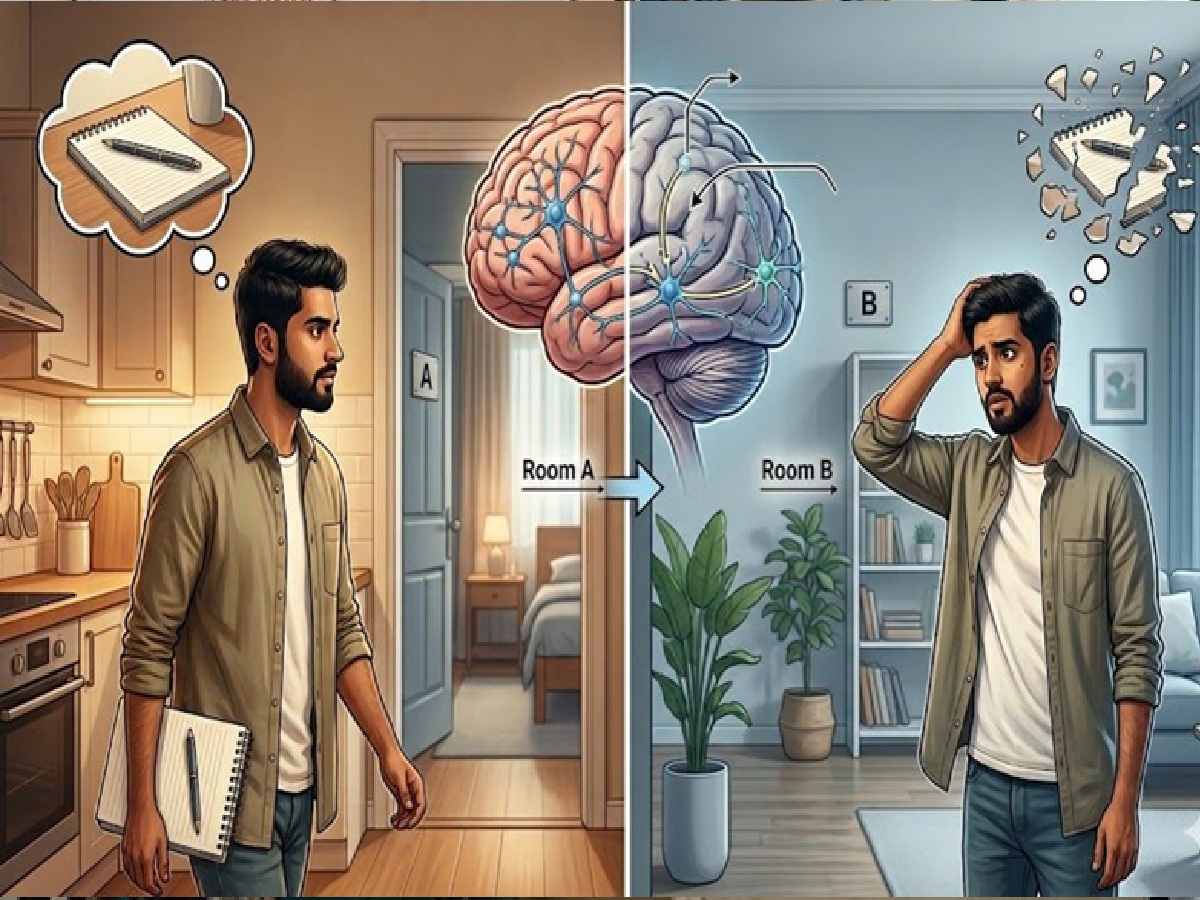
News Topical, Digital Desk : Sometimes we rush to the kitchen or another room to do something, but upon reaching there, we're stunned, wondering, "Oh, what did I come here to get?" Does this happen to you too?
In scientific terms, this is called the "Doorway Effect." People often mistake it for amnesia or memory loss, but science suggests otherwise. In reality, it's not a disease but evidence of your brain's proper functioning.
The brain resets itself
Psychologists at the University of Notre Dame conducted an important study on this. They found that when we cross a door into a new place, our brains "reset" themselves to adapt to the new environment.
Scientists call this "event boundary." It means that as soon as you change locations, your brain erases old, unnecessary information to focus on the new location. This is why memories of the previous room disappear as soon as you enter the new room.
Our brain works like a smartphone's 'tab'
You can think of your brain like a mobile phone with too many tabs or apps open. To prevent the phone from hanging, we close apps that we don't need.
Our brains protect our memory in a similar way. When you enter a new room, the brain senses that a new task is about to begin. Therefore, it immediately clears space for the old thought. This is not a weakness of the brain , but rather a wonderful feature.
Fatigue and stress worsen the condition
In today's busy lifestyle, our attention is often divided between many things. When we are tired, stressed, or multitasking, our brain's ability to focus diminishes. At times like this, and when we change our location, our brain becomes overloaded and forgets past memories quickly.
Some easy hacks to remember things
If you want to avoid this 'doorway effect', you can trick your brain in these small ways:
- Create a mental picture: Create a clear picture of the items you need to carry.
- Hum or say: Say the task you are going to do out loud all the way.
- Take a break at the door: Before entering the room, stop for a moment at the door and take a good look at your work.
- Carry a memento: Keep a small object in your hand that reminds you of your work.
Is there a need to see a doctor?
Generally, there's no need to panic. Forgetting things in the room is a very common occurrence and isn't a sign of cognitive decline. It's simply your brain cleaning up.
Yes, if you start forgetting people's names, important meetings or even important tasks in your daily life, then you should definitely consult a doctor.
--Advertisement--