desk
desk Share
Share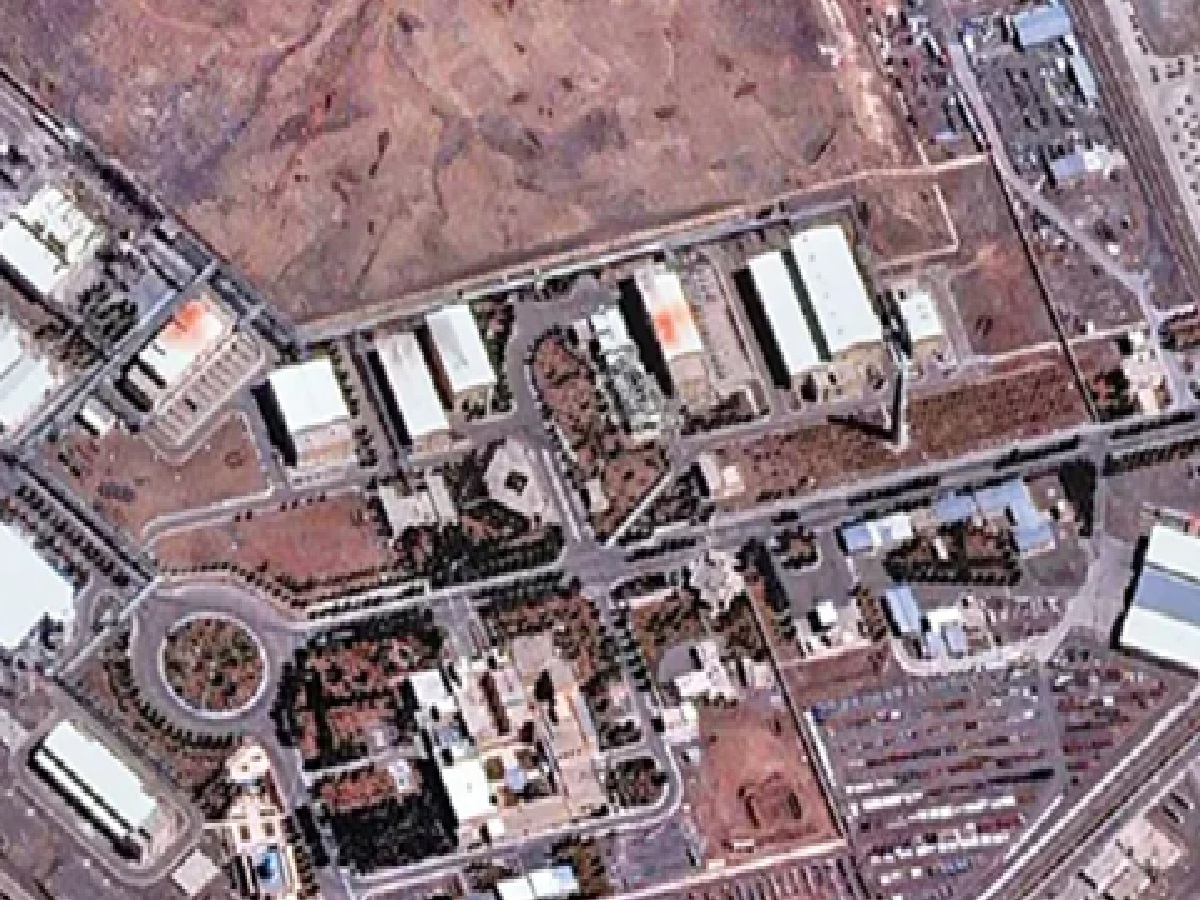
News Topical, Digital Desk : Over the past few years, US airstrikes have crippled Iran's nuclear program. However, despite numerous US attacks, including the one in June 2025, and a five-week-long war that began in February, one suspected Iranian nuclear site remains untouched: Pickaxe Mountain.
Experts inside and outside the US government agree that any agreement with Iran must ensure that Pickaxe Mountain is permanently closed. Little is known about Pickaxe Mountain, locally known as Kuh-e Kolang Ghaz La. Satellite images revealed that Iran significantly advanced construction at the site shortly after the US military deactivated the country's three main nuclear facilities last June...
out of reach of bunker-piercing bombs
The facility is located in central Iran, about a mile south of the destroyed uranium enrichment plant at Natanz and 200 miles south of Tehran. Experts say the underground debris of nuclear dust, known as Pickaxe Mountain, is buried so deep that even America's most powerful bunker-busting bombs cannot reach it.
Experts believe there is no immediate threat from nuclear debris, and construction of the nuclear plant is not yet complete. But in the future, Pickaxe Mountain could provide Iran with a suitable location to advance its nuclear project.
2,000 feet deeper than the boils
In June 2025, US President Trump ordered an attack on three underground nuclear facilities in Iran, where centrifuges were being used to produce highly enriched uranium.
One of the sites targeted under Operation Midnight Hammer was Iran's mountain-based uranium enrichment plant at Fodon, which the US attacked with 30,000-pound bombs known as Massive Ordnance Penetrators, specifically designed for this mission.
According to the Institute for Science and International Security, specially designed bombs called Massive Ordnance Penetrators may not be able to reach Pickaxe Mountain's inner chambers, which are buried about 2,000 feet deeper beneath the granite than Fordow. Pickaxe Mountain is deeper, larger, and more fortified than Fordow.
Highly enriched uranium reserves may be hidden
When construction began in 2020, Iran said the site would be used to build centrifuges, which spin uranium at high speeds to make it more pure. It would replace a plant believed to have been destroyed by Israeli sabotage.
However, Iran has not allowed the International Atomic Energy Agency (IAEA) to inspect the site, leading experts to suspect it could be used to enrich uranium to weapons-grade levels for nuclear bombs. Experts suspect Iran may already have hidden some of its 439 kg stockpile of highly enriched uranium at Pickaxe Mountain.
Read More: Fires in refineries in five countries, including India, within 45 days: coincidence or conspiracy.
--Advertisement--