desk
desk Share
Share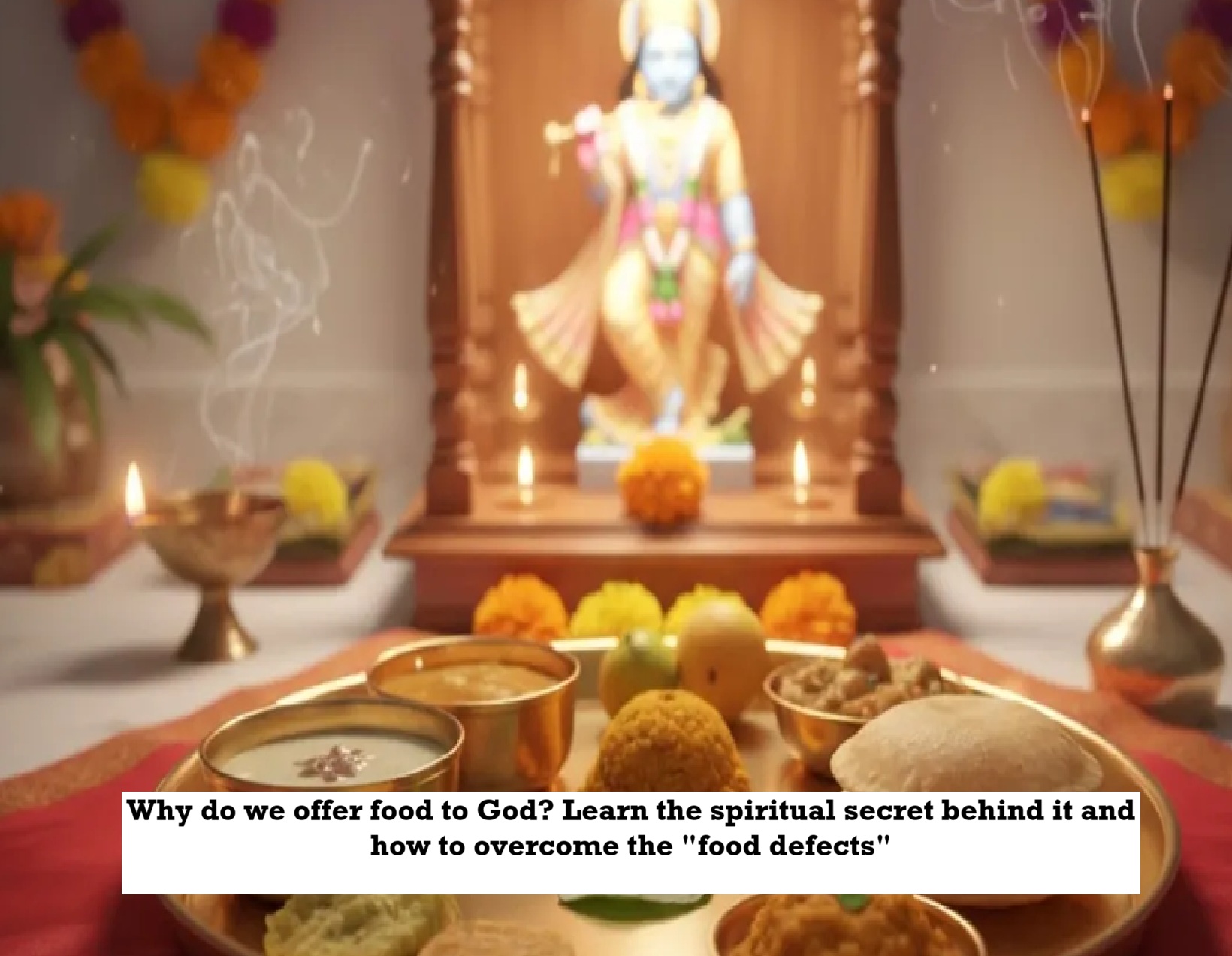
News Topical, Digital Desk : In Sanatan Dharma, there are many important aspects of worshipping deities, of which offering "Bhog" is considered the most special. We often wonder: when God himself is the provider of food to the entire universe, what is the point of offering food to him? Does God truly eat food? This holds profound implications from a mythological and spiritual perspective.
The True Meaning of Bhoga: Surrender and Gratitude
According to Hinduism, offering food is a way to express gratitude to God. It symbolizes that everything we have, whether it's food or wealth, is a gift from God. When we offer food to God, we are essentially saying, "O Lord! The first part of what you have given us is dedicated at your feet." God accepts not the physical portion of the food, but the devotee's “bhaav.”
Food defects and their remedies
A very important aspect of this tradition is related to " Ann Dosh ." The scriptures state that food can have three types of doshas:
Arth Dosha: If the food is purchased with ill-gotten money.
Nimitta Dosha: If the food is prepared in an impure place or with impure hands.
Bhaav Dosh: If the person preparing the food has anger, jealousy or negative thoughts in his mind.
It is believed that when we offer food at the feet of God, the divine sight and the influence of mantras remove all mental and spiritual impurities from the food. Once offered, the food becomes not just ordinary food but "prasad," which, upon consuming, brings spiritual purity and peace to the mind.
Process of making 'prasad' from food
As long as food is in the kitchen, it serves only as a means to satisfy the body's hunger. However, as soon as it is offered to God, it becomes " Mahaprasad ." In the Srimad Bhagavad Gita, Lord Krishna says that any devotee who lovingly offers me a leaf, flower, fruit, or water, I accept it. This act of offering food eliminates ego and awakens the spirit of service.
--Advertisement--