desk
desk Share
Share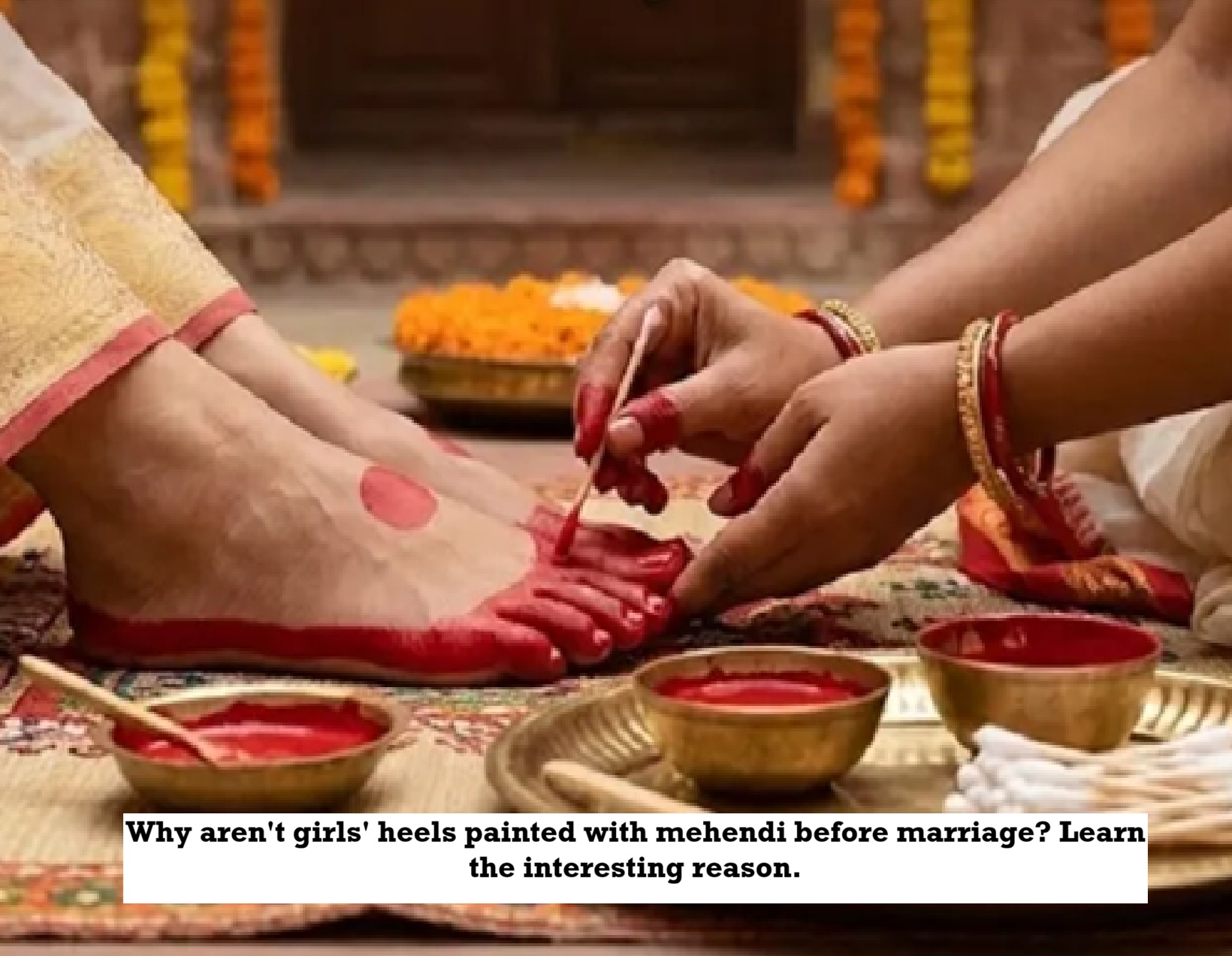
News Topical, Digital Desk : Sixteen adornments have special significance in Indian culture, which also includes 'Mahavar'. A bride's adornment is considered incomplete without alta. Be it a Manglik Kaam or any festival, applying Mahavar on women's feet on every auspicious occasion is considered a symbol of good fortune and prosperity, but you must have noticed that when Mahavar (Mahavar Significance) is applied on the feet of unmarried girls, their heels are not joined together, that is, the back portion of the heel is left open. Let us know the religious reason behind this.
Symbol of perfection
According to religious beliefs, joining the heels with mehendi symbolizes "completeness." A virgin girl is a trust in her father's household and departs from there to another home. Not joining the heels signifies that the girl's life is not yet complete and she will begin a new life at her in-laws' home.
The beginning of a new life
Leaving her heels bare before marriage signifies that the girl is still bound by the customs and confines of her parents' home. On the wedding day, when her heels are first painted with mehendi, it symbolizes her entering a new bond and the completion of her married life.
Symbol of good fortune and happiness
For married women, the heel, which is tied with mehendi, is considered a symbol of their "unbroken good fortune." It is believed that the joined heel represents the unbreakable bond between husband and wife and the completeness of life. However, unmarried women are prohibited from joining it.
Benefits of applying Mahavar
Applying mehendi is not just a matter of beauty, but it also has many benefits -
- Coolness – Mahavar cools the feet, which reduces mental stress.
- Skin protection – In ancient times, mehendi had many medicinal properties, which provided relief from many problems including cracked heels.
Respect for culture and dignity
In Indian traditions, every small ritual has a strong reason and sentiment behind it. Not joining the heel with the mehendi isn't just a tradition, but a respect for the culture and dignity of a girl's transition from one stage of life to another. This is why, even today, elders in the Kush region strictly enforce this rule.
--Advertisement--