desk
desk Share
Share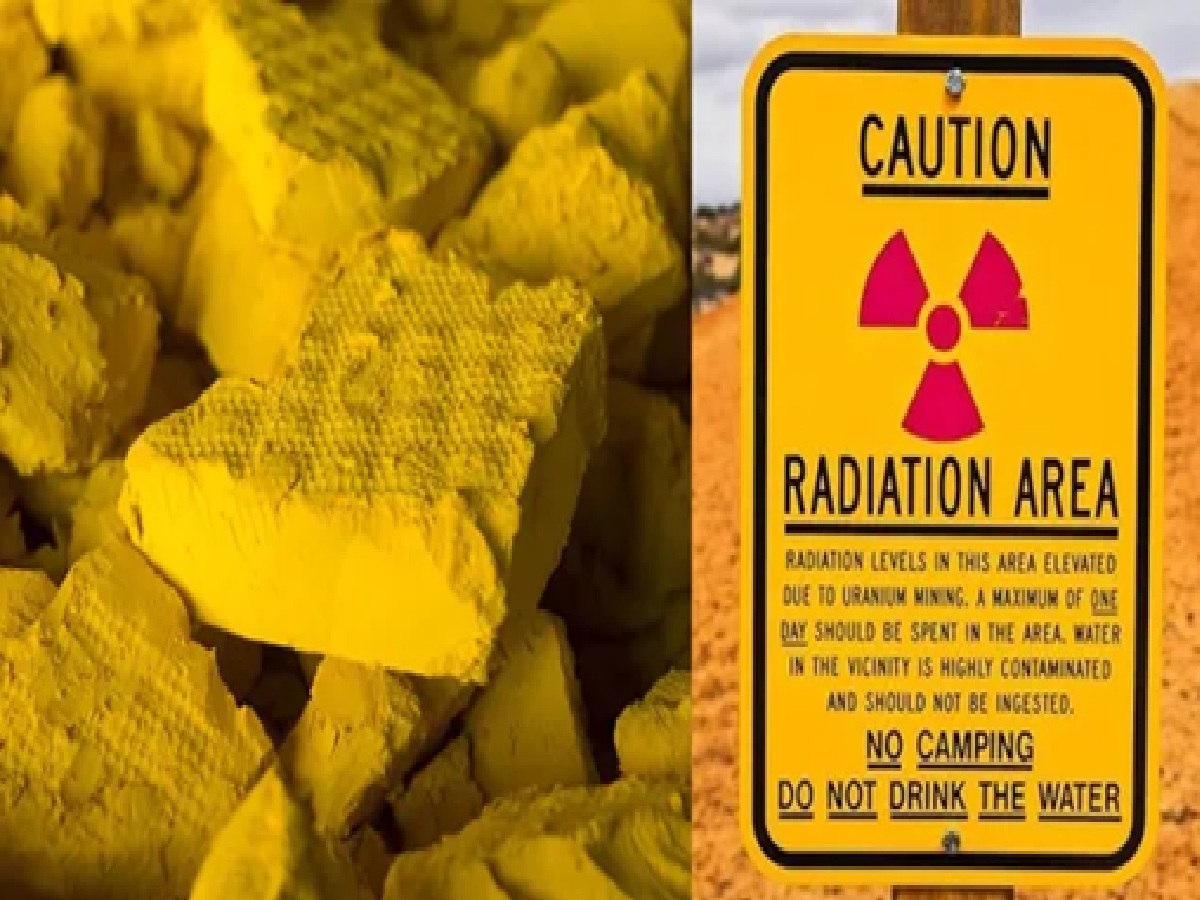
News Topical, Digital Desk : US President Donald Trump has claimed that Iran is ready to hand over its uranium dust, or nuclear waste, to the United States. Let's learn what uranium dust is, when it needs to be sintered, and how it is stored.
What is uranium dust?
Uranium dust is typically referred to as 60 percent enriched uranium. It is produced by treating natural uranium. Natural uranium contains approximately 99 percent U-238 and approximately 0.7 percent U-235. When enriched, the amount of U-235 is increased. According to the IAE, uranium is the main source of nuclear fuel. Because it is radioactive, there is talk of Iran handing it over. This uranium must be handed over to a third country under international supervision.
Iran has more than 400 kilograms of enriched uranium
Before the US and Israel launched airstrikes on Iran in June, Iran was believed to have possessed more than 400 kilograms of 60 percent enriched uranium. About 200 kilograms was 20 percent fissile material, which can easily be converted into 90 percent weapons-grade uranium. Iran maintains that its uranium enrichment is for power generation and energy security, not for nuclear weapons.
Uranium was not destroyed in the attack
Much of Iran's uranium reserves are believed to be buried under the rubble of a mountain that was destroyed in a US attack that claimed to have completely destroyed Tehran's nuclear program.
However, according to International Atomic Energy Agency Director General Rafael Grassi, Iran's nuclear materials are primarily stored at two of the three sites attacked by the US: an underground tunnel at the nuclear complex in Isfahan and a store in Natanz. It has been claimed that the Iranians have centrifuges for uranium enrichment and the capability to establish a new underground enrichment site.
This is how enriched uranium is stored
This enriched uranium is typically stored in forms such as metal, oxide powder, or UF6 gas. After enrichment, it is often stored in solid oxides or sealed containers. It is stored in sealed premises under the supervision of organizations such as the IAEA. It poses a significant radiation risk, so it cannot be stored as ordinary metal or powder.
Iran has already handed over uranium to other countries.
Iran has repeatedly handed over its uranium reserves, including uranium dust or yellowcake and enriched uranium, to countries such as Russia and Oman to meet the terms of its nuclear agreements.
Due to the ban, uranium had to be handed over to other countries.
Under the 2015 nuclear deal, Iran was restricted from possessing enriched uranium beyond a certain limit. To maintain this limit, Iran shipped tons of low-enriched uranium to Russia. In return, Russia provided Iran with natural uranium, which Iran could use for its civilian nuclear energy programs.
Read More: Tokyo's Haneda Airport tops cleanliness again, retains top spot in Skytrax rankings.
--Advertisement--