desk
desk Share
Share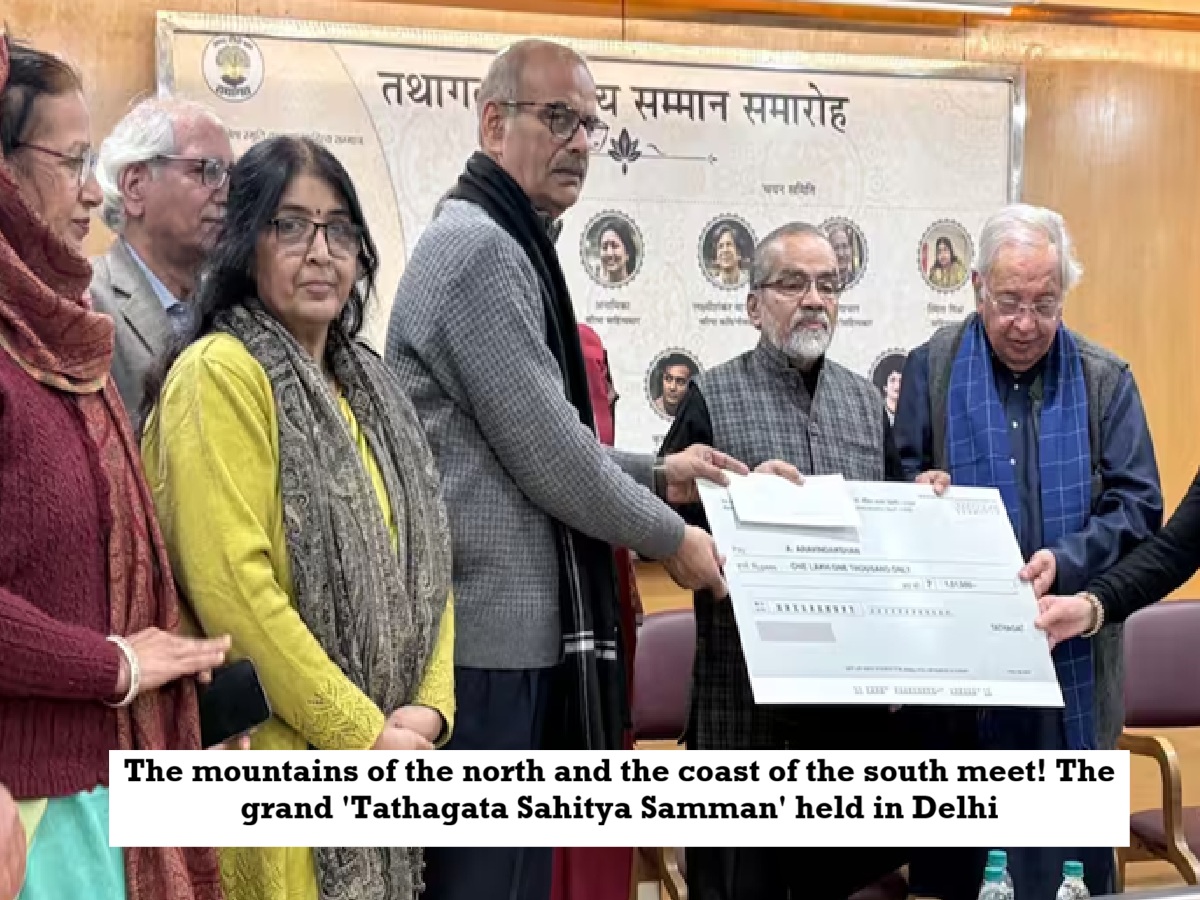
News Topical, Digital Desk : The prestigious Sahitya Akademi auditorium in the capital witnessed a remarkable confluence of cultural and linguistic unity in Indian literature. The Tathagat Literature Awards ceremony marked the occasion, where a successful attempt was made to bridge the gap between North and South through the bridge of literature. This year, the awards were presented to senior Hindi literary figure Prof. A. Aravindakshan of Kerala and the brilliant young poet Jamuna Beeni of Arunachal Pradesh.
The ceremony began with a soulful Kathak performance based on the timeless work "Varde Veenavadini" by the great poet Suryakant Tripathi "Nirala." Presiding over this grand event, Tathagata Trust patron and former IAS officer Dr. N.P. Singh explained the Trust's vision.
He said, "The goal of the Tathagata Trust is not merely to give awards, but to establish a continuous dialogue of language and culture between North and South India." He underlined that this honor is dedicated to the memory of the renowned litterateur Ramdarsh Mishra, who was a lifelong advocate of human sensibility.
Discussion on literary contributions
The program was attended by prominent figures from the Hindi world. Scholars like Anamika, Ashok Vajpayee, Om Nischal, and Chandrakanta delved into the work of the award-winning authors.
Prof. A. Aravindakshan: Discussing his work 'Dhadkon Ke Bhid Jakar', the speakers said that Aravindakshan not only adapted Hindi to the South Indian context but also gave it a new emotional depth.
Jamuna Bini: Bringing the fragrance of Arunachal Pradesh, Jamuna Bini's collection "When the Adivasi Sings" received special praise. According to scholars, her poems are a powerful voice of tribal consciousness, struggles for water, forest, and land, and marginalized communities.
A bridge of compassion and humanity
Speakers at the ceremony's closing session emphasized that in today's times of divisive society, such events serve to strengthen dialogue and humanism in Indian literature. This award ceremony was not just a tribute to two writers, but also an important ideological ritual, connecting the hills of the Northeast and the coasts of the South through Hindi.
The event witnessed a huge turnout of literature lovers, researchers and journalists from Delhi, who described this linguistic reconciliation as an auspicious sign for Indian integrity.
--Advertisement--