desk
desk Share
Share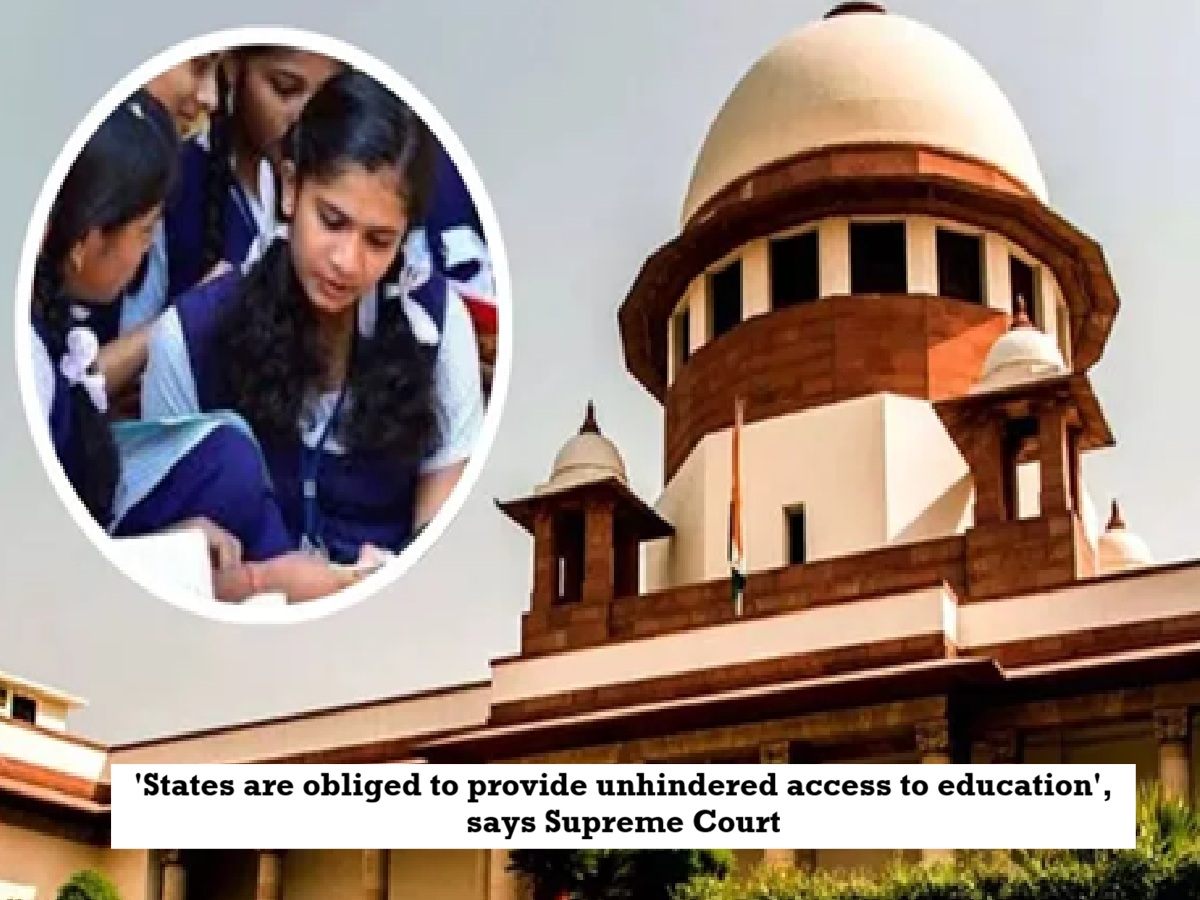
News Topical, Digital Desk : In its judgment directing the provision of free sanitary napkins in all schools, the Supreme Court has said that compliance with the standards laid down in Section 19 of the RTE Act is not subject to financial support.
In other words, states cannot be allowed to cite lack of funds as a reason for not complying with standards and norms, the apex court said, adding that states are obligated to provide unhindered access to education.
Free sanitary napkins mandatory under RTE Act
The apex court, in its judgment, stressed on the responsibility of the states, saying that this is further strengthened in view of Sections 8 and 9, which entrust the state governments and local authorities with the duty to provide school buildings, teaching staff, learning equipment, etc.
Governments and local authorities must monitor and ensure that every child enrolls in, attends, and completes primary education. Most importantly, they must ensure high-quality primary education in accordance with standards.
States cannot make the excuse of financial shortage
The Court stated that the requirement of unhindered access must be understood in its true sense. It mandates not only ensuring formal access to school buildings, but also removing all obstacles that hinder a child's attendance at school.
In this context, the lack of sanitary napkins and a clean disposal system leads to school absenteeism and dropout among girls.
The court said this failure was not administrative but constitutional, and it revealed a grave constitutional failure, as the law mandates barrier-free access to school buildings and separate toilets for boys and girls.
But even 17 years after the law came into force, many schools still lack basic facilities for students.
The court said that the rules and standards laid down in the schedule are not merely procedural in nature but are integral to the effective implementation of the right to education under Section 3 of the RTE Act and in particular Article 21A of the Constitution.
Progress is measured by how we protect the vulnerable.
Explaining the purpose and essence of the decision, the Supreme Court said that this order and discussion is not only for the stakeholders of the legal system.
It's also for classrooms where girls hesitate to ask for help. It's also for teachers who want to help but are unable to due to a lack of resources.
It's also for parents who may not understand the impact of their silence. It's also for society to establish that progress is measured by how we protect the most vulnerable.
The court said it wanted to send a message to every girl who may have been absent from school through no fault of her own. It said these words should go beyond the courts and legal review reports and reach the everyday consciousness of society.
--Advertisement--