desk
desk Share
Share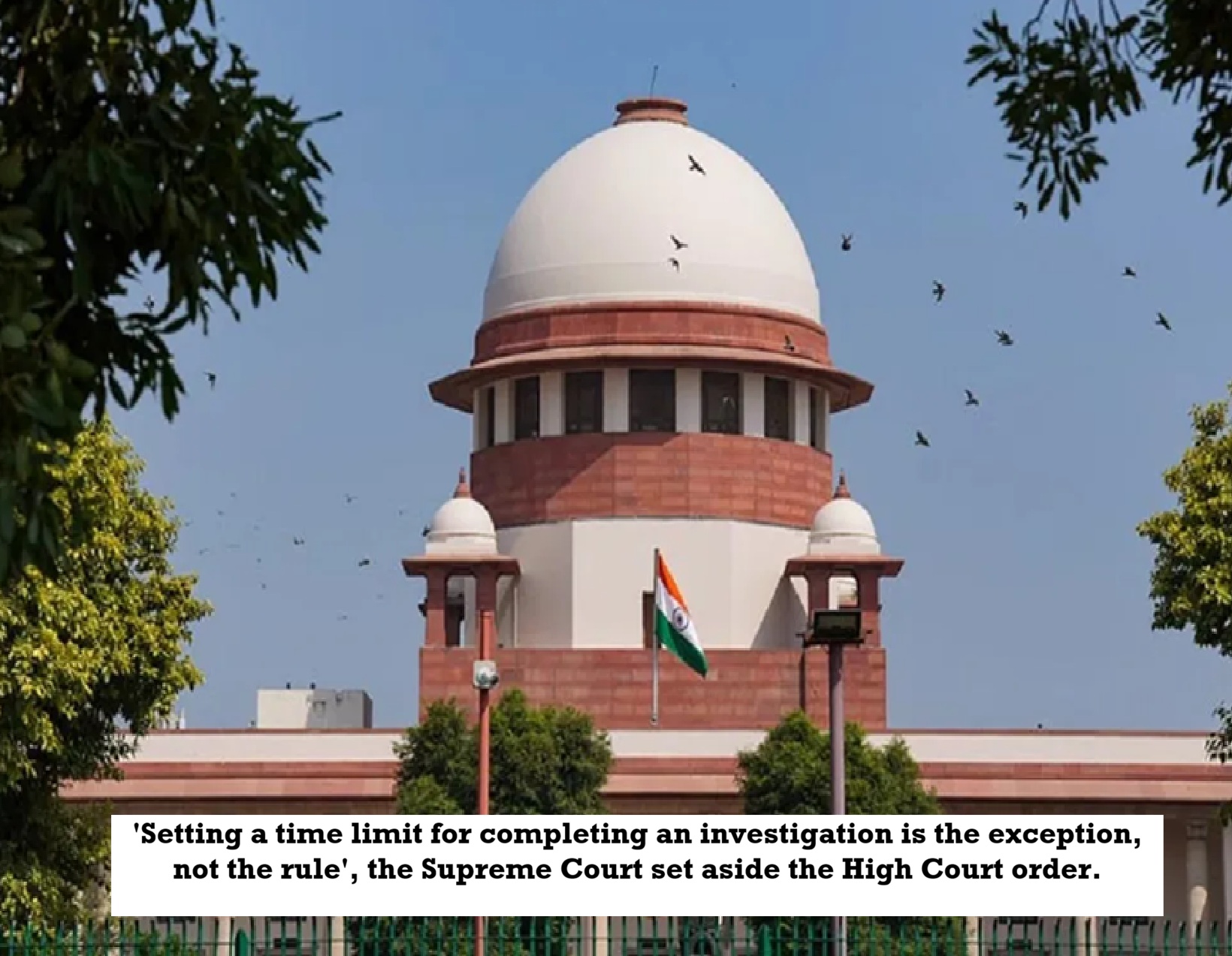
News Topical, Digital Desk : The Supreme Court has said that courts' deadlines for agencies to complete investigations are an exception, not a general rule. Courts set deadlines reactively, not preventively, where excessive delays could cause prejudice.
A bench of Justices Sanjay Karol and N.K. Singh made the observation while setting aside an order of the Allahabad High Court, which had granted the Uttar Pradesh police 90 days to complete its investigation into a case of alleged falsification of documents to obtain arms licenses and had granted the accused protection from any coercive action.
The bench said, "In short, timelines are set reactively, not preventively." Analyzing previous Supreme Court decisions, the bench also noted that courts have consistently held that directing time-bound investigations should be the exception, not the rule.
The Supreme Court stated that it is in this constitutional context that courts have intervened in appropriate cases where delay in investigation itself causes prejudice. With these observations, the Supreme Court set aside the High Court order.
The bench said, "Courts respect the practical realities of investigation, yet intervene where delay jeopardizes the fairness, independence or credibility of the criminal justice process."
The Supreme Court also found the Allahabad High Court's orders, which granted the accused protection from any punitive action, to be flawed. The Supreme Court directed that the accused be provided protection for the next two weeks, after which action would be taken according to the law.
--Advertisement--