desk
desk Share
Share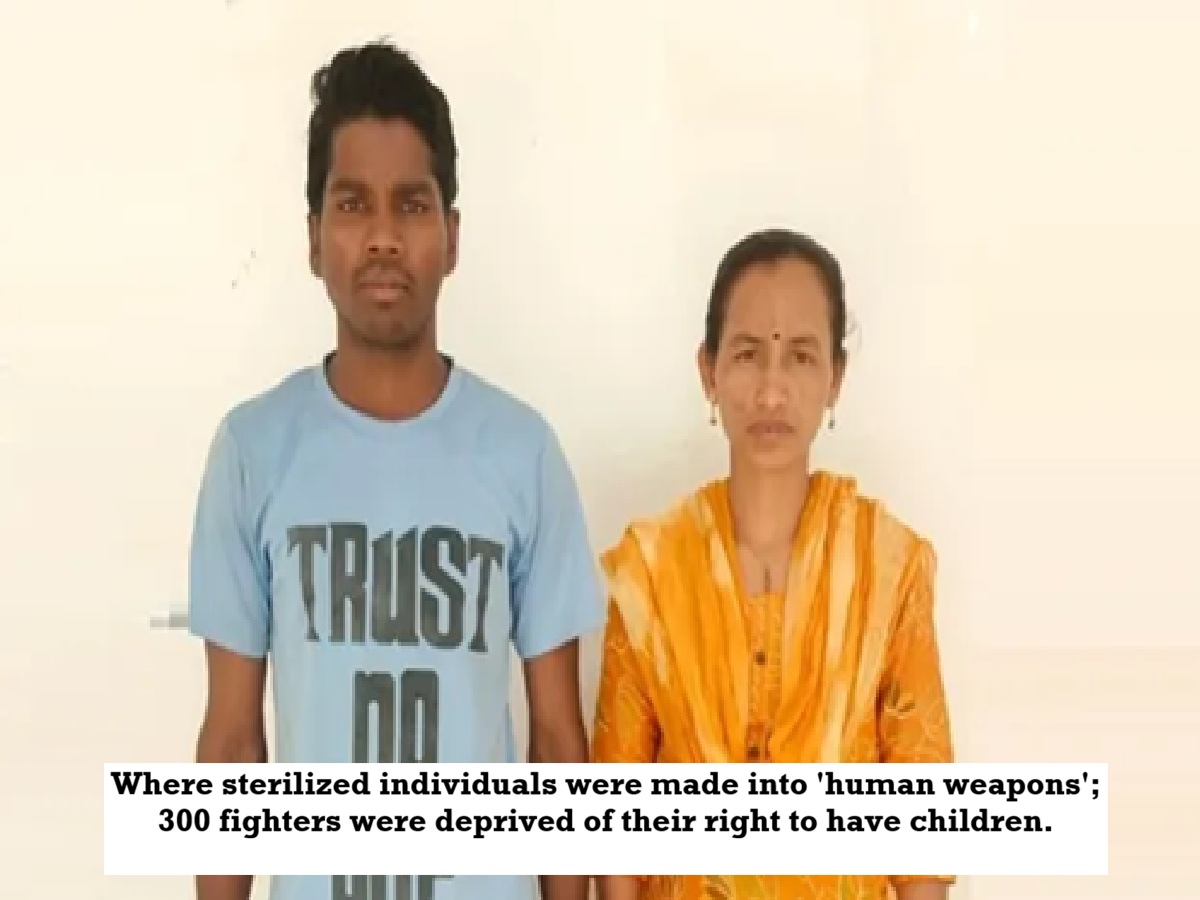
News Topical, Digital Desk : A silence spread among the dense sal and teak trees... and the barrel of a gun pierced that silence, deciding who would live and who would die.
The Maoist battalion operating in these forests of Bastar was not just a military unit, but a well-planned 'factory' where a human being was stripped of his emotions and turned into a violent tool.
The personal experience of surrendered Maoist "Doctor" Madkam Kesa reveals the layered truth behind this horrific system. According to Kesa, the young people's lives were transformed as soon as they joined the organization.
First, they were forced to hand over a gun, then they were stripped of any sense of belonging. The most severe part of this preparation was sterilization. Over 300 Maoists were sterilized, cutting them off from any attachment to family and future.
Many of them were married, but denied the right to fatherhood. Kesa himself experienced this. He married Aayti, a member of the Chetna Theatre Group, but the relationship remained unfulfilled. Now, after surrendering, both want to return to normal life and have their sterilizations reversed so they can live a normal life with their families in their village.
Surgery in the woods, the end of the senses
He explained that procedures like sterilization were performed in the jungles, with limited resources. In his role as a "doctor," he personally sterilized several comrades. This wasn't just medical treatment, but a strategy to cut off fighters from their natural ties.
This is why the brutality of this battalion often became spine-chilling – the celebration amidst the dead bodies after the sacrifice of 76 soldiers in Tadmetla and the violent celebration after the killing of Mahendra Karma in the Jheeram incident were extreme expressions of insensitivity.
Leadership secure, Bastariya faces on the front
The battalion's tactics were equally ruthless. According to Kesa, the top leadership planned major attacks, while they remained behind in the encounters. Devji and Sannu Dada, also known as Gopanna, were rarely seen at the front lines, while Hidma remained under tight security. The front lines were manned by young men drawn from the villages, who were the first to face the bullets and suffered the most casualties.
The battalion's discipline was based on fear and distrust. Hidma was so feared that members avoided direct communication with him. He maintained a distance and wouldn't even eat with him. Hidma, a former cattle herder from Poorvarti village in Sukma, eventually became a notorious commander after joining the Maoists.
The battalion disbanded after Hidma was killed.
This battalion, comprising 300 armed Maoists, was once the backbone of the organization. Until 2019, it was based in the Kistaram forests, but has steadily retreated under increasing pressure from security forces.
The battalion was forced to abandon its stronghold in 2023, and even after camping in the Karregutta Hills in January 2025, pressure continued, leading to the battalion's division. Following Hidma's killing in the Maredumilli forest in Andhra Pradesh on November 18, its morale was shattered, and most of its members have now surrendered.
--Advertisement--