desk
desk Share
Share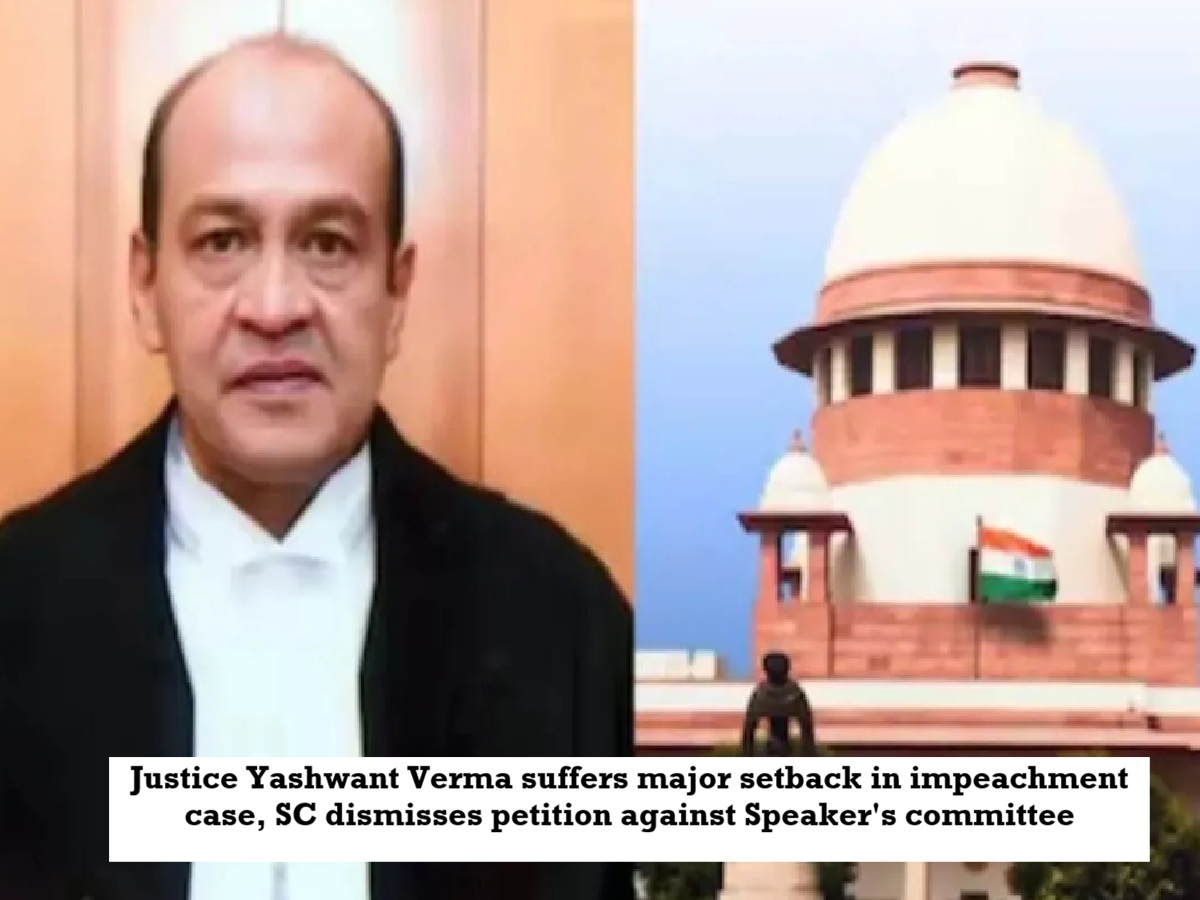
News Topical, Digital Desk : Allahabad High Court judge Justice Yashwant Verma, embroiled in a cash scandal, has suffered a major setback. The Supreme Court dismissed Justice Verma's petition challenging the Lok Sabha Speaker's decision to accept a resolution seeking his removal and the validity of the parliamentary panel investigating corruption allegations against him.
A bench of Justices Dipankar Datta and SC Sharma concluded its hearing on Verma's petition on January 8th and reserved its decision. The Supreme Court asked both parties to file written responses on Monday. Subsequently, the Supreme Court delivered its verdict today.
The Supreme Court said that if the Vice President can exercise the functions of the President in the absence of the President, then why cannot the Deputy Chairman of the Rajya Sabha exercise the functions of the Chairman in the absence of the Chairman.
The Deputy Speaker has no power to reject any motion.
These observations were made by the bench which refused to agree with the argument made by Justice Verma that the Deputy Chairman of the Rajya Sabha does not have the power to reject a motion and, under the Judges (Inquiry) Act of 1968, only the Speaker and the Chairman have the power to accept or reject a motion against a judge.
The Supreme Court dismissed Justice Verma's petition, stating that Justice Verma did not challenge the RS Deputy Chairman's rejection of the proposal. Both the Lok Sabha Speaker and the RS Chairman did not pass the proposal, so a joint committee is not possible.
What was the objection?
Justice Verma had sought quashing of the Speaker's action, the admission of the motion, and the notice containing all findings issued by the inquiry committee, arguing that the entire process was unconstitutional. The procedure laid down in the 1968 Act had not been followed.
--Advertisement--