desk
desk Share
Share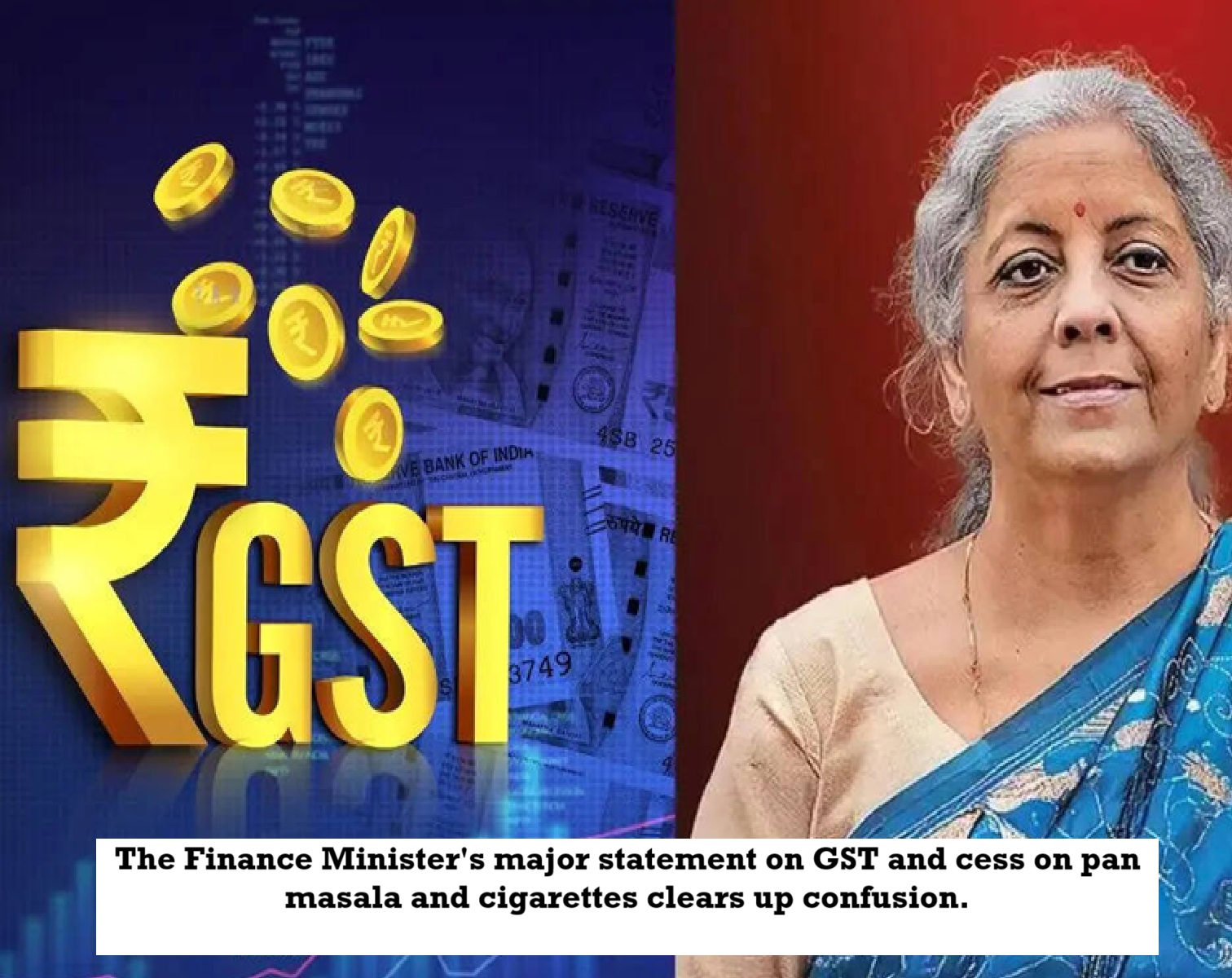
News Topical, Digital Desk : The central government is preparing to make a major change. Finance Minister Nirmala Sitharaman stated that the new Health and National Security Cess 2025 will only be imposed on demerit goods like pan masala. She clarified that this cess will not be imposed on essential commodities like pulses, rice, and oil. A portion of the revenue generated from this cess will be given to the states so they can spend it on health programs.
Sitharaman said in the Lok Sabha that the purpose of The Health Security and National Security Cess Bill, 2025 is to create a permanent fund for health and national security. The Finance Minister said, "We want to increase taxes on products that harm health so that people reduce their use."
Effect on pan masala, gutkha and cigarettes
Finance Minister Nirmala Sitharaman cleared up any confusion surrounding the Health and Security Bill during her speech in the Lok Sabha. She stated that the bill will directly impact products like pan masala, gutkha, and cigarettes. The government claims its purpose is to enhance health security and provide additional funds to the states. Let's first understand what this bill is.
What is the new bill, who will benefit from it?
The government has proposed imposing a new cess on pan masala and tobacco products. Until now, these were subject to GST, but it was difficult to levy tax at the production level because pan masala does not fall into the "excisable" category. Under the new law, the cess can now be imposed at the production level as well, and state governments will also receive a share of it.
What did the Finance Minister say on imposing cess?
The Finance Minister stated clearly in the Lok Sabha (Nirmala Sitharaman Lok Sabha speech) that pan masala poses a serious health risk. She stressed that,
"There is a health risk in consuming paan masala. The purpose of imposing this cess is to reduce people's consumption by increasing the price. Increase the price, and it will prevent people from consuming paan masala."
Sitharaman stated that the revenue generated from the cess will be spent on health awareness and related schemes, which will also benefit state governments. She added another important point: "The central government doesn't just keep the cess money. It is also distributed to the states through schemes."
He clarified that this is a cess, not an excise duty. Therefore, a portion of it will go to the states and will not lead to a Centre-state dispute.
How much tax is currently levied on pan masala?
Sitharaman explained that pan masala is already considered a demerit good under GST. Currently, it attracts 28% GST and a cess, totaling 40%. However, the cess will be abolished in a few days, after which a 40% tax will apply to these items.
He said, "Even today, pan masala is not subject to many taxes because GST is levied on a consumption basis. There is no GST on production." Cigarettes are subject to a production-based excise duty, but this wasn't possible because pan masala isn't in the excisable category. Therefore, the government has decided to introduce a new cess.
Why was there a need to make a new law?
Sitharaman explained, "Because pan masala is not excise, we couldn't tax its production. Therefore, under the new law, a cess is being imposed, which will be levied on production and shared with the states." She also stated that this new cess will not impact the GST system. Both taxes will run parallel.
What is the government's main objective?
The government is calling this part of its health-based taxation strategy. By imposing higher taxes on pan masala, tobacco, and gutkha, the government aims to reduce their consumption. The revenue generated will go to the state and central health security funds. The government has given this tax a broad name, linking it to both "national security" and "health security."
Can prices increase further?
Experts believe that tax rates aren't changing immediately. However, bringing pan masala under the excise tax net will make it easier for the government to increase taxes in the future. Therefore, the possibility of further price increases in the upcoming budget or new health policies cannot be ruled out.
--Advertisement--