desk
desk Share
Share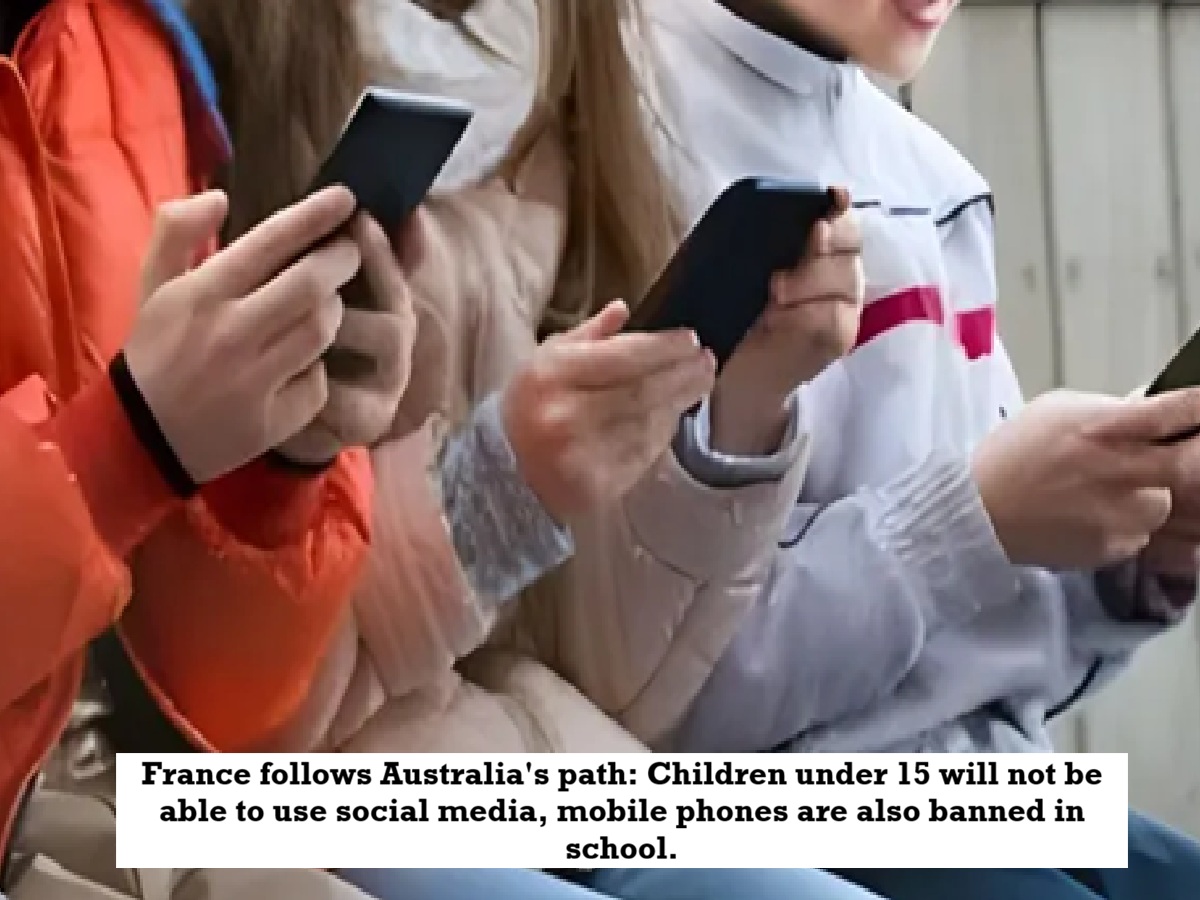
News Topical, Digital Desk : In a sign of a major global shift in response to the growing influence of media and its impact on adolescent mental health, the French National Assembly has now approved a landmark bill.
It completely bans internet media use for children under the age of 15. The bill passed late Monday night by a landslide 130-21 margin.
This law will not only regulate internet media platforms but will also completely ban the use of mobile phones in high schools.
Social media banned for children under 15 years of age
French President Emmanuel Macron has requested that the law be fast-tracked so that it can be implemented by the start of the new academic year in September. Macron strongly supported the decision, saying, “The minds of our children are not for sale – neither to American platforms nor to Chinese networks. Their dreams should not be determined by algorithms.”
Why was this strict law needed? A recent report by France's health watchdog revealed shocking statistics. According to the report, nearly 90 percent of children between the ages of 12 and 17 use the internet daily. Of these, 58 percent of teenagers are active on internet media.
On average, every second teenager spends two to five hours a day on a smartphone. Experts believe that excessive internet media use has led to low self-esteem, depression, and increased suicidal tendencies among teenagers.
There is also a complete ban on the use of mobile phones in high schools.
Several families in France have also sued platforms like TikTok, claiming that harmful content on the platform was responsible for their children's suicides. This bill, a growing trend in Europe and globally, is modeled after the European Union's Digital Services Act.
Across Europe, there are currently discussions underway to raise the minimum age to 16 to protect minors online. The British government is also considering internet media restrictions to protect teenagers from harmful content and excessive screen time.
Australia has already restricted internet media access for children under 16, resulting in the closure of approximately 4.7 million accounts. What is the scope of this law? While this law is strict, it does have some exceptions.
The ban will not apply to online encyclopedias (such as Wikipedia), educational or scientific directories, and platforms that share open-source software. Some opposition leaders have called it an infringement on personal freedom, but it is being hailed as a major achievement for France given the growing mental health crisis.
This is a historic step towards protecting the mental health of children.
Following Australia, the French National Assembly has now approved a landmark bill, signalling a major global shift in response to the growing influence of internet media and its impact on the mental health of adolescents.
It completely bans internet media use for children under the age of 15. The bill passed late Monday night by a landslide 130-21 margin.
The law will not only regulate internet media platforms but also completely ban the use of mobile phones in high schools. French President Emmanuel Macron has requested that the law be fast-tracked so that it can be implemented by the start of the new academic year in September.
Macron strongly supported the decision, saying, "The minds of our children are not for sale – neither to American platforms nor to Chinese networks. Their dreams should not be determined by algorithms."
Why was this strict law needed? A recent report by France's health watchdog revealed alarming statistics. According to the report, nearly 90 percent of children between the ages of 12 and 17 use the internet daily.
Of these, 58 percent of teens are active on internet media. On average, every second teen spends two to five hours a day on a smartphone. Experts believe that excessive internet media use has led to low self-esteem, depression, and increased suicidal tendencies among teens.
Several families in France have also sued platforms like TikTok, claiming that harmful content on the platform was responsible for their children's suicides. This bill, a growing trend in Europe and globally, is modeled after the European Union's Digital Services Act.
Accounts of 47 lakh children closed
Across Europe, there are currently discussions underway to raise the minimum age to 16 to protect minors online. The British government is also considering internet media restrictions to protect teenagers from harmful content and excessive screen time.
Australia has already restricted internet media access for children under 16, resulting in the closure of approximately 4.7 million accounts. What is the scope of this law? While this law is strict, it does have some exceptions.
The ban will not apply to online encyclopedias (such as Wikipedia), educational or scientific directories, and platforms that share open-source software. Some opposition leaders have called it an infringement on personal freedom, but it is being hailed as a major achievement for France given the growing mental health crisis.
Read More: 'No Iranian ship will be able to leave,' JD Vance warns Tehran
--Advertisement--