desk
desk Share
Share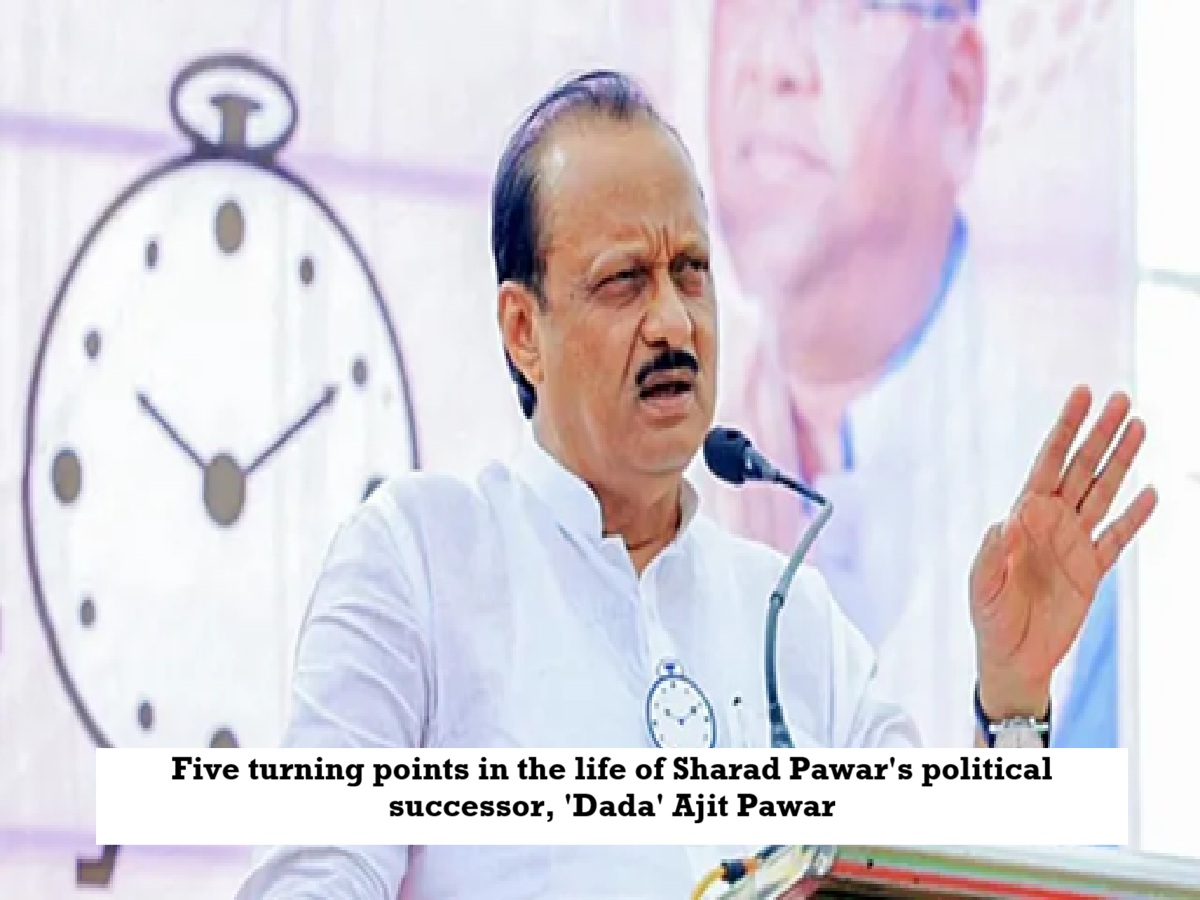
News Topical, Digital Desk : He was "Dada" to his supporters and a headache to his opponents—a hard-working politician with a sharp tongue and an even sharper wit. Ajit Pawar never gave up his pursuit of top office, and his political career always reflected the restlessness of a man pressed for time.
Pawar, a six-time deputy chief minister, was known for his authority, respected for his administrative acumen, and often criticized for his harsh temper. He always seemed poised for Maharashtra's highest office, but never quite reached it. Ajit Pawar was Sharad Pawar's political heir apparent.
On Wednesday morning, his life came to an abrupt end in a plane crash near Baramati, his hometown. He left behind a career defined by influence as well as unfulfilled ambitions.
Ajit Pawar (66) was traveling from Mumbai to Baramati to campaign for local elections when the plane crashed during landing. All five people on board, including two of his employees and two crew members, were killed. The cause of the crash has not yet been confirmed and an investigation is underway.
Beyond the headlines of a tragic death lies a larger political story, the story of a grassroots leader who mastered the state's rural power network, repeatedly reached the doors of power and then saw the chief ministership linger just beyond his reach.
1- Started politics from Baramati, entered politics in 1982
Ajit Pawar's political education began not in television studios, but in Maharashtra's strongest power center—the sugar and cooperative societies ecosystem. Born on July 22, 1959, to Asha and Anantrao Pawar, he entered politics in 1982 when he was elected to the board of a sugar factory, following in the footsteps of his uncle, Sharad Pawar.
The Baramati brand gave him what few leaders have: a fortress-like following and a political machinery that operates year-round. His rise was no accident. It was the result of an organizational strategy.
2- Deputy Chief Minister and punctual 'Karmath'
Pawar served as deputy chief minister several times during shifting coalitions, serving a record six terms, and earned a reputation as a punctual and hardworking person, unusual in a political culture notorious for delays. It was this period that shaped his strongest political identity – as an administrator who can deliver results.
Even rivals reluctantly acknowledged his understanding of the state's functioning and how to run it effectively. His hold on the finance and planning ministries further strengthened his authority. He was expected to present Maharashtra's 2026-27 budget next month.
3- Controversies hurt him, but did not break him
Pawar's supporters considered him a decisive and hardworking leader, while his critics saw him as a leader who, while seeking power, routinely courted controversy. Allegations related to the irrigation scam and later, controversies surrounding his son Parth's land deals repeatedly became political weapons against him.
Still, the pattern remained the same: he stuck to his position. His most infamous public controversy came in 2013, when he mocked the state's drought crisis while addressing a village gathering in Indapur, sparking outrage and forcing him to apologize. The incident highlighted both aspects of his personality: politically astute and outspoken.
4- The dawn swearing-in ceremony of 2019 and the hunger for power
In November 2019, a political move catapulted him from an influential state leader to a national topic of discussion: a surprise early-morning swearing-in ceremony with Devendra Fadnavis. Ajit Pawar became deputy chief minister in a government that lasted barely two days, but its impact endured much longer. This wasn't mere opportunism. It was a signal.
Pawar has never hidden his ambition to become chief minister. That morning was widely seen as his transition from an "uncle's successor" image to an "I can handle power" one. The attempt failed, but it permanently established him as Maharashtra's most unpredictable ruler.
5- There was a separation from Sharad Pawar in 2023, then a reunion.
In July 2023, Ajit Pawar pulled off the biggest upset of his career—he rebelled against Sharad Pawar, taking most of his MLAs with him, and formed an alliance with the BJP-Shiv Sena government. This move not only divided a party but also a legacy. But personal drama has no place in politics.
After a disappointing performance in the Lok Sabha elections, where his faction won just one seat, he staged a spectacular comeback by winning 41 seats in the assembly elections, strengthening his position and silencing his critics, at least temporarily. Then came a new twist.
Ahead of the municipal elections in Pune and Pimpri-Chinchwad, Ajit Pawar and Sharad Pawar appeared to be strategically uniting to avoid vote division. Pawar publicly described this as pragmatic politics, saying that fighting between the two factions would only benefit the rivals. That "reunion" fueled speculation about a future merger of the factions, and after his sudden death, this discussion remains unresolved.
Ajit Pawar, a six-time Deputy Chief Minister, remained the state's most influential and autocratic ruling leader, feared by rivals and highly respected by allies. He formed governments, split parties, and often changed the dynamics overnight. While he never became Chief Minister, few have wielded as much clout in Maharashtra politics as he has.
--Advertisement--